Seasonal
The first cold snap checklist
The first genuinely cold evening always arrives with people already invited. Ten minutes of checking in daylight is the difference between a good evening and a trip to the hardware store.
Check it in daylight, before the first cold evening. Weigh the cylinder, leak-test every joint with soapy water, inspect the hose for perishing, clear the pilot orifice of nests, and light it once. The two things that usually fail after storage are the thermocouple and the pilot orifice.
Why the timing matters
The first cold evening of the season is never a quiet one. It is a Friday, people are coming over, and it is the moment you discover the heater will not stay lit and the cylinder is empty.
Everything on this list takes ten minutes in September daylight, and every item on it is something that fails silently over a stored winter. Do it once and the season starts properly.
The checklist
- Weigh the cylinder. Every cylinder is stamped with a tare weight, usually marked TW. Total weight minus tare is the propane. If it is low, refill now rather than at nine on a Friday. The runtime arithmetic.
- Inspect the hose end to end. Cracks, perishing, a stiff or chalky feel, crush marks. A hose that has spent a winter outdoors is the most likely part to have degraded, and it is a replace rather than a repair.
- Check the regulator. Any damage, corrosion or a bent connection means replace. Regulators are not owner-serviceable.
- Connect and leak-test. Soapy water on the cylinder connection, both hose ends and the valve body, with the cylinder valve open. Bubbles mean stop. Ninety seconds, and it is the step nobody should skip.
- Clear the pilot orifice and venturi. Spider nests in gas orifices are a documented failure in outdoor gas appliances, and they are the reason a heater that worked fine in March will not light in October. Compressed air or a pipe cleaner, gently.
- Check the thermocouple position. The tip should sit in the upper part of the pilot flame, engulfed. Knocked sideways over a winter, it will light and drop out. The full diagnostic.
- Clean the burner ports and the reflector. Debris in the ports gives an uneven flame; a dirty reflector underside wastes the radiant output the reflector exists to direct.
- Fill the ballast reservoir. If you emptied it before the freeze — and you should have — refill it now. Why it matters.
- Check the glass tube, on a pyramid heater. Cracks, chips, a loose connecting ring. Replacement tubes.
- Light it once, in daylight. Hold the knob a full twenty to thirty seconds. Let it run ten minutes. Watch for a steady blue pilot and an even main burner.
For an electric heater
- Inspect the cord and plug for damage, and the housing for cracks that will let water in.
- Check the mounting fixings. A winter of wind and thermal cycling loosens screws, and a mounted heater is a heavy object above people.
- Test the GFCI outlet. Press test, press reset. If it does not trip on test, the outlet needs replacing before you rely on it.
- Clear the clearance zone. Anything that grew over summer — climbing plants especially — is now in the space the published clearance requires. What that clearance is.
- Run it for ten minutes and confirm every element lights and the remote works.
Quick picks
Ranked for fit, not for hype. Output is the maker’s published figure; reach is computed from it or from the maker’s own radius claim, and the table says which. Tap a row for the full write-up, or go straight to the listing.
| # | Product | Best for | Output | Reach | Price |
|---|---|---|---|---|---|
| 1 | 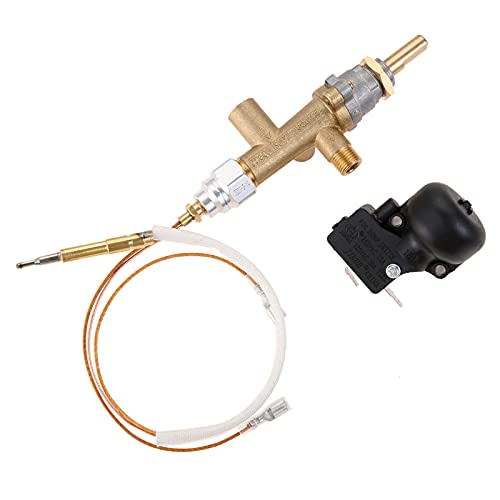 Thermocouple repair kitThe single most common patio-heater failure is a tired thermocouple, and the symptom is precise: it lights, you release the knob, it goes out. This kit is the fix, and it is cheap. | A heater that lights and dies | n/a | n/a | $19.98 · Check on Amazon |
| 2 |  Easy-Going pyramid coverRust in the burner assembly is what kills patio heaters, not use. A cover is the cheapest thing on this site and it is the one that decides whether the heater works next October. | A pyramid heater left outdoors | n/a | n/a | $25.99 · Check on Amazon |
| 3 |  Clear vinyl curtainsThe highest-leverage purchase on this whole site. Blocking the wind on two sides changes the heat a patio needs by more than any heater upgrade does, and costs a fraction as much. | Turning open sides into walls | n/a | n/a | $63.17 · Check on Amazon-10% |
Reach marked “claimed” is the maker’s own published figure. Reach without that label is ours, computed from published output at 20 BTU per square foot for an open patio. Neither is a measurement we took.
Top pick · A heater that lights and dies
Propane Patio Heater Repair Kit — Thermocouple, Dump Switch and Control Valve
The single most common patio-heater failure is a tired thermocouple, and the symptom is precise: it lights, you release the knob, it goes out. This kit is the fix, and it is cheap.
- Fuel
- Accessory
- Output
- Not published
- Reach (computed)
- Not published
- Cost per hour
- n/a
What works
- It matches the exact symptom in our fault tree: flame holds while the knob is pressed, dies when released. That is a thermocouple, nearly every time
- Including the dump switch is sensible, because a heater that has fallen over often has both problems at once
- The parts cost a small fraction of a new heater, and this is the repair that keeps a five-year-old tower going
What does not
- Check the fit before ordering. The gas train is broadly standard across cheap towers but not universal — compare your existing part to the listing photographs
- Working on a gas appliance means a leak test with soapy water afterwards, every time, without exception
- If you are not comfortable disconnecting a gas line, this is the point to stop and call someone
| Published specification | |
|---|---|
| Contents | Thermocouple sensor, tilt dump switch, main control valve with pilot port |
| Fits | Common propane patio heaters using the standard gas train |
| Tools | Adjustable wrench; no gas fitting beyond the cylinder connection |
| Maker’s coverage claim | None published — the reach figure above is ours |
| Safety listing | Not applicable — replacement gas-train parts, not an appliance |
Who it is for
Anyone whose propane heater lights but will not stay lit, and who owns an adjustable wrench.
What it is not for
Electric heaters, which fail for [entirely different reasons](/troubleshooting/electric-not-working).
Sources for this entry
2 · A pyramid heater left outdoors
Easy-Going Pyramid Torch Patio Heater Cover, 90 x 23 x 23 in
Rust in the burner assembly is what kills patio heaters, not use. A cover is the cheapest thing on this site and it is the one that decides whether the heater works next October.
- Fuel
- Accessory
- Output
- Not published
- Reach (computed)
- Not published
- Cost per hour
- n/a
What works
- The published dimensions match the shape. 90 in tall with a 23 in square footprint is the standard pyramid envelope, which is the measurement that actually decides whether a cover fits
- Measure your heater first. Pyramid heights vary by several inches between brands and a cover that is short is a cover that does nothing
- Cheap enough that replacing it every few seasons is not a decision
What does not
- No fabric weight is published. 600D is the sensible floor for something that spends a winter outdoors, and this listing does not state what it uses — so treat longevity as unknown rather than assured
- Never cover a heater that is still warm. It is the one instruction on the label people ignore
- A cover on an uncovered patio still needs anchoring against wind or it becomes a sail
| Published specification | |
|---|---|
| Fits | Pyramid and torch heaters up to 90 in tall, 23 x 23 in footprint |
| Colors | Black, camel and gray listed |
| Fabric weight | Not published |
| Maker’s coverage claim | None published — the reach figure above is ours |
| Safety listing | Not applicable — a cover, not an appliance |
Who it is for
Anyone whose pyramid heater lives outdoors between uses, which is nearly everyone.
What it is not for
A mushroom-style tower with a wide reflector, which needs the [domed shape](/troubleshooting/off-season-storage) instead.
Sources for this entry
3 · Turning open sides into walls
Clear Vinyl Patio Enclosure Curtains, 23 oz, with Grommets
The highest-leverage purchase on this whole site. Blocking the wind on two sides changes the heat a patio needs by more than any heater upgrade does, and costs a fraction as much.
- Fuel
- Accessory
- Output
- Not published
- Reach (computed)
- Not published
- Cost per hour
- n/a
What works
- On our own sizing model, moving a patio from exposed to sheltered cuts the required output by about a third — that is a bigger change than any heater swap
- Clear vinyl keeps the view, which is why people actually leave it up rather than taking it down after a week
- Grommets every 12 inches make it a rope-and-tie job, not a construction project
What does not
- Enclosing a patio changes the heater rules. Once you have walls and a roof, an open-flame propane unit is no longer appropriate — read the safety page before you buy both
- Vinyl goes cloudy and stiff with age and UV, faster in hot climates
- It flogs and cracks in real wind unless it is tied at every grommet, not just the corners
| Published specification | |
|---|---|
| Material | 23 oz clear PVC vinyl tarpaulin |
| Fixing | Metal grommets, ropes and ties included |
| Claimed properties | Waterproof, anti-UV, tear resistant per the listing |
| Intended use | Porch, pergola, gazebo, balcony |
| Maker’s coverage claim | None published — the reach figure above is ours |
| Safety listing | Not applicable — this is a fabric panel, not an appliance |
Who it is for
Any patio where wind is the actual problem and the heater is being blamed for it.
What it is not for
Sealing a space fully. A partly open, well-ventilated enclosure is the goal; an airtight one with a combustion heater inside is dangerous.
Sources for this entry
The two failures this catches
The thermocouple. It fails from soot, corrosion and age, and a winter outdoors accelerates all three. The symptom is unmistakable — lights, dies the moment you release the knob — and the part is inexpensive. Catching it in September means ordering it rather than discovering it.
The pilot orifice. Insects nest in gas orifices over a warm still summer, and a partly blocked pilot produces a small weak flame that cannot heat the thermocouple properly. It presents exactly like a failed thermocouple and costs nothing to fix. Always clear the orifice before ordering a part.
While you are out there
Two things that are not maintenance and improve the season more than maintenance does.
- Put the windbreak up before you need it. Screening the windward side in September, while it is pleasant to be outside doing it, is far better than deciding to in November. What to use.
- Buy the second cylinder now. It costs less than most accessories, and it converts running out mid-evening from a problem into a two-minute swap. It is the single most useful thing anyone with a propane heater can own.
If it fails the check
A heater that will not hold a flame after these steps needs a thermocouple, and that is an ordered part and a wrench. A heater with a perished hose, a damaged regulator, or a gas smell with the valve closed needs a gas technician. Know which side of that line you are on before you start.
Common questions
What should I check on a patio heater before winter?
Weigh the cylinder, inspect the hose for perishing, leak-test every joint with soapy water, clear the pilot orifice of insect nests, check the thermocouple sits in the pilot flame, clean the burner and reflector, and light it once in daylight.
Why will my patio heater not light after being stored?
Two usual causes: an insect nest in the pilot orifice, or a thermocouple that has corroded over the winter. Clear the orifice first — it costs nothing and it is often the whole problem. If it still dies on releasing the knob, the thermocouple is the part.
How do I know if my propane hose needs replacing?
Cracks, a stiff or chalky feel, crush marks or any visible perishing. A hose that has spent a winter outdoors is the component most likely to have degraded, and it is a replacement rather than a repair — do not patch a gas hose.
When should I get my patio heater ready for the season?
Late August or early September, in daylight, before the first cold evening. Everything on the checklist takes ten minutes then, and the parts that fail after storage can be ordered rather than discovered on a Friday night.
Read next
Heated blankets for the patio
Battery heated blankets cost a fraction of a cent an hour to run. The arithmetic, and the two models worth buying.
Storing a patio heater for the off-season
The off-season routine, where the cylinder goes, and which cover shape fits which heater.
What to run at 50, 40 and 30 degrees
Three temperature bands, and what genuinely keeps people outside in each — cheapest intervention first.
Patio heater will not stay lit
The ordered diagnostic for a heater that lights and dies, ending in the part that fixes it.
Patio windbreaks, and why they beat a bigger heater
Vinyl, mesh and curtains compared, with what enclosing a patio changes about your heater choice.
Patio heater replacement parts
The four parts that account for nearly every dead heater, with symptoms and measuring advice.
How long a propane cylinder actually lasts
The cylinder arithmetic in full: energy content, burn rate, and every size from 15 to 40 lb.
The best patio heaters for beginners
What to buy first, the three predictable beginner mistakes, and the ownership costs nobody mentions.