Runtime
How long a propane cylinder actually lasts
Nine hours at full output on a 48,000 BTU tower. Not a season, not a month, and the reason so many people are surprised is that nobody shows the division.
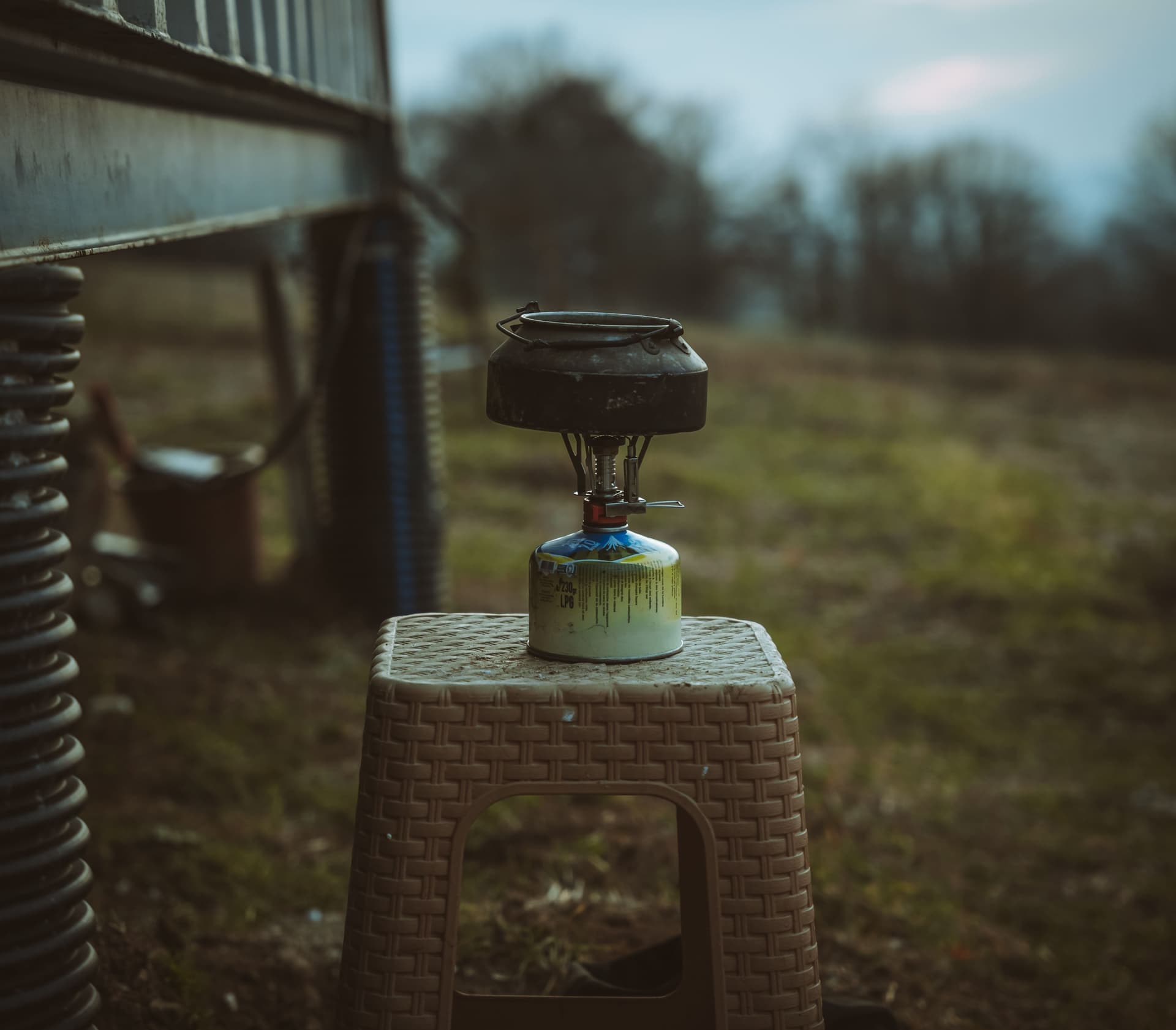
About 9 hours at 48,000 BTU/h. A 20 lb cylinder holds 4.72 gallons of propane at 4.24 lb per gallon; each gallon carries 91,420 BTU, so the cylinder holds about 431,500 BTU. Divide by the burn rate and you have the runtime.
The whole calculation, in four lines
The arithmetic
20 lb / 4.24 lb per gallon = 4.72 gallons. Then 4.72 x 91,420 BTU per gallon = 431,500 BTU. Then 431,500 / 48,000 BTU/h = 8.99 hours. That is it. There is no hidden variable and no manufacturer secret; it is one division after two conversions.
The two constants both have sources. Liquid propane is filled and billed at 4.24 pounds per gallon at 60 degrees Fahrenheit, the industry standard density. Energy content is 91,420 BTU per gallon at higher heating value, published by the U.S. Department of Energy — and higher heating value is the correct basis here because appliance BTU ratings are gross input ratings measured the same way.
Every cylinder size, every common burn rate
| Burn rate | 15 lb cylinder | 20 lb cylinder | 30 lb cylinder | 40 lb cylinder |
|---|---|---|---|---|
| 11,000 BTU/h | 29.4 h | 39.2 h | 58.8 h | 78.4 h |
| 35,000 BTU/h | 9.2 h | 12.3 h | 18.5 h | 24.6 h |
| 40,000 BTU/h | 8.1 h | 10.8 h | 16.2 h | 21.6 h |
| 46,000 BTU/h | 7.0 h | 9.4 h | 14.1 h | 18.7 h |
| 48,000 BTU/h | 6.7 h | 9.0 h | 13.5 h | 18.0 h |
| 58,000 BTU/h | 5.6 h | 7.4 h | 11.2 h | 14.9 h |
Cylinder energy = pounds ÷ 4.24 lb per gallon x 91,420 BTU per gallon, divided by the burn rate. A 20 lb cylinder therefore holds 4.7 gallons and 431,226 BTU. Full output only — turn it down and every figure here stretches proportionally.
Read down the 20 lb column and the picture is clear. A tabletop heater at 11,000 BTU runs for over a day and a half. A full-size tower runs for an evening or two. A 58,000 BTU fire bowl runs for about seven and a half hours. Output and runtime are the same number seen from opposite ends.
Why your real runtime is usually worse
Three reasons, none of them a defect, and all of them worth knowing before you plan an evening around a cylinder.
- Exchange cylinders are not full cylinders. A swap-cage cylinder is commonly filled to 15 lb rather than 20, because the exchange model prices convenience over volume. That is a 25 percent cut to every figure above — read the 15 lb column instead.
- Cold reduces vapor pressure. Propane has to boil off inside the cylinder to feed the burner, and that gets harder as the cylinder cools, both from the weather and from the evaporation itself. In genuinely cold conditions a nearly-empty cylinder can struggle to maintain full output. This is also why a cylinder feels cold and sometimes frosts in use.
- Rated input is full output. Every figure here assumes the control is wide open. Very few people run a patio heater flat out all evening, and turning it down stretches the runtime proportionally — half output really is double the hours.
How to know how much is left
There is no fuel gauge on a standard cylinder and the clip-on pressure gauges sold for the purpose are close to useless, because propane vapor pressure stays roughly constant until the liquid is nearly gone. Two methods actually work.
- Weigh it. Every cylinder is stamped with its tare weight — the empty weight — usually as TW followed by a number in pounds. Put it on a bathroom scale, subtract the tare, and the remainder is the propane. Straightforward and exact.
- Pour warm water down the side. The liquid propane absorbs heat, so the cylinder wall stays cool where there is liquid behind it and warms where there is only vapor. Run your hand down and you can feel the level. Crude, free, and surprisingly reliable.
For a worked example at the low end of the burn-rate range, the Mr. Heater MH15T review runs this calculation across all three of its settings — 29 to 43 hours on one 20 lb cylinder, against about nine for a full-size tower.
Buying a second cylinder is the actual fix
The most common propane complaint is not cost, it is running out mid-evening. The arithmetic says a tower gets two or three evenings from a cylinder, so if you use the patio twice a week you are refilling monthly, and the refill never happens on a convenient day.
A second cylinder costs less than most accessories on this site and eliminates the problem completely: swap, and refill the empty one whenever you happen to pass. It is a duller recommendation than a bigger heater and it solves the thing people actually complain about.
And if the running cost rather than the swapping is the issue, the answer is upstream: size the heater properly so you are not buying 48,000 BTU for a patio that needs 4,000, or block the wind so the heat you buy stays put.
Common questions
How long does a 20 lb propane tank last on a patio heater?
About 9 hours at 48,000 BTU/h, 9.4 at 46,000, and around 12.3 at 35,000. A 20 lb cylinder holds about 431,500 BTU (4.72 gallons at 91,420 BTU each), so runtime is that divided by the burn rate.
How many hours does a propane tank last in a patio heater?
Between about 7.4 and 39 hours depending on the heater. A 58,000 BTU fire bowl gives about 7.4 hours from a 20 lb cylinder; a 48,000 BTU tower about 9; an 11,000 BTU tabletop heater about 39.
How long does a 15 lb propane tank last on a patio heater?
About 6.7 hours at 48,000 BTU/h — three quarters of the 20 lb figure. This matters more than it sounds, because exchange-cage cylinders are commonly filled to 15 lb rather than 20, so the 15 lb column is the realistic one if that is how you buy fuel.
How do I tell how much propane is left in the tank?
Weigh it. Every cylinder is stamped with a tare weight, usually marked TW; subtract that from the total and the remainder is propane. Alternatively pour warm water down the side and feel for the temperature change — the wall stays cool where liquid is behind it.
Why does my propane tank frost up?
Because liquid propane is boiling off to feed the burner, and boiling absorbs heat from the cylinder. A high draw rate on a cold night can cool the cylinder enough to condense and freeze moisture on the outside. It is normal, though it can limit output on a nearly empty cylinder in cold weather.
Sources
Read next
What a patio heater costs to run
Cost per hour, evening and month for electric and propane, at named prices with the formulas shown.
Propane patio heaters, with the cylinder arithmetic
Four propane heaters compared on published BTU, computed reach and real cylinder runtime.
Patio heater BTU calculator
Your patio's BTU requirement with every multiplication shown, plus why the published rules disagree.
Patio heater will not stay lit
The ordered diagnostic for a heater that lights and dies, ending in the part that fixes it.
Mr. Heater MH15T review
Radiant propane with no outlet for under fifty dollars, the runtime arithmetic, and why it radiates at your shins.