Flame failure
How to keep a propane heater lit
It goes out because a safety device noticed the pilot was disturbed and shut the gas off. That is the system working. Here is how to stop it having to.
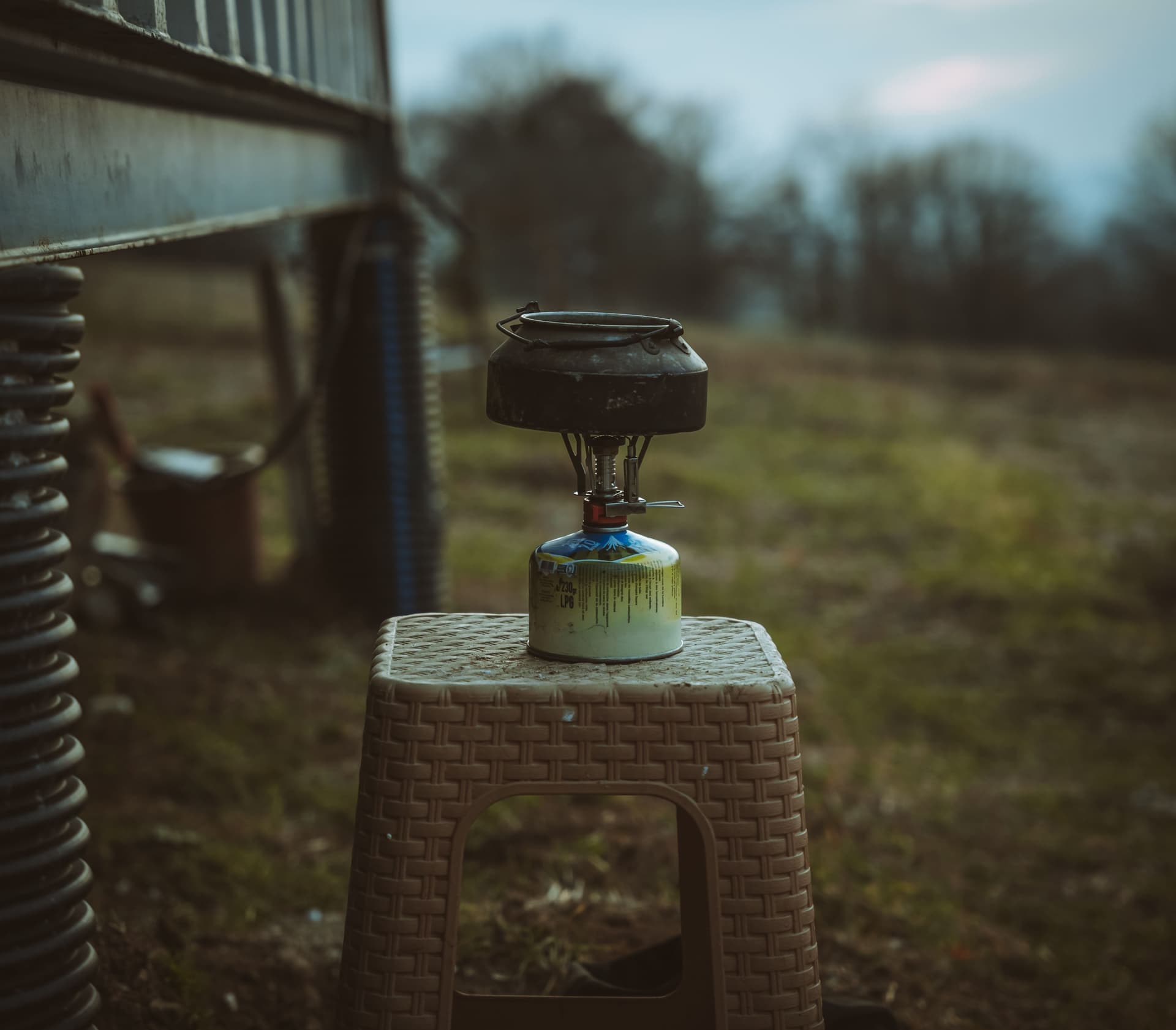
A breeze disturbs the pilot flame, the thermocouple cools within seconds, and the safety valve closes the gas. Nothing is broken — that is the interlock doing its job. Shelter the burner, keep the unit out of the direct wind path, and check the pilot is clean.
What is actually happening
Every gas patio heater has the same safety interlock, and understanding it makes the whole problem legible.
A small probe called a thermocouple sits in the pilot flame. When it is hot it generates a tiny voltage — a few tens of millivolts — and that voltage is what holds an electromagnetic gas valve open. It is why you have to hold the control knob down for twenty seconds when lighting: you are holding the valve open manually until the thermocouple is hot enough to take over.
The consequence is direct. Anything that cools the thermocouple closes the valve. A gust that lifts the pilot flame away for two seconds is enough. The heater does not fail gracefully and it is not supposed to: the alternative is unburnt propane flowing out of an unlit burner, which is exactly what the interlock exists to prevent.
Say this out loud once
A heater that goes out in the wind is a heater whose safety system works. If yours never went out in a breeze, that would be the thing to worry about.
The five things that keep it lit
- Shelter the windward side. By far the largest effect. A wall, a fence, a corner, or a screen. The flame does not need still air, it needs air that is not being torn past it.
- Point the access panel away from the wind. Most towers have an opening in the housing for lighting and for the cylinder. That gap is the route the wind takes to the pilot. Turning the unit 180 degrees is free and often solves it entirely.
- Clean the pilot assembly. A partly blocked pilot burns a smaller, weaker flame that is easier to disturb and heats the thermocouple less. Spiders build nests in gas orifices — this is a well-documented failure in outdoor gas appliances, not folklore.
- Check the thermocouple tip is in the flame. It gets knocked out of position during cleaning, moving, or a fall. It should sit in the upper part of the pilot flame. If it is beside it rather than in it, it will hold at full flame and drop out at the slightest disturbance.
- Run it a little higher for the first few minutes. A larger flame is harder to disturb. Once it is properly hot the whole assembly is more tolerant, and you can turn it back down.
If it also goes out on still evenings
Then wind is not your problem, and this is the wrong page. A heater that will not hold on a calm night has a fault, and the symptom tells you which one.
- Dies the instant you release the knob — the thermocouple is not generating enough voltage. The fault tree.
- Runs for a few minutes then stops — often a thermocouple that is marginal rather than dead, or a control valve going.
- Will not light at all since it fell — the tip-over switch has latched. How to reset it.
- Burns yellow and sooty rather than blue at the pilot — a combustion or airflow problem, and worth taking seriously rather than persevering with.
The tabletop caveat
Tabletop heaters are much worse at this and it is not a quality issue. A small burner at table height, with a screen guard rather than a deep housing, has far less protection than a tower's shielded assembly. On an exposed balcony a tabletop unit will go out repeatedly, and there is not much to be done about it beyond blocking the wind.
If a balcony is the space and it is windy, an electric infrared heater is the honest recommendation — there is no flame to disturb, and the radiant heat is unaffected by the air movement that is defeating the flame.
When to stop trying
There is a wind speed beyond which no amount of shelter keeps a patio heater useful, and it is lower than people expect. At that point the manual's own advice applies: shut it down, secure it, and go inside. Relighting a heater six times in an evening is not persistence, it is a sign the patio needed a windbreak or a different kind of heater.
Common questions
Why does my patio heater keep going out in the wind?
A gust disturbs the pilot flame, the thermocouple cools, and the safety valve shuts the gas off. That is the flame-failure interlock working correctly. Shelter the windward side, turn the access opening away from the wind, and check the pilot is clean and the thermocouple is sitting in the flame.
How do I keep a propane heater lit outside?
Shelter it — a wall, a corner or a screen does more than anything else. Then turn the housing so the lighting access faces away from the wind, clean the pilot assembly, and run it a little higher for the first few minutes so the flame is harder to disturb.
Is it bad if my patio heater keeps shutting off?
Not in itself. It means the flame-failure safety system is working. It becomes a fault rather than a nuisance when it happens on still evenings too, which usually points at the thermocouple.
Can wind damage a patio heater?
Yes, mainly by knocking it over rather than through the flame. A tall unit on a small base is vulnerable, and a fall can damage the hose, the regulator or a glass tube. Ballast the base and shut the heater down in high wind.
Read next
Patio heater will not stay lit
The ordered diagnostic for a heater that lights and dies, ending in the part that fixes it.
Patio windbreaks, and why they beat a bigger heater
Vinyl, mesh and curtains compared, with what enclosing a patio changes about your heater choice.
Resetting a patio heater tip-over switch
How the tip-over switch works, how to clear it, and what to check when it will not reset.
Electric patio heaters, and the ceiling nobody mentions
Four electric patio heaters compared on wattage, published IP rating and cost per hour.