Head to head
Chiminea vs fire pit
A chiminea is the only common outdoor fire design that aims its heat sideways on purpose. That is its whole argument, and it is a real one.
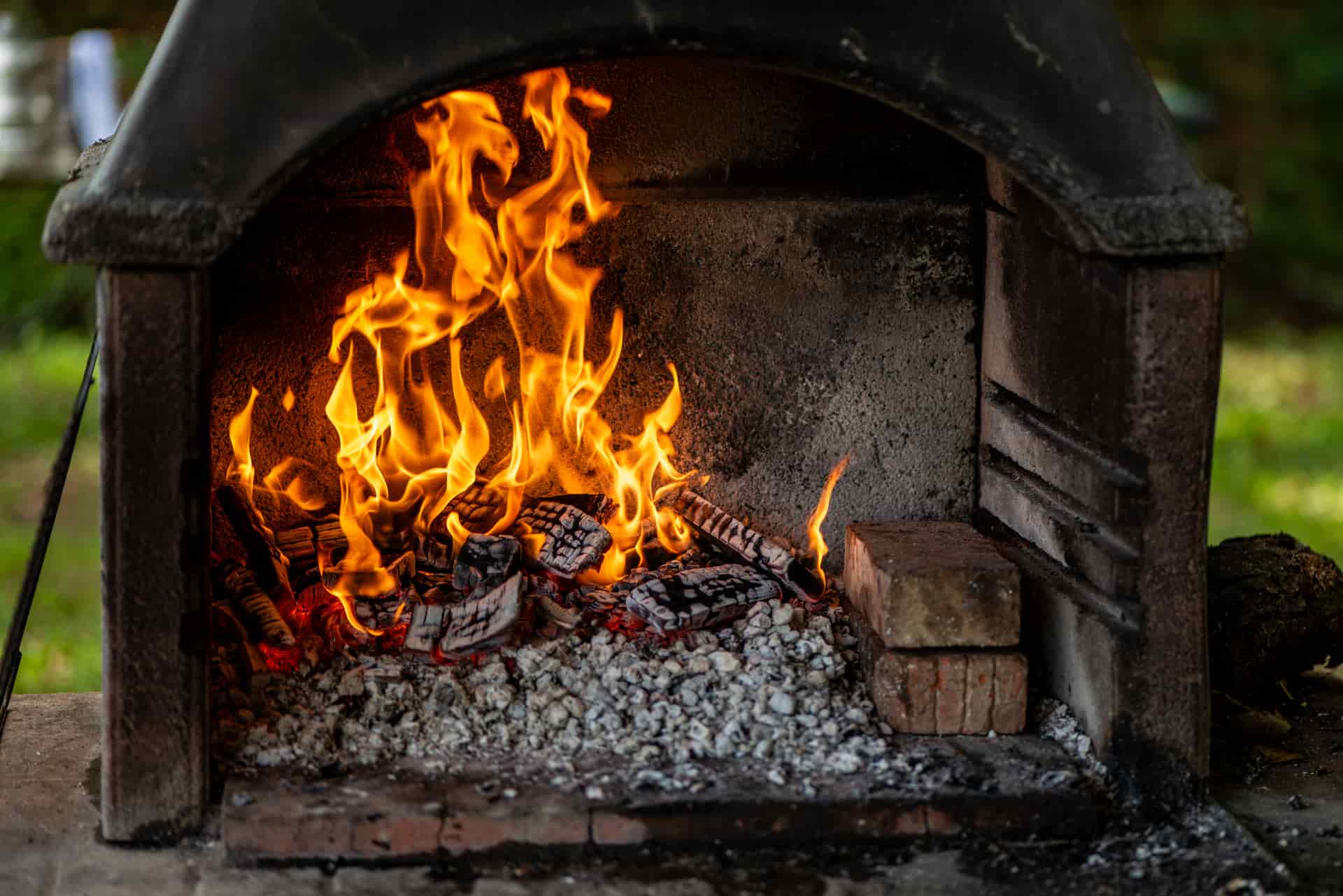
A chiminea directs heat forward through its front opening and vents smoke up its chimney, so it warms people in front of it and smokes them less. A fire pit radiates in all directions, so it warms a full circle. Chiminea for a seating group on one side; fire pit for a ring.
The design difference
A chiminea is a fire in a chamber with two openings: a front mouth and a chimney. The chimney creates a draft that pulls air in the front and sends combustion products up, and the chamber walls heat up and radiate forward through the mouth.
That is genuinely different from every other product in this section. An open fire pit radiates in all directions and loses most of its output upward. A chiminea's chamber directs a meaningful share of the radiant heat out of the front, which means the people sitting in front of it receive more of the fire than they would from an open bowl burning the same wood.
The chimney does a second useful thing: it takes the smoke up and away rather than letting it drift across the seating. Anyone who has sat downwind of an open fire pit for an evening will recognize why that matters.
The comparison
| Chiminea | Open fire pit | |
|---|---|---|
| Heat direction | Forward, through the mouth | All directions, mostly up |
| Who it warms | People in front of it | A full circle around it |
| Smoke | Drafted up the chimney, away from seating | Drifts wherever the wind takes it |
| In wind | The chamber shelters the fire well | Flame survives; embers scatter |
| Ember risk | Low — the fire is enclosed | Higher; open sparks |
| Fuel | Small logs only; the chamber is narrow | Whatever fits |
| Cooking | Awkward | Easy with a grate |
| Durability | Clay cracks with thermal shock; cast iron rusts | Steel is straightforward |
Where a chiminea genuinely wins
- A seating group along one side. A bench against a wall, or chairs facing a view. The chiminea points at them and everyone gets the heat.
- A small patio. The enclosed fire and the drafted smoke make a chiminea far more tolerable in a confined space than an open pit.
- Windy evenings. The chamber shelters the fire in a way an open bowl does not, which makes a chiminea one of the more reliable things to light in a breeze.
- Neighbors close by. Smoke that goes up rather than sideways is the difference between a pleasant evening and a conversation over the fence.
Where the fire pit wins
- A ring of chairs. A chiminea has a front and a back; the people behind it get nothing. A pit has no back.
- Bigger fires. A chiminea's chamber limits the fuel. If you want a substantial fire, an open pit is what takes it.
- Cooking. A grate over an open pit works; a chiminea's geometry does not lend itself to it.
- Durability. Steel pits are simple objects. Clay chimineas crack from thermal shock, especially if they are rained on hot or left to freeze wet.
Quick picks
Ranked for fit, not for hype. Output is the maker’s published figure; reach is computed from it or from the maker’s own radius claim, and the table says which. Tap a row for the full write-up, or go straight to the listing.
| # | Product | Best for | Output | Reach | Price |
|---|---|---|---|---|---|
| 1 |  Solo Stove Bonfire 2.0The secondary-burn design does genuinely reduce smoke, and a wood fire puts out more heat than any patio heater here. It heats a circle of people, not a patio, and those are different products. | Heat you gather around | Not published | Not published | $349.99 · Check on Amazon |
| 2 |  Outland Firebowl 89358,000 BTU is more rated input than any patio heater in this registry, in a 19 in bowl you can carry. The catch is that an open bowl throws most of that straight up. | The highest published output here | 58,000 BTU | 2,900 sq ft | $159.99 · Check on Amazon |
Reach marked “claimed” is the maker’s own published figure. Reach without that label is ours, computed from published output at 20 BTU per square foot for an open patio. Neither is a measurement we took.
Top pick · Heat you gather around
Solo Stove Bonfire 2.0 Smokeless Fire Pit with Stand, 19.5 in
The secondary-burn design does genuinely reduce smoke, and a wood fire puts out more heat than any patio heater here. It heats a circle of people, not a patio, and those are different products.
- Fuel
- Wood
- Output
- Not published
- Reach (computed)
- Not published
- Cost per hour
- n/a
What works
- A wood fire's output is not comparable to a patio heater's — this is the reason the heater versus fire pit question resolves the way it does
- The stand is not an accessory, it is the thing that makes it usable on a surface. Buy the version that includes it
- Removable ash pan turns cleanup from a chore into a step, which is the difference between using it weekly and using it twice
What does not
- Smokeless is a comparison, not an absolute. It smokes noticeably less than an open pit; it does not produce no smoke, especially while it comes up to temperature
- The heat is radiant and low — it warms a ring of people standing close, and does nothing for anyone six feet back
- Even with the stand, this needs a heat barrier on a wood deck. The stand reduces transferred heat, it does not eliminate it
| Published specification | |
|---|---|
| Diameter | 19.5 in |
| Height | 16.75 in |
| Weight | 21.75 lb |
| Material | 304 stainless steel, Gunmetal finish |
| Maker's capacity | Suits 4 to 6 people |
| Ash handling | Removable ash pan under the base plate |
| Maker’s coverage claim | None published — the reach figure above is ours |
| Safety listing | No safety listing applies; this is a wood-burning appliance, not a gas one |
Who it is for
A group that gathers around the fire rather than sitting in a spread-out seating arrangement, on a patio where wood smoke is not a neighbor problem.
What it is not for
Anywhere with a roof — this is an open wood fire and belongs under open sky. Also not for anyone who wants heat at the flick of a switch.
2 · The highest published output here
Outland Firebowl 893 Deluxe Portable Propane Fire Pit, 19 in
58,000 BTU is more rated input than any patio heater in this registry, in a 19 in bowl you can carry. The catch is that an open bowl throws most of that straight up.
- Fuel
- Propane
- Output
- 58,000 BTU/h
- Reach (computed)
- 2,900 sq ft · 30.4 ft radius
- Cost per hour
- $1.70
What works
- 58,000 BTU with no wood, no smoke and no ash — it is on in ten seconds and off in one
- Propane means it is legal in most fire-ban conditions where wood is not, though check your own county before assuming
- Portable enough to take camping, which no other heat source here manages
What does not
- An open bowl is a chimney. The rated input is the highest here and the useful radiant fraction is among the lowest — do not read 58,000 BTU as 58,000 BTU of warmth on people
- At full output a 20 lb cylinder empties fast. The runtime table has the exact figure
- The hose runs across the ground to the cylinder, which is a trip hazard and a design compromise the fire tables avoid
| Published specification | |
|---|---|
| Rated input | 58,000 BTU/h |
| Diameter | 19 in |
| Fuel | 20 lb cylinder via the included hose and regulator |
| Included | Cover and carry kit on the Deluxe |
| Fill | Lava rock included |
| Maker’s coverage claim | None published — the reach figure above is ours |
| Safety listing | CSA certified per the maker's published product data |
Who it is for
Somewhere that needs instant, smokeless flame on demand, including places where a wood fire is not permitted.
What it is not for
Efficient heating, decks without a [heat barrier](/fire-pits/deck-safe), and anywhere with anything overhead.
Sources for this entry
The clay problem, which is worth knowing before buying
Traditional chimineas are clay, and clay cracks. The failure mode is thermal shock — a hot chiminea meeting cold rain, or moisture trapped in the clay freezing and expanding over winter.
Two habits prevent nearly all of it. Build up the fire gradually rather than lighting a large one in a cold chiminea, and keep it dry when it is not in use — covered, and off the ground so it does not draw up moisture. A clay chiminea left uncovered through a freezing winter is a chiminea in pieces by March.
Cast iron and steel versions avoid the cracking entirely and rust instead, which is slower and more manageable. If the chiminea is going to live outdoors year-round, metal is the practical choice.
Both compared with a heater
Worth remembering that both of these lose to a patio heater at warming an area, for the same reason: they are fires, and a fire warms whoever is close and facing it. A chiminea's directional advantage narrows that gap somewhat and does not close it.
If the goal is a patio that is usable rather than a fire to sit around, the head-to-head against a heater is the more relevant comparison, and the heater picks are here.
Common questions
Is a chiminea or a fire pit better for heat?
A chiminea, for people sitting in front of it, because the chamber directs radiant heat forward through the mouth instead of losing it upward. A fire pit is better for a ring of people, because a chiminea has a back and the people behind it get nothing.
What are the pros and cons of a chiminea vs a fire pit?
A chiminea directs heat forward, drafts smoke up and away, and shelters the fire in wind — but it only warms one side, takes smaller fuel, and clay ones crack from thermal shock. A fire pit warms a full circle, takes bigger fires and cooks well, but smokes in whatever direction the wind chooses.
Do chimineas give off more heat than fire pits?
Not more total heat — that depends on the fuel — but more of it in one direction. The chamber and the mouth act as a crude reflector, so someone sitting in front receives a larger share of the fire than they would from an open bowl.
Why do clay chimineas crack?
Thermal shock. A hot chiminea meeting cold rain, or trapped moisture freezing over winter. Build fires up gradually rather than lighting large ones in a cold chiminea, and keep it covered and off the ground when not in use.
Read next
The best fire pits for heat
Fire pits ranked on delivered warmth rather than rated output, with runtime and cost computed.
Patio heater vs fire pit
Output, direction, cost, wind and permitted use compared, with exits to both catalogs.
Smokeless fire pits, honestly described
How secondary burn works, what it does not do, and what really determines smoke.
Wind & Weather
Which heaters survive a breeze, how to stop one blowing over, and why a windbreak beats a bigger heater.