Fire pits
The best fire pits for heat
Ranked on warmth that reaches a person sitting four feet away, which is a different ranking from the one you get by comparing rated outputs.
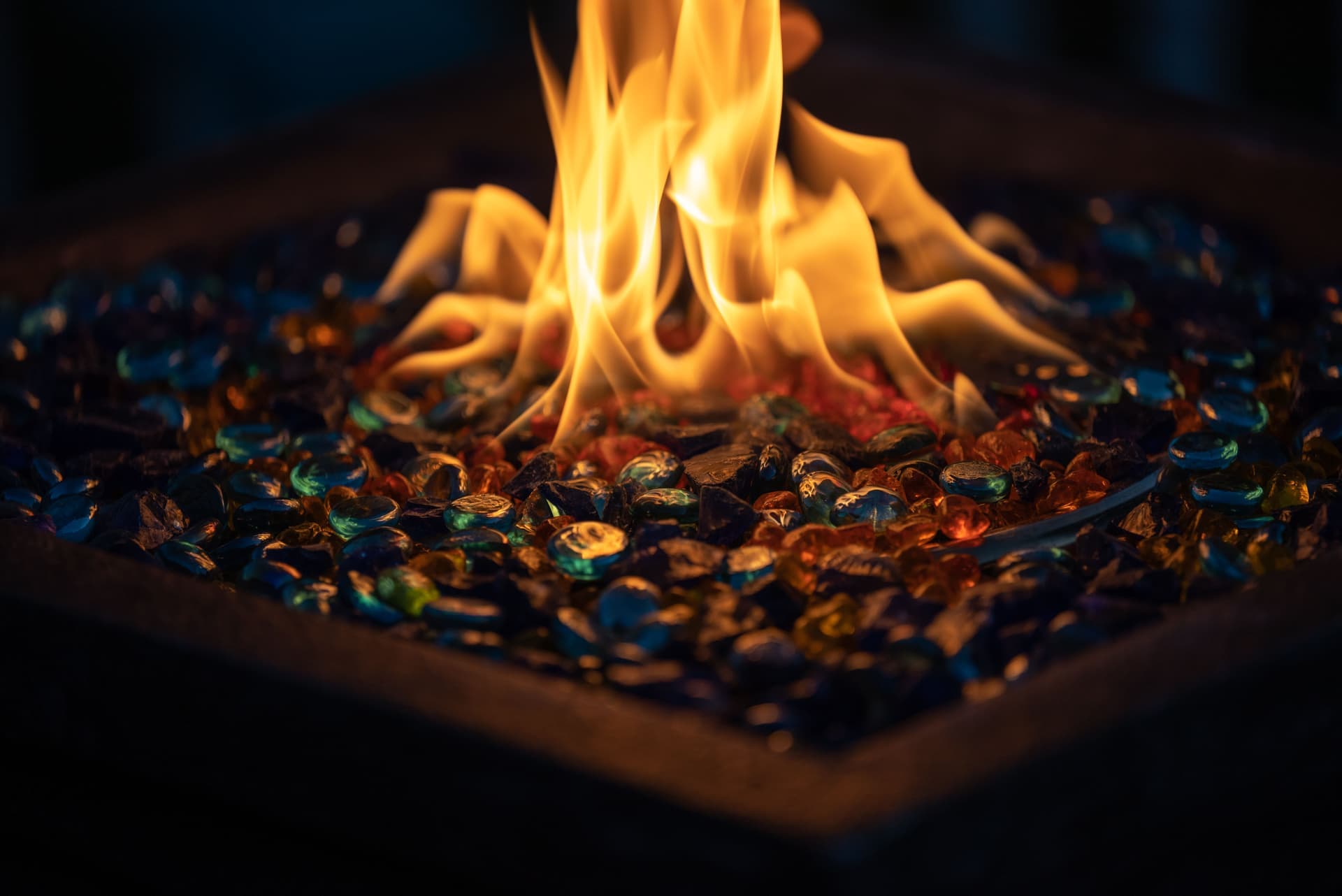
A wood pit with a secondary-burn design delivers the most warmth, because wood produces far more energy than any gas bowl. A 58,000 BTU propane bowl gives the most instant, smokeless heat. A fire table gives the least heat and the most furniture.
How this list is ranked
Not on rated output, because rated output on a fire pit is close to meaningless for comparison. An open bowl and a patio heater at the same rating do not deliver remotely similar amounts of warmth to a person, and neither do two fire pits of different shapes.
What we can assess honestly is the combination of raw energy available, how much of it goes sideways rather than up, and how close people can reasonably sit. Wood beats gas on the first by a wide margin. A deeper bowl with a secondary burn beats a shallow one on the second. And a stand plus a mat is what determines the third on a deck.
Quick picks
Ranked for fit, not for hype. Output is the maker’s published figure; reach is computed from it or from the maker’s own radius claim, and the table says which. Tap a row for the full write-up, or go straight to the listing.
| # | Product | Best for | Output | Reach | Price |
|---|---|---|---|---|---|
| 1 |  Solo Stove Bonfire 2.0The secondary-burn design does genuinely reduce smoke, and a wood fire puts out more heat than any patio heater here. It heats a circle of people, not a patio, and those are different products. | Heat you gather around | Not published | Not published | $349.99 · Check on Amazon |
| 2 |  Outland Firebowl 89358,000 BTU is more rated input than any patio heater in this registry, in a 19 in bowl you can carry. The catch is that an open bowl throws most of that straight up. | The highest published output here | 58,000 BTU | 2,900 sq ft | $159.99 · Check on Amazon |
| 3 |  Shintenchi fire table50,000 BTU of table-height flame plus somewhere to put a drink, and a lid that turns it back into a table when it is out. As heat it loses to a tower; as a reason to stay outside until eleven it beats one. | A table that is also the fire | 50,000 BTU | 2,500 sq ft | $199.99 · Check on Amazon |
Reach marked “claimed” is the maker’s own published figure. Reach without that label is ours, computed from published output at 20 BTU per square foot for an open patio. Neither is a measurement we took.
Top pick · Heat you gather around
Solo Stove Bonfire 2.0 Smokeless Fire Pit with Stand, 19.5 in
The secondary-burn design does genuinely reduce smoke, and a wood fire puts out more heat than any patio heater here. It heats a circle of people, not a patio, and those are different products.
- Fuel
- Wood
- Output
- Not published
- Reach (computed)
- Not published
- Cost per hour
- n/a
What works
- A wood fire's output is not comparable to a patio heater's — this is the reason the heater versus fire pit question resolves the way it does
- The stand is not an accessory, it is the thing that makes it usable on a surface. Buy the version that includes it
- Removable ash pan turns cleanup from a chore into a step, which is the difference between using it weekly and using it twice
What does not
- Smokeless is a comparison, not an absolute. It smokes noticeably less than an open pit; it does not produce no smoke, especially while it comes up to temperature
- The heat is radiant and low — it warms a ring of people standing close, and does nothing for anyone six feet back
- Even with the stand, this needs a heat barrier on a wood deck. The stand reduces transferred heat, it does not eliminate it
| Published specification | |
|---|---|
| Diameter | 19.5 in |
| Height | 16.75 in |
| Weight | 21.75 lb |
| Material | 304 stainless steel, Gunmetal finish |
| Maker's capacity | Suits 4 to 6 people |
| Ash handling | Removable ash pan under the base plate |
| Maker’s coverage claim | None published — the reach figure above is ours |
| Safety listing | No safety listing applies; this is a wood-burning appliance, not a gas one |
Who it is for
A group that gathers around the fire rather than sitting in a spread-out seating arrangement, on a patio where wood smoke is not a neighbor problem.
What it is not for
Anywhere with a roof — this is an open wood fire and belongs under open sky. Also not for anyone who wants heat at the flick of a switch.
2 · The highest published output here
Outland Firebowl 893 Deluxe Portable Propane Fire Pit, 19 in
58,000 BTU is more rated input than any patio heater in this registry, in a 19 in bowl you can carry. The catch is that an open bowl throws most of that straight up.
- Fuel
- Propane
- Output
- 58,000 BTU/h
- Reach (computed)
- 2,900 sq ft · 30.4 ft radius
- Cost per hour
- $1.70
What works
- 58,000 BTU with no wood, no smoke and no ash — it is on in ten seconds and off in one
- Propane means it is legal in most fire-ban conditions where wood is not, though check your own county before assuming
- Portable enough to take camping, which no other heat source here manages
What does not
- An open bowl is a chimney. The rated input is the highest here and the useful radiant fraction is among the lowest — do not read 58,000 BTU as 58,000 BTU of warmth on people
- At full output a 20 lb cylinder empties fast. The runtime table has the exact figure
- The hose runs across the ground to the cylinder, which is a trip hazard and a design compromise the fire tables avoid
| Published specification | |
|---|---|
| Rated input | 58,000 BTU/h |
| Diameter | 19 in |
| Fuel | 20 lb cylinder via the included hose and regulator |
| Included | Cover and carry kit on the Deluxe |
| Fill | Lava rock included |
| Maker’s coverage claim | None published — the reach figure above is ours |
| Safety listing | CSA certified per the maker's published product data |
Who it is for
Somewhere that needs instant, smokeless flame on demand, including places where a wood fire is not permitted.
What it is not for
Efficient heating, decks without a [heat barrier](/fire-pits/deck-safe), and anywhere with anything overhead.
Sources for this entry
3 · A table that is also the fire
Shintenchi 43 in Rectangular Propane Fire Pit Table, 50,000 BTU
50,000 BTU of table-height flame plus somewhere to put a drink, and a lid that turns it back into a table when it is out. As heat it loses to a tower; as a reason to stay outside until eleven it beats one.
- Fuel
- Propane
- Output
- 50,000 BTU/h
- Reach (computed)
- 2,500 sq ft · 28.2 ft radius
- Cost per hour
- $1.46
What works
- Concealing the cylinder inside the base is the whole design argument — no hose across the patio, no cylinder to look at
- A lid is included, which is what makes a fire table usable as a table for the other six days of the week and keeps rain out of the burner
- CSA certification is published, which on a gas appliance is the kind of claim you can actually look up — plenty of fire tables in this price band state nothing
- 50,000 BTU at table height puts heat where hands and torsos are, which is more usefully placed than a tower's overhead radiance
What does not
- Fire tables are the worst heat-per-dollar in this category and it is not close. You are buying furniture with a flame in it
- At 50,000 BTU/h a 20 lb cylinder empties faster than on a mid-size tower — run the runtime arithmetic before assuming an evening
- The flame sits in an open bowl and a stiff breeze is a real problem for it
- No coverage figure is published, so any reach number for it is ours rather than the maker's
| Published specification | |
|---|---|
| Rated input | 50,000 BTU/h |
| Size | 43 in rectangle |
| Construction | Steel |
| Fuel | 20 lb cylinder, concealed in the base |
| Included | Lid and lava rock |
| Certification | CSA certified per the listing |
| Maker’s coverage claim | None published — the reach figure above is ours |
| Safety listing | CSA certified per the listing |
Who it is for
A seating arrangement that already has a coffee table in the middle of it, where the fire is the point rather than the heating strategy.
What it is not for
Heating an area. If the goal is to make a cold patio usable, [a heater does that better for less](/fire-pits/heater-vs-fire-pit).
What we would skip
A list with no losers is a list nobody edited. These are the choices we would actively steer you away from, and why.
Buying a fire table for its heat
A fire table is the poorest heat per dollar in this whole category and it is not close. 50,000 BTU at table height costs about $1.46 an hour and warms hands. Buy one because you want furniture with a flame in it — that is a good reason — and not because you want a warm patio.
Small tabletop or bowl pits sold on looks
Under about 19 inches of diameter, a fire pit is a candle. It looks correct in photographs and produces very little usable warmth. If heat is the goal, size is the specification.
Any fire pit if your patio is covered
An open flame under a roof, pergola or awning is out regardless of clearance. This eliminates fire pits entirely for covered spaces, and a mounted heater is the answer instead.
What each fuel actually gives you
| Wood | Propane | |
|---|---|---|
| Energy available | Far higher; limited by how much you burn | Fixed by the rating, 35,000 to 58,000 BTU/h |
| Time to useful heat | 10 to 20 minutes | Seconds |
| Smoke | Reduced by secondary burn, never eliminated | None |
| Ash and cleanup | Yes, every time | None |
| Fire bans | Commonly restricted | Frequently permitted when wood is not |
| Running cost | Varies too much by region to publish | $1.02 to $1.70 per hour |
| Turning it off | It burns down in its own time | One valve |
The runtime arithmetic for gas pits
| Burn rate | 15 lb cylinder | 20 lb cylinder | 30 lb cylinder | 40 lb cylinder |
|---|---|---|---|---|
| 35,000 BTU/h | 9.2 h | 12.3 h | 18.5 h | 24.6 h |
| 40,000 BTU/h | 8.1 h | 10.8 h | 16.2 h | 21.6 h |
| 50,000 BTU/h | 6.5 h | 8.6 h | 12.9 h | 17.2 h |
| 58,000 BTU/h | 5.6 h | 7.4 h | 11.2 h | 14.9 h |
Cylinder energy = pounds ÷ 4.24 lb per gallon x 91,420 BTU per gallon, divided by the burn rate. A 20 lb cylinder therefore holds 4.7 gallons and 431,226 BTU. Full output only — turn it down and every figure here stretches proportionally.
Worth noting how short those are. A 58,000 BTU bowl empties a 20 lb cylinder in about 7.4 hours — two evenings. A fire table at 50,000 BTU gets about 8.6. These are the same numbers patio heaters face, and they surprise fire pit buyers more because a fire pit feels less like an appliance.
The most-recommended propane pit on this list has its own close reading: the Outland Firebowl 893 review covers the gap between its 58,000 BTU rating and the warmth that actually reaches people, and the cost per hour.
Whichever of these ends up on a deck, the barrier underneath is a separate purchase and an easy one to get wrong: fire pit deck protectors has the sizing arithmetic and the picks.
About smokeless
Secondary-burn fire pits — the double-wall designs that draw air up between the walls and inject it above the fire — genuinely do reduce smoke. The mechanism is real: preheated air burns off combustion products that would otherwise leave as smoke.
It is a comparison, not an absolute. They smoke noticeably less than an open pit, and they do smoke, particularly while coming up to temperature and if the wood is damp. The marketing word is doing some work. The full treatment is here.
How we picked
- Ranked on heat that reaches a seated person, not on rated input. An open bowl's rating overstates its usefulness and we say so on the card rather than in a footnote.
- Runtime and cost per hour computed for every gas unit from its published rating and the energy prices this site names.
- Wood deliberately not priced. Firewood cost varies too much by region and by whether you bought or cut it for a national figure to mean anything.
- Deck compatibility recorded, because it eliminates options for a large share of readers before anything else does.
- Fire-ban behavior noted, since propane is frequently permitted when wood is not.
What we did not do
Everyone in this category says they tested twenty heaters. We have not tested any, and we say so. What we do instead: compile the published specs, compute the electrical and gas load from them, cite the maker’s own manual, and show the arithmetic so you can check it. The full method, including how to challenge a figure.
Before you buy any of these
Check what is above your patio and what is under it. Anything overhead rules a fire pit out entirely. A wood or composite deck requires a rated heat barrier, and on composite that is about heat marking rather than fire. Deck-safe fire pits covers both.
Common questions
What type of fire pit is best for heat?
A wood-burning pit with a secondary-burn design. Wood produces far more energy than any gas bowl, and the double-wall design that reduces smoke also raises the burn temperature. Propane is the better choice for instant heat, no cleanup and places with wood restrictions.
What is the best fire pit for a patio?
A 19-inch stainless wood pit on a stand suits most open patios: enough size to produce real warmth, portable, and the stand reduces heat reaching the surface. On a covered patio no fire pit is appropriate at all.
Are fire pits good at heating?
At heating people gathered around them, yes. At heating a patio, no — most of an open fire's output rises, so only those close in and facing it feel much. A patio heater with a reflector spreads warmth across an area instead.
How long does a propane fire pit run on a 20 lb tank?
About 7.4 hours at 58,000 BTU/h and about 12.3 at 35,000. A 20 lb cylinder holds roughly 431,500 BTU, so runtime is that divided by the rated burn rate.
Sources
Read next
Patio heater vs fire pit
Output, direction, cost, wind and permitted use compared, with exits to both catalogs.
Deck-safe fire pits
The stand-plus-barrier combination that protects decking, and the pits that suit it.
Smokeless fire pits, honestly described
How secondary burn works, what it does not do, and what really determines smoke.
How long a propane cylinder actually lasts
The cylinder arithmetic in full: energy content, burn rate, and every size from 15 to 40 lb.
Fire table vs fire pit
What a fire table costs, what it heats, and the patio where it is genuinely the right buy.
Solo Stove Bonfire 2.0 review
How the secondary burn works, what smokeless really means, what wood costs, and when a propane pit is the better buy.
Are fire pits worth it?
What a fire pit actually delivers, what it costs to feed, and the three cases where the answer is no.
Outland Firebowl 893 review
What 58,000 BTU really delivers from an open bowl, the cost per hour, using it on a deck, and the fire-ban claim in context.
Fire pit deck protectors
Mats judged on published thickness and stated limits, plus how to size one and why leg height matters more than the rating.
Shintenchi 43 in fire table review
What the concealed cylinder and included lid are worth, the cost per hour, and the heat-per-dollar problem.