Fault tree
Patio heater will not stay lit
If it dies the instant you let go of the control knob, you already know what is wrong. Here is the sequence, in order, ending in a part that costs very little.
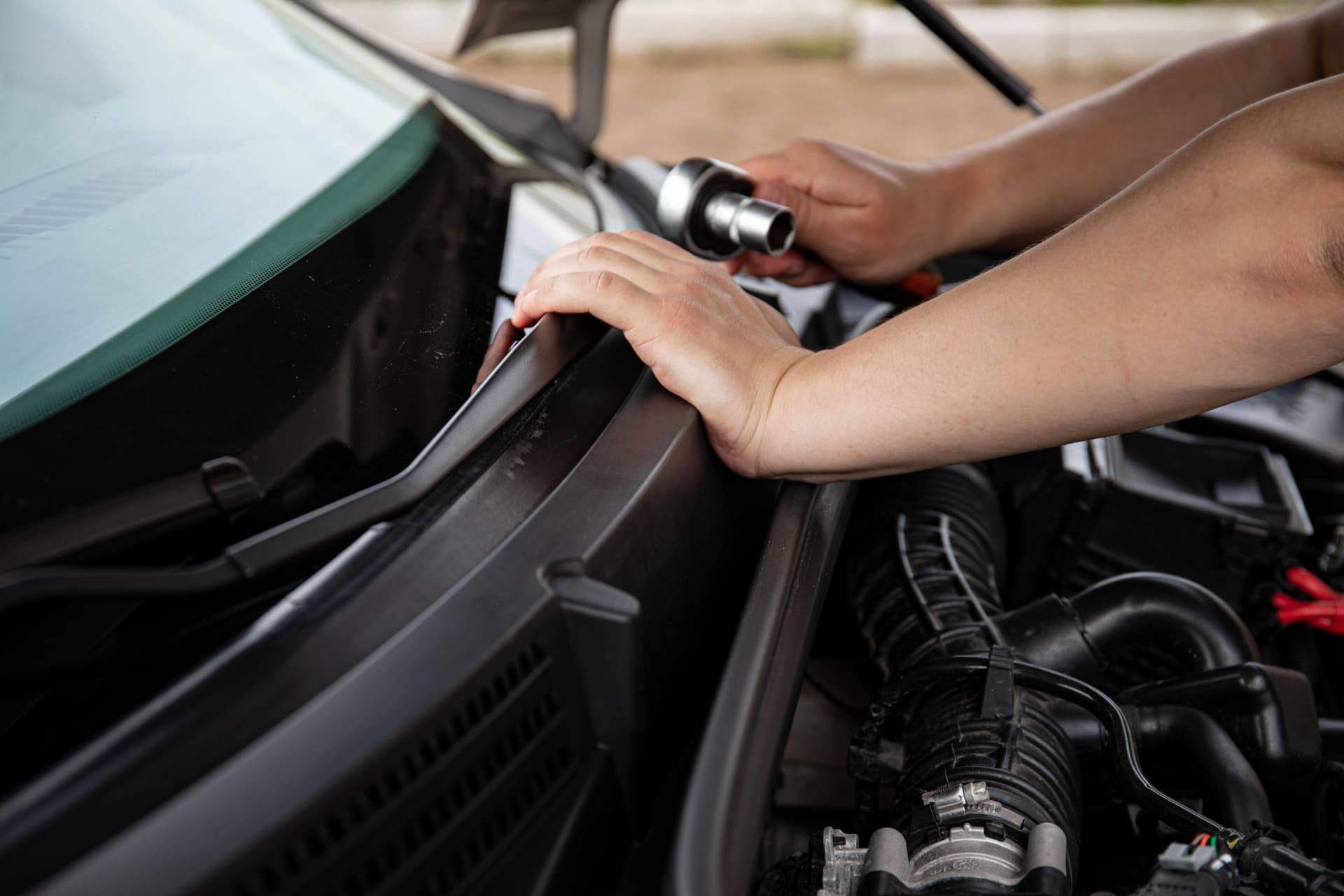
If it lights and goes out the moment you release the control knob, the thermocouple is not generating enough voltage to hold the safety valve open. That is the commonest fault in the category, and the part is inexpensive. Clean it first; replace it if cleaning does not hold.
Understand the interlock and the diagnosis is obvious
Every gas patio heater has the same safety system. A small probe called a thermocouple sits in the pilot flame. Heated, it generates a tiny voltage — a few tens of millivolts — and that voltage energizes an electromagnet that holds the gas safety valve open.
That is why you hold the control knob down for twenty seconds when lighting. You are holding the valve open mechanically while the thermocouple gets hot enough to take over. Release too early and the valve shuts, which is not a fault — that is the sequence working.
So a heater that lights and dies on release is telling you something precise: the thermocouple is not producing enough voltage. Soot on the tip, the tip sitting outside the flame, or simple age all cause it, and all three are cheap to address.
The fault tree, in order
- Is there gas? Weigh the cylinder or run warm water down the side and feel for the level. An almost-empty cylinder in cold weather can supply the pilot and not the main burner. The runtime arithmetic tells you how long yours should have lasted.
- Did you hold the knob long enough? Twenty to thirty seconds, not ten. This is the most common non-fault in the category. Try again properly before opening anything.
- Has it been knocked over? Then it is the tip-over switch, not the thermocouple, and the symptom is usually no pilot at all rather than a pilot that dies. How to reset it.
- Is there wind? If it only happens in a breeze and holds on calm evenings, nothing is broken. Shelter and placement are the fix.
- Is the pilot flame small, yellow or lifting? A weak pilot cannot heat a thermocouple properly. Clean the pilot orifice — spider nests in gas orifices are a documented failure in outdoor gas appliances, not a folk story.
- Is the thermocouple tip actually in the flame? It should sit in the upper part of the pilot flame, engulfed. Knocked sideways during cleaning or a fall, it will hold at full flame and drop out at the slightest disturbance. Bend it gently back.
- Clean the thermocouple tip. Fine abrasive paper or steel wool on the tip, gently. Soot is an insulator and a sooted tip runs cool.
- Replace the thermocouple. If steps five to seven do not hold it, the part has aged out. This is the answer in the large majority of cases that get this far.
Where to stop
Cleaning and replacing a thermocouple is an owner job with an adjustable wrench. A gas smell with the cylinder valve closed, a cracked or perished hose, a damaged regulator, or anything requiring work on a fixed gas line is not. Close the valve, leave the heater outside, and call a gas technician.
Replacing a thermocouple
- Close the cylinder valve and disconnect the cylinder. Not negotiable, not a step to speed through.
- Open the access panel and find the thermocouple: a thin copper tube running from the pilot assembly back to the control valve, with a nut where it connects.
- Note how the tip is positioned in the pilot flame before removing anything. A photograph on your phone takes two seconds and saves ten minutes.
- Undo the nut at the valve end and free the tip from its bracket at the pilot.
- Fit the new one in the same position, tighten the nut firmly by hand plus a quarter turn with a wrench. Overtightening damages the fitting and does not improve the seal.
- Reconnect the cylinder and leak-test. Soapy water on every joint, valve open, look for bubbles. Every time.
- Relight, holding the knob a full twenty to thirty seconds.
Quick picks
Ranked for fit, not for hype. Output is the maker’s published figure; reach is computed from it or from the maker’s own radius claim, and the table says which. Tap a row for the full write-up, or go straight to the listing.
| # | Product | Best for | Output | Reach | Price |
|---|---|---|---|---|---|
| 1 | 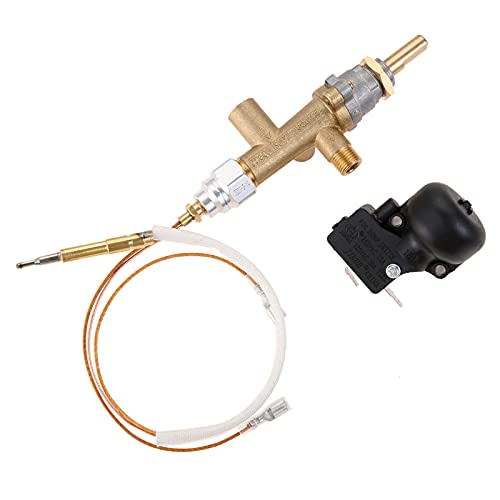 Thermocouple repair kitThe single most common patio-heater failure is a tired thermocouple, and the symptom is precise: it lights, you release the knob, it goes out. This kit is the fix, and it is cheap. | A heater that lights and dies | n/a | n/a | $19.98 · Check on Amazon |
Reach marked “claimed” is the maker’s own published figure. Reach without that label is ours, computed from published output at 20 BTU per square foot for an open patio. Neither is a measurement we took.
Top pick · A heater that lights and dies
Propane Patio Heater Repair Kit — Thermocouple, Dump Switch and Control Valve
The single most common patio-heater failure is a tired thermocouple, and the symptom is precise: it lights, you release the knob, it goes out. This kit is the fix, and it is cheap.
- Fuel
- Accessory
- Output
- Not published
- Reach (computed)
- Not published
- Cost per hour
- n/a
What works
- It matches the exact symptom in our fault tree: flame holds while the knob is pressed, dies when released. That is a thermocouple, nearly every time
- Including the dump switch is sensible, because a heater that has fallen over often has both problems at once
- The parts cost a small fraction of a new heater, and this is the repair that keeps a five-year-old tower going
What does not
- Check the fit before ordering. The gas train is broadly standard across cheap towers but not universal — compare your existing part to the listing photographs
- Working on a gas appliance means a leak test with soapy water afterwards, every time, without exception
- If you are not comfortable disconnecting a gas line, this is the point to stop and call someone
| Published specification | |
|---|---|
| Contents | Thermocouple sensor, tilt dump switch, main control valve with pilot port |
| Fits | Common propane patio heaters using the standard gas train |
| Tools | Adjustable wrench; no gas fitting beyond the cylinder connection |
| Maker’s coverage claim | None published — the reach figure above is ours |
| Safety listing | Not applicable — replacement gas-train parts, not an appliance |
Who it is for
Anyone whose propane heater lights but will not stay lit, and who owns an adjustable wrench.
What it is not for
Electric heaters, which fail for [entirely different reasons](/troubleshooting/electric-not-working).
Sources for this entry
Other symptoms, and what they mean instead
| Symptom | Most likely cause | What to do |
|---|---|---|
| Pilot lights, holds, main burner will not ignite | Blocked main orifice, or a failing control valve | Clean the orifice. If that fails, the valve is the part. |
| Runs for a few minutes then dies | A marginal thermocouple, or a valve going | Replace the thermocouple first — it is far cheaper and far likelier. |
| No pilot at all, no spark | Igniter, or the tip-over switch latched | Try lighting with a match. If it lights, the igniter is the fault. If not, the tip-over switch. |
| Yellow, sooty flame rather than blue at the pilot | Airflow or combustion problem | Do not persevere with it. Clean thoroughly; if it persists, get it looked at. |
| Lights fine but the patio is not warm | Nothing is broken | Sizing or exposure. |
If the fault tree ends somewhere expensive, or the frame is showing its age, repair or replace has the three questions that decide it and what each common fix actually costs against a new heater.
Preventing the next one
Thermocouples fail from soot, corrosion and age, and the biggest accelerant is a heater standing outdoors uncovered for eight months of the year. Cover it when it is cold and not in use, disconnect the cylinder for the off-season, and clean the pilot assembly once a season. The full storage routine.
The other preventable cause is falls. A heater that goes over stresses the whole gas train, and a fallen heater often needs a thermocouple and a tip-over switch. Ballast the base.
Common questions
Why does my patio heater not stay lit?
If it dies the instant you release the control knob, the thermocouple is not producing enough voltage to hold the gas safety valve open. Clean the tip and check it is sitting in the pilot flame; if that does not hold, replace it. The part is inexpensive.
Why does my patio heater keep going out after a few minutes?
Usually a thermocouple that is marginal rather than dead — it holds while very hot and drops out as conditions change. Occasionally a failing control valve. Replace the thermocouple first: it is much cheaper and much more likely.
How long should I hold the knob down on a patio heater?
Twenty to thirty seconds, and this is the most common non-fault in the category. You are holding the gas valve open manually while the thermocouple heats up enough to hold it electrically. Ten seconds is often not enough.
How much does a patio heater thermocouple cost?
It is one of the cheapest parts on the heater and is commonly sold in a kit with a tip-over switch and a control valve — convenient, because a heater that has fallen over often needs more than one of them.
Can I clean a thermocouple instead of replacing it?
Yes, and it is worth trying first. Fine abrasive paper or steel wool on the tip removes soot, which is an insulator and makes the probe run cool. If cleaning does not hold it, the part has aged out and needs replacing.
Read next
Patio heater replacement parts
The four parts that account for nearly every dead heater, with symptoms and measuring advice.
Resetting a patio heater tip-over switch
How the tip-over switch works, how to clear it, and what to check when it will not reset.
How to keep a propane heater lit
The flame-failure sequence explained, and the five things that keep a burner alight in a breeze.
Storing a patio heater for the off-season
The off-season routine, where the cylinder goes, and which cover shape fits which heater.
How long a propane cylinder actually lasts
The cylinder arithmetic in full: energy content, burn rate, and every size from 15 to 40 lb.
Repair or replace your patio heater?
Which faults are a cheap part, which mean the heater is finished, and the three questions that decide it.