Deep review
Solo Stove Bonfire 2.0 review
The design does what it says. The word smokeless is doing more work than most buyers realize, and the heat is a different shape from what a patio heater gives you.
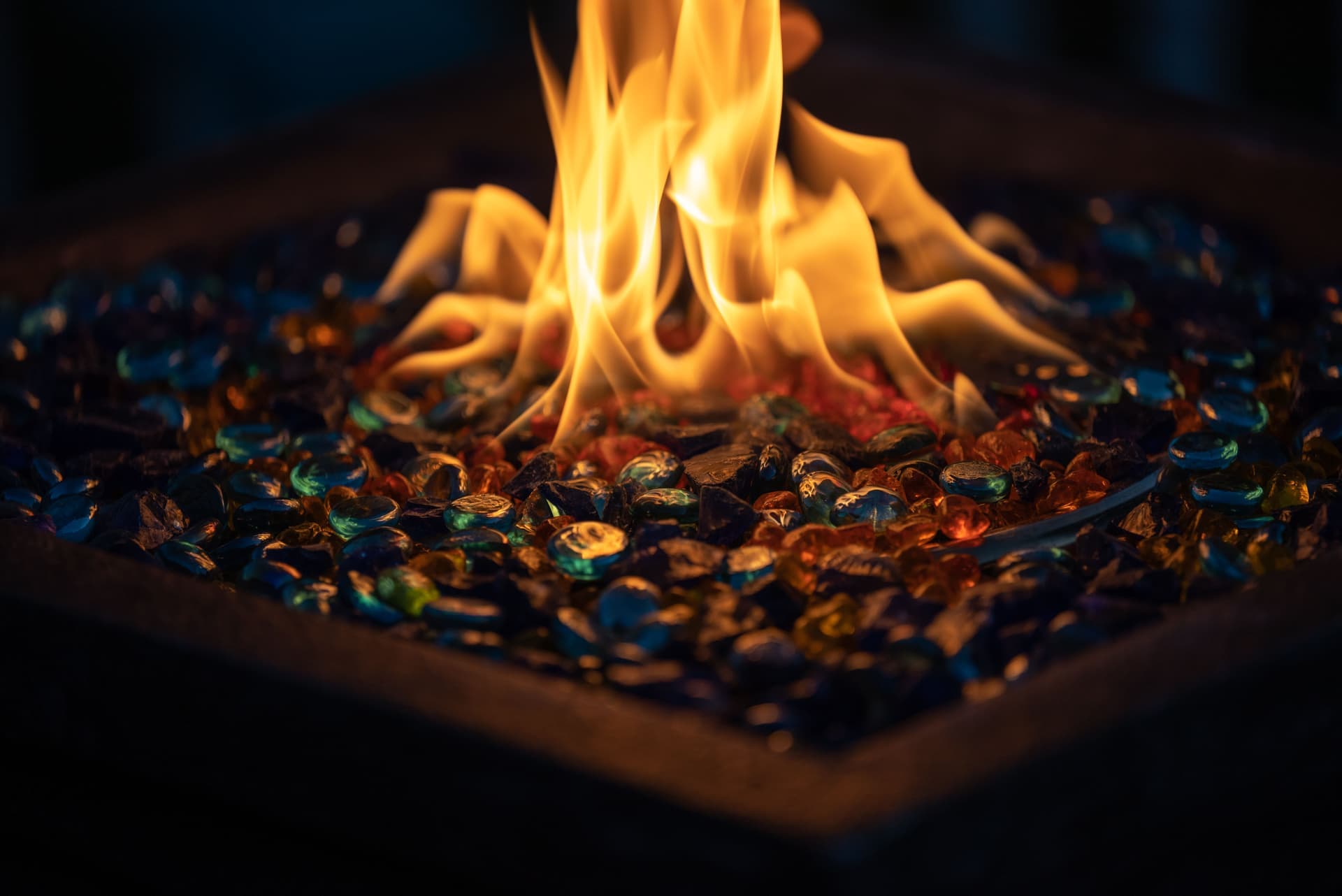
The secondary-burn design genuinely works, and smokeless is a comparison rather than an absolute. It smokes markedly less than an open pit once hot, and noticeably while it is getting there. Expect it to warm a ring of people standing close, not a patio — and buy the version that includes the stand.
We have not burned wood in this one. What follows reads the published specification, explains the mechanism from how the airflow is arranged, and is explicit about which parts are the maker's claims and which are ours.
How the secondary burn actually works
The mechanism is the product, so it is worth understanding rather than taking on trust. The pit is a double wall with vents around the bottom and a ring of holes around the top rim.
- Air enters the lower vents and passes into the cavity between the two walls.
- Rising heat from the fire drives that air upward through the cavity, and it is preheated on the way by the inner wall it is in contact with.
- It exits through the ring of holes at the top rim, directly into the column of unburned gases coming off the wood.
- Hot air plus unburned fuel at the right temperature equals a second combustion, and that second burn is what the ring of small flames around the rim is.
Smoke is unburned fuel. Burning it a second time is why there is less of it, and it is also why the pit puts out more usable heat from the same wood than an open ring does. Nothing about the physics is proprietary; the engineering is in getting the preheating and the hole pattern right so the second burn is self-sustaining.
Quick picks
Ranked for fit, not for hype. Output is the maker’s published figure; reach is computed from it or from the maker’s own radius claim, and the table says which. Tap a row for the full write-up, or go straight to the listing.
| # | Product | Best for | Output | Reach | Price |
|---|---|---|---|---|---|
| 1 |  Solo Stove Bonfire 2.0The secondary-burn design does genuinely reduce smoke, and a wood fire puts out more heat than any patio heater here. It heats a circle of people, not a patio, and those are different products. | Heat you gather around | Not published | Not published | $349.99 · Check on Amazon |
Reach marked “claimed” is the maker’s own published figure. Reach without that label is ours, computed from published output at 20 BTU per square foot for an open patio. Neither is a measurement we took.
Top pick · Heat you gather around
Solo Stove Bonfire 2.0 Smokeless Fire Pit with Stand, 19.5 in
The secondary-burn design does genuinely reduce smoke, and a wood fire puts out more heat than any patio heater here. It heats a circle of people, not a patio, and those are different products.
- Fuel
- Wood
- Output
- Not published
- Reach (computed)
- Not published
- Cost per hour
- n/a
What works
- A wood fire's output is not comparable to a patio heater's — this is the reason the heater versus fire pit question resolves the way it does
- The stand is not an accessory, it is the thing that makes it usable on a surface. Buy the version that includes it
- Removable ash pan turns cleanup from a chore into a step, which is the difference between using it weekly and using it twice
What does not
- Smokeless is a comparison, not an absolute. It smokes noticeably less than an open pit; it does not produce no smoke, especially while it comes up to temperature
- The heat is radiant and low — it warms a ring of people standing close, and does nothing for anyone six feet back
- Even with the stand, this needs a heat barrier on a wood deck. The stand reduces transferred heat, it does not eliminate it
| Published specification | |
|---|---|
| Diameter | 19.5 in |
| Height | 16.75 in |
| Weight | 21.75 lb |
| Material | 304 stainless steel, Gunmetal finish |
| Maker's capacity | Suits 4 to 6 people |
| Ash handling | Removable ash pan under the base plate |
| Maker’s coverage claim | None published — the reach figure above is ours |
| Safety listing | No safety listing applies; this is a wood-burning appliance, not a gas one |
Who it is for
A group that gathers around the fire rather than sitting in a spread-out seating arrangement, on a patio where wood smoke is not a neighbor problem.
What it is not for
Anywhere with a roof — this is an open wood fire and belongs under open sky. Also not for anyone who wants heat at the flick of a switch.
What smokeless really means
The important caveat, and the source of nearly every disappointed review of this product category.
The secondary burn only happens once the pit is hot. During lighting and the first several minutes it behaves like any other wood fire, which is to say it smokes. Once up to temperature, the difference against an open pit is obvious. That start-up window is not a defect, it is how the mechanism works, and knowing about it in advance changes the experience considerably.
- Dry wood is not optional. Wet or green wood carries water that has to be boiled off before anything reaches secondary-burn temperature, so it smokes for longer and burns cooler. Seasoned hardwood is the single biggest variable in whether this product performs as advertised.
- Do not overload it. Fuel above the top rim blocks the ring of holes the secondary burn depends on, which converts a smokeless fire pit into a regular one.
- It does not remove the smell. Less visible smoke, still a wood fire. If the objection is neighbors or clothes, a propane pit is the answer rather than a better wood one.
The heat is a different shape
This is the comparison that matters if you are choosing between this and a patio heater, and it is not really a question of how much heat.
A wood fire at full burn puts out a great deal of heat — more than any electric unit on this site, and comparable to a propane tower. But it radiates outward at knee-to-waist height from a source sitting on the ground, so it warms a tight ring of people leaning in and does very little for someone six feet back in a chair. A tower radiates downward and outward from seven feet up and covers a seating area.
Which means the honest framing is not better or worse, it is gathering versus seating. The full comparison works through both.
It has to go under open sky
This is an open wood fire with a column of hot gas above it. It does not belong under a pergola, a porch roof, an awning or an umbrella, and no version of it does. If your patio is covered, this product is not a candidate regardless of how much you like it.
The stand, and decks
Buy the version with the stand. It is not an accessory in any meaningful sense — without it, the base sits close enough to whatever is underneath to transfer real heat into it.
Even with the stand, a wood deck needs a barrier underneath. The stand reduces transferred heat; it does not eliminate it, and the failure mode on composite decking is scorching that does not come out. The deck-safe page covers what actually works and what merely looks like it should.
On the practical side, the removable ash pan under the base plate is the detail that decides how often the thing gets used. A fire pit that needs tipping upside down to empty gets lit twice a season; one that empties in a step gets lit weekly.
What it costs to feed
Wood is the one fuel on this site with no national average worth quoting — a bundle at a gas station and a cord from a local supplier differ by an order of magnitude per BTU, and both are real prices someone pays.
So we will not print a cost per hour for this the way we do for propane and electricity, because any figure would be invented rather than sourced. What we can say is the shape of it: bundles bought a few at a time are the expensive way, seasoned hardwood bought by volume in advance is the cheap way, and the gap between those two is far larger than any difference between fire pit models.
There is a real convenience cost too. Wood has to be bought, stored dry, carried out, lit, tended and cleaned up after. That is part of the appeal for some buyers and the entire reason others end up with a propane fire pit instead.
The propane counterpart to this page is our Outland Firebowl 893 review, which reads the other common answer to the same question with the same method.
Who should buy it
Someone who wants a fire rather than heating, on an uncovered patio, with a group that gathers around it. If the appeal is the fire itself — the light, the sound, the standing around it — this is the version of that with the least smoke in your eyes, and the stainless construction is built to a standard that outlasts the painted steel bowls it competes with.
Who should not
- Anyone with a roof over the patio. Not a preference, a hard exclusion.
- Anyone trying to heat a seating area. The heat is the wrong shape for it, and a patio heater is the product for that job.
- Anyone who wants heat at the flick of a switch. Lighting, tending and cleanup are the deal, and a propane fire pit removes all three.
- Anywhere smoke is a neighbor problem, or where a burn restriction applies. Less smoke is still smoke.
The verdict
The engineering does what the marketing says, which is rarer than it should be. The word smokeless oversells the result at the margins — during lighting, and with anything other than dry wood — but the design is a genuine improvement on an open pit rather than a finish detail.
Buy it for the fire. If what you actually want is a warm patio, buy a heater and spend the difference on a windbreak.
Common questions
Is the Solo Stove Bonfire actually smokeless?
It smokes markedly less than an open fire pit once it is up to temperature, and it does smoke while lighting and warming up. Smokeless is a comparison rather than an absolute. Dry seasoned wood and not overloading it above the rim are what get you the advertised result.
How does the Solo Stove secondary burn work?
Air enters vents at the bottom, rises through the cavity between the double walls where it is preheated, and exits through holes at the top rim straight into the unburned gases above the fire. That reignites them, which is the ring of flames around the rim and the reason there is less smoke.
Does the Solo Stove Bonfire heat a patio?
No, and that is the wrong expectation for it. A wood fire radiates outward at low level, so it warms a ring of people standing close to it and does little for someone seated six feet back. A patio heater radiates down from seven feet up and covers a seating area, which is a different job.
Can you use a Solo Stove under a covered patio?
No. It is an open wood fire with a column of hot gas above it, and it belongs under open sky - not under a pergola, porch roof, awning or umbrella. If your patio is covered, this is not a candidate.
Do you need the stand with the Solo Stove Bonfire?
Yes, and it should be treated as part of the product rather than an accessory. Without it the base sits close enough to the surface underneath to transfer real heat into it. Even with the stand, a wood deck needs a separate barrier under the pit.
Is the Solo Stove Bonfire worth the money?
If you want a fire, it is a well-made version of one with a design that genuinely reduces smoke and stainless construction that outlasts painted steel bowls. If you want a warm patio, the money is better spent on a heater and a windbreak.
Sources
Read next
Smokeless fire pits, honestly described
How secondary burn works, what it does not do, and what really determines smoke.
The best fire pits for heat
Fire pits ranked on delivered warmth rather than rated output, with runtime and cost computed.
Deck-safe fire pits
The stand-plus-barrier combination that protects decking, and the pits that suit it.
Patio heater vs fire pit
Output, direction, cost, wind and permitted use compared, with exits to both catalogs.
Propane vs wood fire pit
Fuel cost, heat, smoke and hassle compared — and why the deciding question is not either of the obvious ones.
Outland Firebowl 893 review
What 58,000 BTU really delivers from an open bowl, the cost per hour, using it on a deck, and the fire-ban claim in context.