Under $200
The best patio heaters under $200
The interesting thing about this price bracket is not that it is cheap. It is that the same two hundred dollars buys wildly different amounts of heat depending on which aisle you walk down.
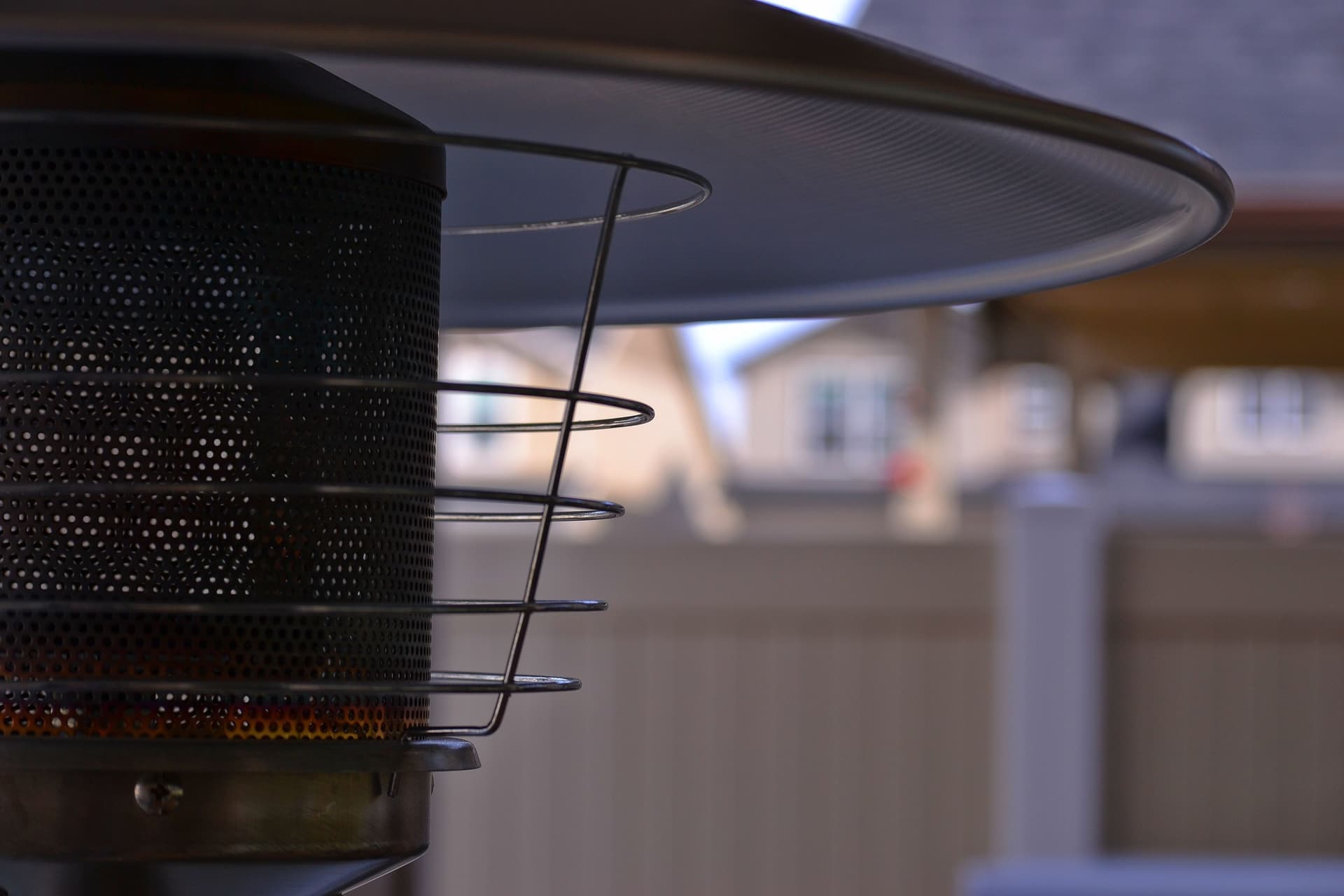
Under $200 buys either a 46,000 BTU propane tower or about 5,100 BTU of electric infrared — a nine-fold difference in output at nearly the same price. Propane if the patio is open, electric if there is a roof and an outlet. The budget is rarely the constraint in this bracket; the space is.
The thing that makes this bracket interesting
Most price-bracket guides are a list of compromises. This one is not, and the reason is worth understanding before you look at a single product.
A full-size propane tower — the mushroom shape the whole category is built around — sits comfortably under $200. So does a 1,500 W electric infrared unit. They cost roughly the same and they produce 46,000 BTU/h and about 5,118 BTU/h respectively. That is a factor of nine, for the same money.
It sounds like propane wins by a mile. It does not, and the reason is the thing this whole site keeps coming back to: gross output is not delivered warmth. A propane tower warms air, and outdoors a breeze removes that warmed air before you feel it. An electric infrared unit warms objects and people directly, and wind barely touches it.
So the nine-fold gap is real on paper and much smaller in a seating area under a roof. Which is why the decision in this bracket is not about money at all.
The question that actually spends your $200
Look up. If there is a roof, a pergola, a porch ceiling or anything solid overhead, and there is an outlet within reach, buy electric. It costs about 28 cents an hour to run against roughly $1.35 for propane, there is no cylinder to swap mid-evening, and under cover it does not need the extra output.
If there is open sky and no outlet, buy propane. Not because it is better, but because the alternative cannot physically work there — and because on an open patio you genuinely do need the larger number.
Everything below follows from that one look upward. Run your area through the calculator if you want the arithmetic rather than the rule of thumb.
Quick picks
Ranked for fit, not for hype. Output is the maker’s published figure; reach is computed from it or from the maker’s own radius claim, and the table says which. Tap a row for the full write-up, or go straight to the listing.
| # | Product | Best for | Output | Reach | Price |
|---|---|---|---|---|---|
| 1 |  Amazon Basics 46kOne of the very few towers whose maker publishes a coverage radius rather than a vague area, and the 9 ft figure survives the arithmetic. That alone puts it ahead of most of the field. | The published-radius honesty test | 46,000 BTU | 254 sq ft claimed | $156.16 · Check on Amazon |
| 2 |  Heat Storm TradesmanThe one electric unit here with a published IP rating, which is the difference between a heater that survives a wet winter mounted outdoors and one that is a warranty claim waiting to happen. | Leaving outside all year | 1,500 W | 256 sq ft | $99.99 · Check on Amazon-8% |
| 3 |  Mr. Heater MH30TSDouble the burners and a swivel head, which is the version that actually solves the single unit's worst flaw — you can aim it. Still job-site equipment, but job-site equipment that reaches a seating area. | Radiant propane with real output | 30,000 BTU | 1,500 sq ft | $97.55 · Check on Amazon |
| 4 | 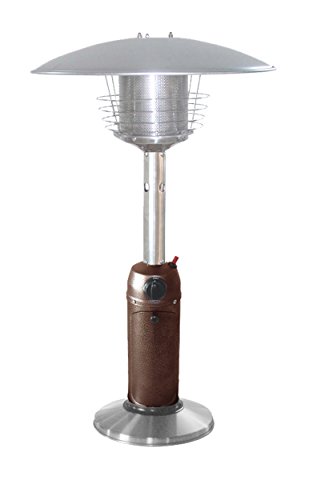 Hiland tabletop11,000 BTU heats a table, not a patio, and being clear about that is the whole point. For a bistro table on a balcony it is the right size and nothing bigger fits. | One table, four people | 11,000 BTU | 550 sq ft | $126.54 · Check on Amazon |
Reach marked “claimed” is the maker’s own published figure. Reach without that label is ours, computed from published output at 20 BTU per square foot for an open patio. Neither is a measurement we took.
Top pick · The published-radius honesty test
Amazon Basics 46,000 BTU Outdoor Propane Patio Heater
One of the very few towers whose maker publishes a coverage radius rather than a vague area, and the 9 ft figure survives the arithmetic. That alone puts it ahead of most of the field.
- Fuel
- Propane
- Output
- 46,000 BTU/h
- Reach (claimed)
- 254 sq ft · 9.0 ft radius
- Cost per hour
- $1.35
What works
- A published 9 ft radius is a 254 sq ft circle, and 46,000 BTU is far more than that area needs — a claim on the conservative side of its own specification, which is rare here
- The water-fill base box is a real anti-tip measure, not a sticker: filled, it is the difference between a windy evening and a repair bill
- One-touch ignition and a chain for the cylinder are both small things the cheap clones drop
What does not
- The listing does not name a safety certifying body, only the tilt valve, so we cannot tell you it is CSA listed
- 91 in tall with an open flame: the same wind exposure as every other tower of this shape
- The water box has to be emptied before a freeze or it splits
| Published specification | |
|---|---|
| Rated input | 46,000 BTU/h |
| Published reach | 9 ft radius |
| Dimensions | 32.1" L x 32.1" W x 91.3" H |
| Fuel | 20 lb propane cylinder, not included |
| Safety | Tilt auto-shutoff valve; chain to secure the cylinder |
| Base | Water-fill box for ballast, wheel kit included |
| Maker’s coverage claim | 9.0 ft radius, which is 254 sq ft |
| Safety listing | Tilt auto-shutoff valve; the listing does not name a certifying body |
Who it is for
An open patio where you want the largest honest circle of warmth per dollar and are happy to handle cylinders.
What it is not for
Anywhere enclosed, and anywhere the base cannot be filled with water — an empty ballast box makes this a tall, light, tippy object.
Sources for this entry
2 · Leaving outside all year
Heat Storm Tradesman HS-1500-OTR-R 1500 W Weatherproof Infrared Heater
The one electric unit here with a published IP rating, which is the difference between a heater that survives a wet winter mounted outdoors and one that is a warranty claim waiting to happen.
- Fuel
- Electric
- Output
- 1,500 W = 5,118 BTU/h
- Reach (computed)
- 256 sq ft · 9.0 ft radius
- Cost per hour
- $0.28
What works
- A published IPX4 rating. Almost nobody in this category publishes an ingress rating at all, and mounting an unrated electric heater outdoors is a gamble you cannot price
- The maker publishes its own BTU figure (5,200), which is within a rounding error of the 5,118 our watts-to-BTU conversion gives — a company doing its own arithmetic honestly
- Wall or ceiling mount puts the heat above head height where a radiant beam belongs
What does not
- IPX4 rates water only — the solids digit is X, meaning none is published. It is splashing-water protection, not immersion, and it tells you nothing about dust ingress
- Fixed mounting means fixed aim. Get the position wrong and there is no adjusting it from the chair
- Same 1,500 W ceiling as every other plug-in electric heater
| Published specification | |
|---|---|
| Rated power | 1,500 W at 120 V |
| Published output | 5,200 BTU/h per the maker |
| Element | Carbon fiber infrared, per the maker |
| Weather rating | IPX4 |
| Dimensions | 27 x 8 x 6 in |
| Control | Remote included |
| Mounting | Wall or ceiling; tripod and tri-mount combos are separate SKUs |
| Maker’s coverage claim | None published — the reach figure above is ours |
| Safety listing | IPX4 weatherproof rating published by the maker |
Who it is for
A permanently mounted heater on a pergola, porch ceiling or exterior wall that you never want to take down and store.
What it is not for
Portability, and any open patio with no structure to mount to.
3 · Radiant propane with real output
Mr. Heater MH30TS Double Tank Top Propane Radiant Heater, Spark Ignition
Double the burners and a swivel head, which is the version that actually solves the single unit's worst flaw — you can aim it. Still job-site equipment, but job-site equipment that reaches a seating area.
- Fuel
- Propane
- Output
- 30,000 BTU/h
- Reach (computed)
- 1,500 sq ft · 21.9 ft radius
- Cost per hour
- $0.88
What works
- The swivel head is the whole upgrade. A radiant heater warms what it points at, and being able to aim it upward at seated people rather than at their shins changes what the thing is useful for
- A hi-med-low regulator plus the option to run one burner or both, so it can genuinely be turned down — which matters, because at full output it empties a cylinder roughly twice as fast as the single-burner unit
- 30,000 BTU/h of radiant output is genuinely substantial; most of it reaches what it is aimed at rather than rising into the sky
- Same wind tolerance as any radiant heater, and still no outlet or wiring anywhere
What does not
- Still unmistakably work equipment. Chrome mesh guards on top of a gas bottle. It does not read as patio furniture and no amount of placement fixes that
- Outdoor only, like every tank-top heater. Enclosing it is a carbon monoxide problem rather than a comfort decision
- At 30,000 BTU/h it burns about twice as fast as the single unit, so the impressive runtime figures belong to the lower settings
- The maker publishes no coverage area, so the reach figure on this site is ours
- Directly on the cylinder means the whole assembly is only as stable as the bottle it stands on, which on soft ground is worth thinking about
| Published specification | |
|---|---|
| Rated input | 10,000 to 30,000 BTU/h |
| Settings | Hi-med-low regulator; one or two burners, per the maker |
| Ignition | Electronic spark |
| Heat type | Radiant, per the maker |
| Aim | Adjustable swivel head |
| Construction | Chrome and stainless steel components |
| Mounting | Direct connection to a 20 lb bulk cylinder |
| Assembly | Assembled in Cleveland, Ohio; all components replaceable per the maker |
| Maker’s coverage claim | None published — the reach figure above is ours |
| Safety listing | Two tip-over safety shut-offs per the maker; no third-party listing published |
Who it is for
Someone who wants radiant propane heat with enough output for a group, and who values being able to aim it more than they mind how it looks.
What it is not for
Anywhere enclosed, anywhere appearance matters, or anyone who wants to set it and forget it at full output all evening.
Sources for this entry
4 · One table, four people
Hiland HLDS032-BB Portable Table Top Patio Heater, Hammered Bronze
11,000 BTU heats a table, not a patio, and being clear about that is the whole point. For a bistro table on a balcony it is the right size and nothing bigger fits.
- Fuel
- Propane
- Output
- 11,000 BTU/h
- Reach (computed)
- 550 sq ft · 13.2 ft radius
- Cost per hour
- $0.32
What works
- Runs off a 1 lb canister, which makes it the only heater here you can carry out to a table and back with one hand
- 11,000 BTU is honest for the job: our reach arithmetic puts that at roughly a table's worth of warmth, and the unit does not pretend otherwise
- A burner screen guard on a table-height heater is a genuine safety feature, not a spec-sheet line
What does not
- 1 lb canisters are the most expensive propane per BTU you can buy — get the 20 lb adapter hose if you use it regularly
- At 38 in on a table, this puts an open flame at seated head height. Placement matters more than with any other unit here
- It will not touch an open patio. Anyone expecting a room-scale effect will be disappointed
| Published specification | |
|---|---|
| Rated input | 11,000 BTU/h, adjustable |
| Height | 38 in |
| Fuel | 1 lb canister or 20 lb cylinder, per the listing |
| Finish | Hammered bronze |
| Safety | Thermocouple, anti-tilt device, burner screen guard |
| Stability | Weight plate in the base |
| Maker’s coverage claim | None published — the reach figure above is ours |
| Safety listing | Thermocouple flame-failure cutoff and anti-tilt device per the listing |
Who it is for
A balcony, a bistro table, or a second heater that warms hands at the table while a tower does the space.
What it is not for
Heating an area. And never indoors, on a covered porch with a low ceiling, or anywhere a tablecloth can reach it.
Sources for this entry
What we would skip
A list with no losers is a list nobody edited. These are the choices we would actively steer you away from, and why.
Judging this bracket on the BTU number alone
It is the single most expensive mistake here. A 46,000 BTU propane tower and a 1,500 W electric unit sit at almost the same price, and the propane figure is nine times larger. That does not make it nine times better — it makes it a different appliance for a different space, and picking on the big number lands a lot of people with a cylinder they did not want.
Anything at this price with no published output figure
Under $200 is where unbranded listings cluster, and the tell is a listing that talks about coverage in adjectives and never states a wattage or a BTU rating. If a maker will not tell you what it produces, there is no way to size it and no way to compute what it costs to run.
Forgetting the cylinder in the budget
Every propane pick here excludes the tank. A full 20 lb cylinder is a real additional cost on day one, and exchange or refill is a decision worth making before you are standing in front of a cage outside a supermarket.
What $200 does not buy
Being clear about the ceiling is more useful than pretending there is not one.
- A heater with a published weather rating. Ingress ratings are the specification most makers in this bracket skip, and on anything you mount permanently outdoors that silence is a real gap — see what to check on a mounted unit.
- A natural gas installation. Plumbing a gas line is a trade job and the appliance is the cheap part.
- Anything that solves wind. No heater at any price does. A windbreak does, and it costs less than the difference between the picks on this page — the options.
- Commercial duty. These are domestic units. A terrace running five hours a night, seven nights a week, is a different specification and a different budget.
How to read a cheap listing
This is the bracket where listings get vague, and the vagueness is load-bearing. Four checks separate a real product from a repackaged one, and all four take about a minute.
- Is an output figure stated? A BTU rating for gas, a wattage for electric. Not "heats up to 200 sq ft" — that is a marketing claim with no standard behind it. Without an output figure you cannot size the heater or compute what it costs to run.
- Is there a named safety feature? A thermocouple or flame-failure cutoff on anything that burns, a tip-over switch on anything that stands up. These are cheap to include and the makers that include them say so.
- Are parts available? The failure that ends most patio heaters is a thermocouple or a control valve, not the heater. A platform whose parts are stocked lasts twice as long, and that matters more at this price than at any other.
- Does the reflector diameter appear anywhere? On a tower it decides both how wide the heat spreads and which cover fits. Its absence usually means the listing was written from a template.
A listing that passes all four is a real product at a fair price. One that passes none is a photograph with a price attached, and there are plenty of those in this bracket.
The running cost nobody adds up at checkout
A $200 purchase price is not the price of the heater. It is the price of starting.
A season, at each fuel
Three hours an evening, three evenings a week, across a 20-week season is 180 hours. On electric at 1,500 W that is about $50. On a 46,000 to 48,000 BTU propane tower it is about $253. The cheaper heater to buy is frequently the more expensive one to own, and over one season the gap is larger than the purchase price.
That is not an argument against propane — on an open patio it is the only thing that works — but it is the number to know before you decide the electric unit looks underpowered. The full seasonal arithmetic.
Where the money is better spent
Two things in this bracket beat spending the last fifty dollars on a bigger heater, and both are the site's standing advice rather than a sales pitch.
- A windbreak on the exposed side. Blocking wind can cut the heat a patio needs by more than half, which is a larger effect than any upgrade available at this price. Mesh or vinyl.
- A second cylinder, if you bought propane. It costs less than most accessories and it turns running out mid-evening from a ruined evening into a two-minute swap.
A third, if the goal is simply that people stay outside longer: a heated blanket costs a fraction of a cent an hour and handles the seated case completely. It is not a heater and it is not a substitute for one, but at this budget it is the cheapest warmth available by an enormous margin.
The opposite question has its own page now: are expensive patio heaters worth it looks at what the money buys above this bracket, and finds that it is documentation, parts and weather ratings rather than heat.
The short version
Under $200 is a genuinely good budget in this category — you are not buying a compromised version of a better heater, you are buying the mainstream one. Look up, pick the fuel the space allows, check the live price on the button rather than any number in prose, and put whatever is left toward blocking the wind.
Common questions
What is the best patio heater under $200?
For an open patio, a 46,000 BTU propane tower — it is the most heat available at this price and it needs no outlet. For a covered space with power, a 1,500 W electric infrared unit costs about a fifth as much per hour to run and needs no cylinders. The space decides, not the budget.
Can you get a decent patio heater for under $200?
Yes, and this is one of the few categories where the budget bracket is the mainstream product rather than a compromised version of it. Full-size propane towers and standard 1,500 W electric units both sit under $200.
Why do a 46,000 BTU propane heater and a 1,500 W electric heater cost about the same?
Because they are different appliances solving different problems. The propane figure is nine times larger, but much of that output warms air that a breeze removes, while electric infrared puts nearly all of its smaller output directly onto people. Under a roof the gap narrows sharply.
Is the cylinder included with a propane patio heater?
No — not on any pick here, and not generally in this category. A full 20 lb cylinder is a real day-one cost on top of the heater, and worth settling before you buy.
What does a cheap patio heater cost to run?
About 28 cents an hour for a 1,500 W electric unit and roughly $1.35 for a 46,000 BTU propane tower, at current US average energy prices. Across a 20-week season at three evenings a week that is about $50 against $253.
Are cheap patio heaters safe?
The ones with named safety features are — a thermocouple or flame-failure cutoff on anything that burns, and a tip-over switch on anything that stands up. Both are cheap to include, so makers that fit them advertise them. A listing silent on both is the one to avoid, whatever the price.
Should I spend more than $200?
Only for a specific reason — a published weather rating for permanent outdoor mounting, commercial duty, or a fixed natural gas installation. For a domestic patio, more money mostly buys finish and brand rather than more usable heat.
Sources
Read next
The best patio heaters, sorted by the patio
Six heaters covering every real patio case, with published output, computed reach and cost per hour.
What a patio heater costs to run
Cost per hour, evening and month for electric and propane, at named prices with the formulas shown.
Patio heater BTU calculator
Your patio's BTU requirement with every multiplication shown, plus why the published rules disagree.
The best patio heaters for beginners
What to buy first, the three predictable beginner mistakes, and the ownership costs nobody mentions.
Patio windbreaks, and why they beat a bigger heater
Vinyl, mesh and curtains compared, with what enclosing a patio changes about your heater choice.
Are expensive patio heaters worth it?
Why the premium bracket does not buy more heat, what it does buy, and the three cases where paying more pays off.
Mr. Heater MH15T review
Radiant propane with no outlet for under fifty dollars, the runtime arithmetic, and why it radiates at your shins.