Natural gas
Natural gas patio heaters are a plumbing decision
No cylinder to swap, no runtime to worry about, and a gas line that has to be run and permitted before you own one. Here is what that actually involves.
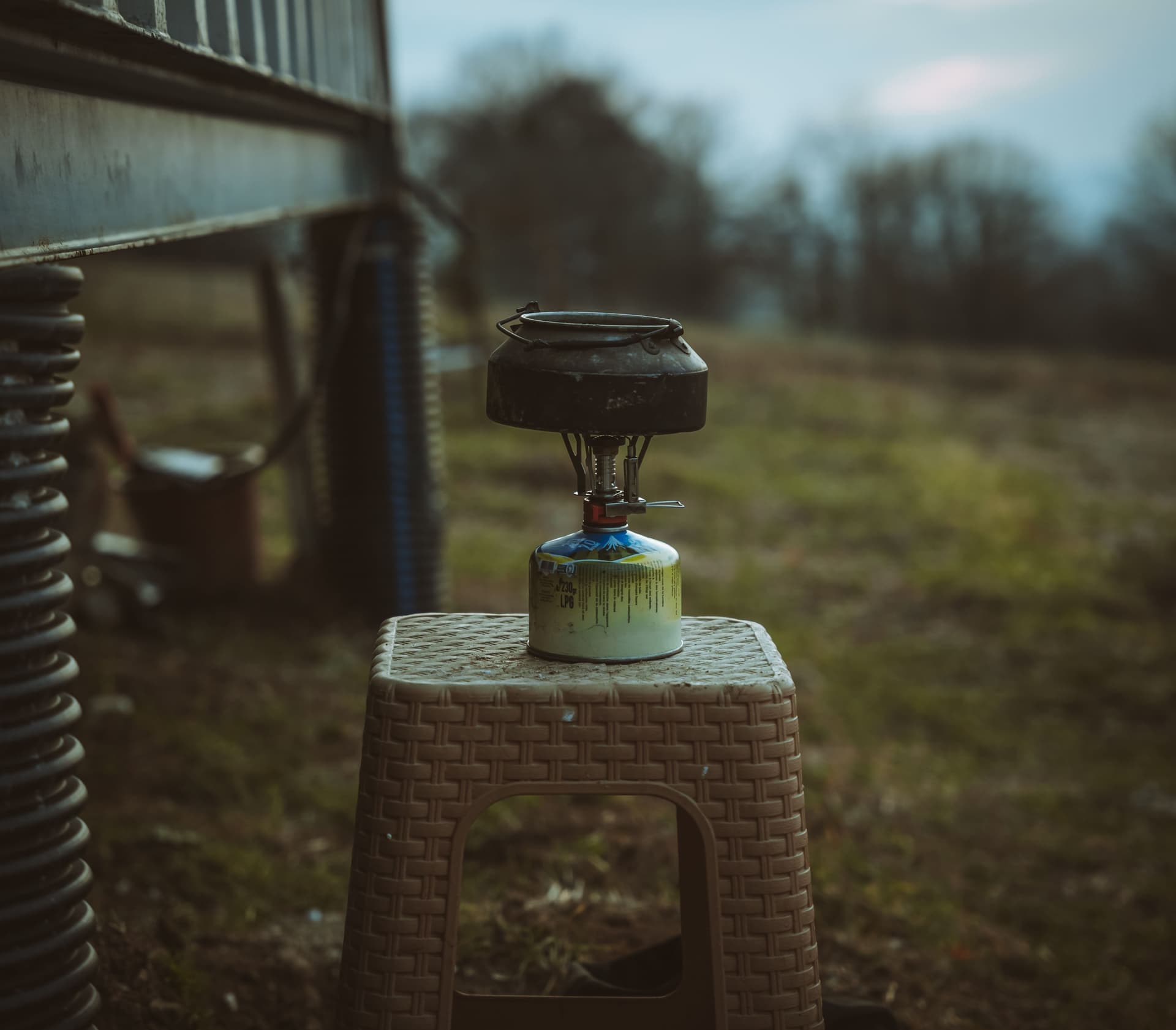
A natural gas patio heater never runs out and costs less per BTU than propane in most of the U.S., but it needs a gas line run to the patio by a licensed installer, usually with a permit and an inspection. The heater is the cheap part of that project.
The trade, stated plainly
Everything people like about natural gas is downstream of one fact: it arrives by pipe. No cylinder to swap, no evening cut short, no arithmetic about how many hours are left. Turn it on in November and turn it off in March.
Everything people find out later is downstream of the same fact. The pipe has to get to the patio. That means a licensed gas fitter, a run from the meter, a shutoff at the appliance, almost always a permit, usually an inspection, and a heater that is now a fixture on the property rather than something you can move or take with you.
It is a good decision for a permanent patio you own and intend to keep using. It is the wrong decision for a rental, a first heater, or anywhere you are still working out where things should go.
Running cost, and why we will not put a number on it here
Natural gas is billed per therm — 100,000 BTU — and residential rates vary far more by state and utility than electricity or propane do. This site publishes a single U.S. average price for electricity and for propane because a single national figure is genuinely meaningful for both. For natural gas it is much less so.
So rather than publish a national average that would be wrong for most readers, here is the arithmetic to do it yourself, which takes about a minute. Find the total cost per therm on your gas bill, including delivery charges, not just the commodity rate. Then: cost per hour = rated BTU/h divided by 100,000, times your cost per therm. A 40,000 BTU heater at $1.50 a therm is 0.4 x 1.50 = 60 cents an hour.
Compare that against the propane and electric figures on the same page and you will have a real answer for your own house rather than a national one for nobody's.
The conversion question
Propane and natural gas are not interchangeable. Natural gas is supplied at much lower pressure and has lower energy density per cubic foot, so the burner orifice has to be a different size. Many manufacturers sell a conversion kit for a given model, and some do not.
Two rules, and they are not ours to soften. Only use a conversion kit made by the manufacturer for that exact model, and have the conversion done by a licensed gas fitter. Drilling out an orifice or fitting a generic kit produces an appliance burning the wrong fuel at the wrong pressure, and that is a carbon monoxide problem rather than an efficiency one.
What Amazon stocks, and what it does not
This is the part of the page where we would normally put picks, and we are not going to, because it would not be honest. The natural gas patio heater market is dominated by fixed-install units sold through specialist and trade channels, and the premium brands people search for in this category are carried on Amazon inconsistently or not at all.
Pointing a buy button at a substitute product because the one you searched for is not stocked would be exactly the thing this site exists not to do. If you are running a gas line anyway, you already have a professional involved, and they are the right person to specify the appliance.
If the appeal of natural gas was really that you are tired of swapping cylinders, there is a cheaper route worth considering first: a mounted electric infrared unit also never runs out, needs a circuit rather than a gas line, and is a considerably smaller project.
Before you commit to the gas line
Work out how much heat the patio actually needs first. If the calculator says 4,000 BTU/h, running a gas line to feed a 40,000 BTU appliance is a large project to solve a small problem — and a 1,500 W electric unit on an existing circuit does it.
Common questions
Is a natural gas patio heater cheaper to run than propane?
In most of the U.S., yes, per unit of heat. Natural gas is billed per therm and is generally cheaper per BTU than bottled propane. Work out your own figure: rated BTU/h divided by 100,000, times your all-in cost per therm from the bill.
Can I convert a propane patio heater to natural gas?
Only with a conversion kit made by the manufacturer for that exact model, fitted by a licensed gas fitter. The two fuels run at different pressures and need different orifice sizes. A generic kit or a drilled orifice produces incomplete combustion, which is a carbon monoxide risk.
Do I need a permit for a natural gas patio heater?
Almost always, because running a new gas line is permitted work in most jurisdictions and usually requires an inspection. Your gas fitter will know the local requirement; it is not a step to skip.
Sources
Read next
What a patio heater costs to run
Cost per hour, evening and month for electric and propane, at named prices with the formulas shown.
Wall mounted patio heaters, and the rating that decides
Wall and ceiling mounted electric heaters, ranked on published weather rating and mounting.
Every outdoor heating option, in one page
Eight outdoor heating options compared on output, cost and where each genuinely belongs.
Patio heater BTU calculator
Your patio's BTU requirement with every multiplication shown, plus why the published rules disagree.