Deep review
Dr Infrared DR-238 review
The electric heater this site reaches for most often, read properly — including the specification half the internet attributes to it that its own manufacturer never claims.
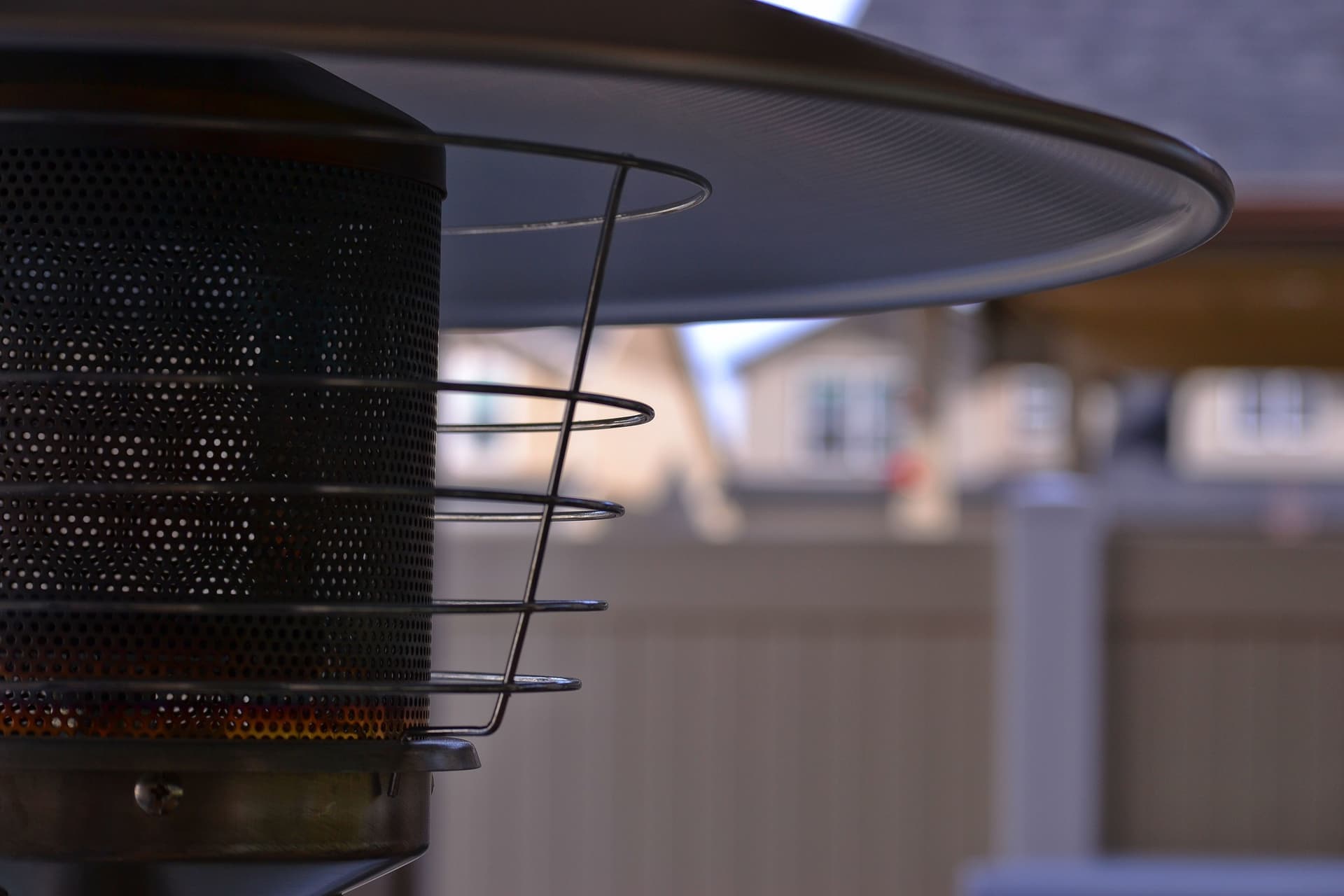
A 1,500 W carbon infrared heater that plugs into a normal outlet, mounts to a wall or a ceiling, and is ETL listed. The carbon element is the reason to buy it — dimmer and gentler than quartz at identical output. The gap is weather: its manufacturer publishes no ingress rating, whatever third-party listings say, so it belongs somewhere sheltered.
We have not used this heater. What follows reads the manufacturer's published specification, checks the arithmetic those figures imply, and compares what the maker says against what the shops selling it say — which on this model turns out to be the most interesting part.
What it is
A slim aluminum bar, roughly the shape of a fluorescent fitting, that bolts to a wall or hangs from a ceiling and radiates heat downward and outward. There is no fan, no flame, no cylinder and nothing to refill. It plugs into a standard 120 V outlet and it is the single most-recommended unit on this site, because the situation it suits — a roof overhead and an outlet within reach — is extremely common.
The maker publishes three power settings, 900 W / 1,200 W / 1,500 W, a carbon infrared element, an anodized aluminum housing, ETL certification, wall and ceiling brackets in the box, and a remote. It is currently sold bundled with a Kasa EP40 outdoor smart plug, which turns out to matter more than a bundled accessory usually does.
Quick picks
Ranked for fit, not for hype. Output is the maker’s published figure; reach is computed from it or from the maker’s own radius claim, and the table says which. Tap a row for the full write-up, or go straight to the listing.
| # | Product | Best for | Output | Reach | Price |
|---|---|---|---|---|---|
| 1 |  Dr Infrared 1500 WRadiant heat that a breeze cannot blow out, on a plug. 1,500 W is only 5,118 BTU/h, which sounds like nothing next to a propane tower and lands far more of itself on you. | Wind, and anywhere with a roof | 1,500 W | 256 sq ft | $148.98 · Check on Amazon |
Reach marked “claimed” is the maker’s own published figure. Reach without that label is ours, computed from published output at 20 BTU per square foot for an open patio. Neither is a measurement we took.
Top pick · Wind, and anywhere with a roof
Dr Infrared Heater DR-238 Carbon Infrared Patio Heater with Kasa Outdoor Smart Plug
Radiant heat that a breeze cannot blow out, on a plug. 1,500 W is only 5,118 BTU/h, which sounds like nothing next to a propane tower and lands far more of itself on you.
- Fuel
- Electric
- Output
- 1,500 W = 5,118 BTU/h
- Reach (computed)
- 256 sq ft · 9.0 ft radius
- Cost per hour
- $0.28
What works
- Infrared warms objects, not air, so it is the only heat that survives a breeze — this is the single reason wind changes the whole buying decision
- No combustion means no flue gas, which is what makes it legal and sensible on a screened porch where propane is not
- Three settings matter more than they sound: 900 W costs a third less to run and is enough most evenings
What does not
- 1,500 W is 1,500 W. Nothing at this wattage heats faster than anything else at this wattage; the differences between electric heaters are beam shape and build, not power
- It heats what it points at. Step out of the beam and you are cold immediately — this is a fundamentally different experience from a tower
- A 120 V plug-in unit is capped by your circuit, not by the maker. See why 1,500 W is the ceiling
| Published specification | |
|---|---|
| Rated power | 1,500 W at 120 V |
| Settings | 900 W / 1,200 W / 1,500 W |
| Element | Carbon infrared lamp |
| Reflector | Mirror aluminum, 90% reflectivity per the maker |
| Housing | Anodized aluminum, rated for outdoor use |
| Mounting | Wall and ceiling brackets plus remote in the box |
| Bundle | Currently sold with a Kasa EP40 outdoor smart plug |
| Maker’s coverage claim | None published — the reach figure above is ours |
| Safety listing | ETL listed, per the maker's published product data |
Who it is for
A covered patio, pergola or screened porch where you can mount it overhead and point it at where people sit, and anywhere wind ruins a flame.
What it is not for
A big open patio with nowhere to mount it. Radiant heat needs a line of sight and a place to hang from.
What 1,500 watts actually buys
The number that governs everything here, and the one most buyers have not converted into anything meaningful.
1,500 W is about 5,118 BTU/h by the standard conversion this site uses everywhere. That is our figure, computed from the wattage rather than quoted. Lowe's lists the same unit as 5,200 BTU, which is the same physics rounded; the maker itself publishes no BTU number at all.
Set against a 46,000 BTU propane tower, 5,118 sounds like nothing. It is not, because almost all of it lands on people rather than on air — radiant heat warms what it strikes, and a tower spends most of its output warming a column of air that leaves. The honest comparison is not the two ratings; it is what reaches a seated person.
What 1,500 W will not do is cover an open patio. That ceiling is the circuit, not the heater — a standard 120 V socket cannot deliver more, so no plug-in unit from any brand exceeds it. If you need more than this, you need a different circuit or a different fuel, and no amount of shopping within the category changes that.
The element is the actual reason to buy it
At the same wattage every electric heater emits the same energy, so the element type cannot make one warmer than another. What it changes is how the heat feels and how the thing looks while it works, and on a patio the second one decides whether you enjoy the evening.
A carbon element runs cooler and dimmer than a quartz or halogen one, with a deeper red glow and a longer, softer wavelength. Sat under it at nine in the evening, that is the difference between a heater you forget about and a bright orange bar in your field of view for two hours. Buyers searching for a low glare patio heater are looking for exactly this property, and carbon is the answer to it — the full element comparison has the detail.
The trade is warm-up. A quartz element is at temperature almost instantly; carbon takes a few seconds. On a patio that is not a meaningful cost. In a workshop where you flick it on for ten minutes, it might be.
The three settings are a real control
900 / 1,200 / 1,500 W is not a marketing list. At the national average electricity price this site cites, those are roughly 17, 22 and 28 cents an hour — so running it on low costs about 40% less than running it flat out, and on a sheltered patio low is frequently enough. Most electric heaters at this price have one setting and an off switch.
The rating it does not have
This is the finding worth the most to a buyer, and it took reading three sources to be sure of it.
Dr. Infrared publishes no ingress protection rating for the DR-238. Its own product page states the wattage settings, the element, the housing, the ETL listing and the mounting hardware, and says nothing about IP. Its distributor's page for the same model also states none. The housing is described as weatherproof anodized aluminum, which is a material claim rather than a tested rating.
Third-party retailer copy for this model nonetheless circulates the line that it is "IP55 approved". We can find no such claim from the manufacturer. What does exist is the DR-239, the 3,000 W model in the same family, which the maker genuinely does publish as IP55 — the likeliest explanation is retailer copy drifting across two adjacent models.
So the practical guidance is unambiguous: treat the DR-238 as a sheltered-position heater. Under a porch roof, a solid pergola or a covered patio it is entirely at home. Bolted to an exposed wall that takes driving rain, or hung under open pergola slats, you are relying on a material description rather than a tested figure — and that is the situation where a published rating is worth paying for.
The smart plug is not filler
Bundled accessories are usually a way to raise a price. This one is unusually well matched to the appliance, for a reason specific to how electric patio heaters get used.
A mounted heater lives above head height, and its remote gets lost. An outdoor-rated smart plug puts on, off and a schedule on a phone, which means the heater can come on twenty minutes before people go outside and shut itself off at a set time rather than running until someone remembers it. On a device costing roughly 28 cents an hour, forgetting it overnight is the expensive failure mode, and this is the cheapest possible fix for it.
It is worth being clear about what it does not do: it switches the whole unit, so it cannot change the heat setting. The 900 / 1,200 / 1,500 W selection still lives on the remote, and whatever level the heater was left on is the level it resumes at.
Mounting, and the thing to get right
Wall and ceiling brackets are both in the box, which removes the most common returns problem in this category — a unit arriving with hardware for the surface you do not have.
- Aim at shoulders, not at the floor. A unit pointed straight down heats the paving. Angled toward where seated people actually are is the whole difference between working and merely operating.
- Mount it where the chairs are, not in the middle. Radiant heat goes where it points, so the geometric center of a patio is the one place the heat is wasted on everybody equally.
- Check the published clearance to whatever is above and beside it, especially on a timber pergola. The clearances page collects the published figures.
- Plan the cable before you drill. A cord dropping from a mounted heater across a patio to a socket is the part of the installation that ages worst.
Who should buy it
A covered patio, porch, pergola or screened porch with an outlet in reach, where the seating is in a settled position and you want heat you can mount and forget. It is also the right answer anywhere a flame is not an option — a screened porch cannot take propane, and this has no combustion products to vent.
It is a good first electric heater for the same reasons: nothing to assemble, nothing to refill, and a running cost around a fifth of a propane tower's. The beginner's guide covers the rest of that decision.
Who should not
- An open patio with no roof. 1,500 W is not enough there and no electric unit on a standard circuit will be. That is a propane situation.
- An exposed position taking real weather. No published ingress rating means no way to price the risk. Buy something that states one.
- Anyone who needs more than 1,500 W. The DR-239 in the same family doubles the output and publishes IP55 — at the cost of a 220-240 V circuit and an electrician.
- Anyone expecting it to heat a space. It heats what it points at. Step out of the beam and you are cold immediately, which is a different product from a heater that warms a room.
If the covered area is larger than this unit can serve, or a new circuit is being run to the mounting point anyway, the DR-239 review takes the 3,000 W model in the same family apart on its own terms.
The verdict
For a sheltered seating area with power nearby, this is the electric heater we would buy, and the three-setting control and bundled smart plug make it cheaper to live with than its price suggests. The carbon element is a genuine quality-of-evening improvement over the bright halogen units it competes with, at identical output.
The reservation is the missing ingress rating, and it is a reservation rather than a fault. The maker never claims one; the shops sometimes do. Buy it for a covered position, and if the position is not covered, buy the model that publishes the figure instead.
Common questions
Is the Dr Infrared DR-238 any good?
For a sheltered patio with an outlet, yes. It is a 1,500 W carbon infrared unit with three power settings, wall and ceiling brackets both included, ETL certification and a remote, and the carbon element glows far less harshly than the halogen units it competes with at identical heat output. Its limitation is that no ingress rating is published for it.
Is the Dr Infrared DR-238 waterproof?
The manufacturer describes a weatherproof anodized aluminum housing but publishes no IP rating for this model, and neither does its distributor. Some third-party retailer copy claims IP55; that figure belongs to the DR-239, the 3,000 W model in the same family. Treat the DR-238 as a sheltered-position heater.
How many BTU is the Dr Infrared DR-238?
About 5,118 BTU/h, which is our conversion from its 1,500 W rating rather than a figure the maker publishes. Lowe's lists it as 5,200 BTU, the same physics rounded. Every 1,500 W heater produces the same amount, whatever the element is made of.
What does the Dr Infrared DR-238 cost to run?
About 28 cents an hour at full output and the national average electricity price this site cites, dropping to roughly 22 cents on 1,200 W and 17 cents on 900 W. That is around a fifth of what a propane patio heater costs per hour.
Does the DR-238 have low glare?
Comparatively, yes - that is the main practical reason to choose it. Its carbon element runs cooler and dimmer than a quartz or halogen one, producing a deeper, softer red glow rather than a bright orange bar. The heat output at the same wattage is identical; only the brightness and the warm-up time differ.
DR-238 or DR-239 - which should I buy?
The DR-238 if you have a sheltered position and a standard 120 V outlet. The DR-239 if the position is exposed or you need more output: it publishes an IP55 rating and doubles the wattage to 3,000 W, but it requires a 220-240 V circuit, which means an electrician.
Sources
- Dr. Infrared Heater - DR-238 published specification (900/1200/1500 W, carbon infrared element, 120 V, anodized aluminum housing, ETL certification, wall and ceiling mounting brackets, remote). No IP rating is published on this page.
- iLiving USA - DR-238 distributor product page, checked for an ingress rating. States 900/1200/1500 W, carbon element, 120 V, weatherproof anodized aluminum, ETL certified, wall or ceiling brackets, remote. No IP rating stated.
- Dr. Infrared Heater - DR-239 published specification, the model in the same family that IS published as IP55 (3,000 W, 220-240 V, 10,260 BTU, ETL listed)
- Lowe's listing - Dr. Infrared Heater DR-238, published as 5,200 BTU at 120 V
- Amazon listing - Dr Infrared outdoor carbon infrared heater bundled with the Kasa EP40 outdoor smart plug
Read next
Electric patio heaters, and the ceiling nobody mentions
Four electric patio heaters compared on wattage, published IP rating and cost per hour.
Carbon vs quartz infrared elements
The two infrared element types compared on warm-up, glare and durability — and why output is identical.
Infrared patio heaters, and why wind does not touch them
Four infrared heaters and heat lamps, with what radiant heat does that a flame cannot.
Wall mounted patio heaters, and the rating that decides
Wall and ceiling mounted electric heaters, ranked on published weather rating and mounting.
Patio heater reviews
Every unit on the site with the same computed columns, and what our reviews are based on.
Dr Infrared DR-239 review
What leaving the 1,500 W ceiling actually buys, what IP55 and ETL cover, and when the 120 V model is the smarter purchase.