Smokeless
Smokeless fire pits, honestly described
The secondary-burn mechanism is real and it works. The word smokeless is doing some marketing work, and knowing where the line is makes the product better, not worse.
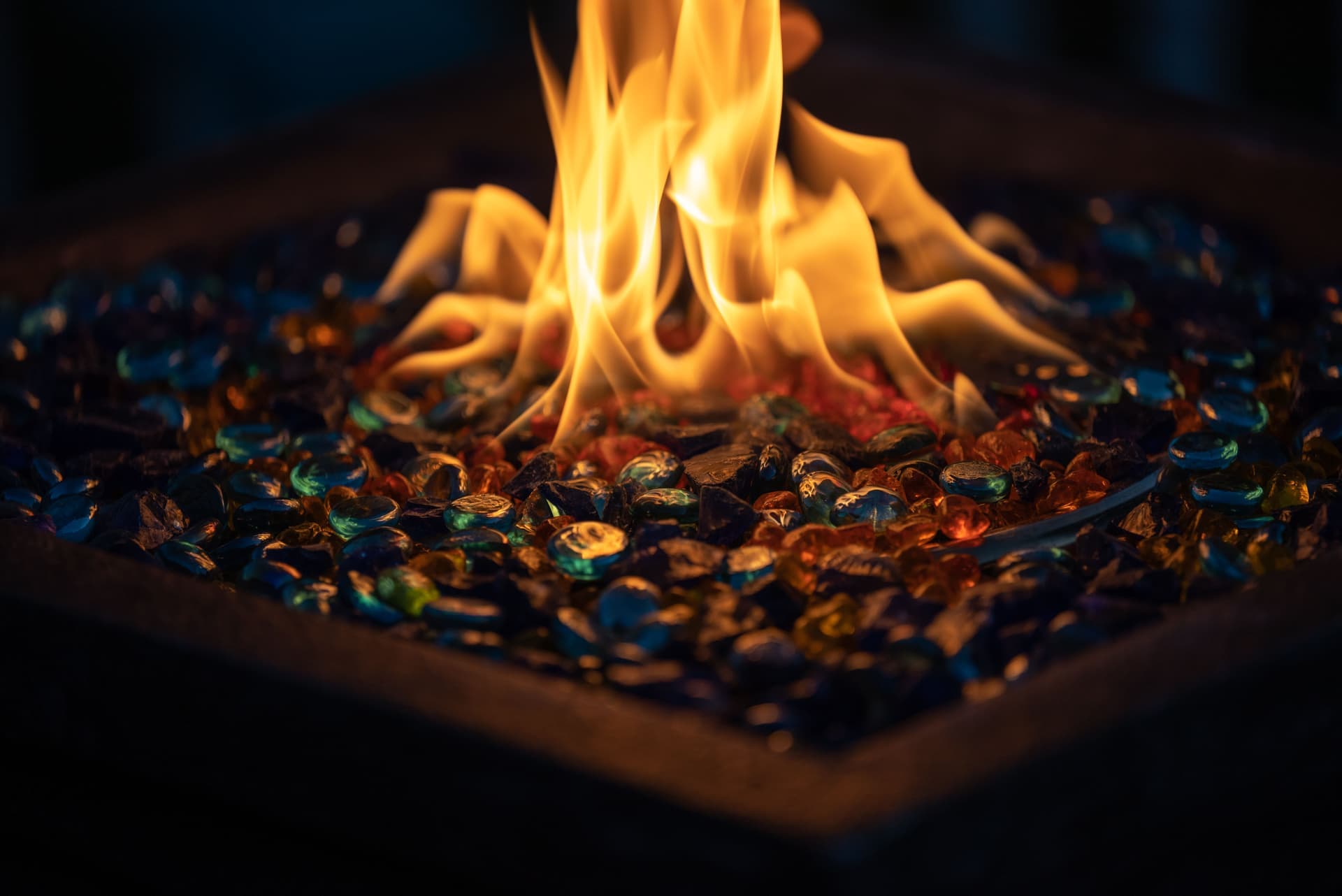
A smokeless fire pit has double walls: air is drawn in at the base, heated as it rises between the walls, and injected above the fire through upper vents. That preheated oxygen burns off combustion products that would otherwise leave as smoke. It reduces smoke substantially; it does not eliminate it.
How secondary burn actually works
Smoke is unburnt fuel. A wood fire releases volatile compounds as it heats, and if those compounds do not meet enough oxygen at a high enough temperature, they leave as visible smoke rather than burning. That is the whole phenomenon.
A double-wall pit attacks it directly. Air enters through holes at the base and travels upward through the gap between the inner and outer walls, where the fire heats it. It emerges through a ring of holes near the top, above the flame, as preheated oxygen arriving exactly where the unburnt volatiles are.
The result is the visible secondary flame you see dancing above the rim of these pits when they are running properly. That is not decoration — it is the smoke burning. It is genuinely clever and it genuinely works.
Where the word smokeless overstates it
Three situations produce smoke from any of these pits, and none of them is a defect.
- Warm-up. The mechanism needs the walls hot to preheat the incoming air. For the first ten to twenty minutes a smokeless pit smokes like any other fire, because the secondary burn has not started yet.
- Damp wood. Moisture must be boiled off before combustion is complete, which costs energy and lowers the temperature. Unseasoned wood produces plenty of smoke in the best pit ever made.
- Overloading. Too much fuel smothers the fire and drops the temperature. These pits work best with a moderate, well-established fire rather than a heaped one.
What determines your smoke, in order
Wood moisture first, by a wide margin. Then how established the fire is. Then the pit design. A secondary-burn pit burning wet wood smokes more than an open pit burning properly seasoned hardwood — the design is the third variable, not the first.
Quick picks
Ranked for fit, not for hype. Output is the maker’s published figure; reach is computed from it or from the maker’s own radius claim, and the table says which. Tap a row for the full write-up, or go straight to the listing.
| # | Product | Best for | Output | Reach | Price |
|---|---|---|---|---|---|
| 1 |  Solo Stove Bonfire 2.0The secondary-burn design does genuinely reduce smoke, and a wood fire puts out more heat than any patio heater here. It heats a circle of people, not a patio, and those are different products. | Heat you gather around | Not published | Not published | $349.99 · Check on Amazon |
| 2 |  Outland Firebowl 89358,000 BTU is more rated input than any patio heater in this registry, in a 19 in bowl you can carry. The catch is that an open bowl throws most of that straight up. | The highest published output here | 58,000 BTU | 2,900 sq ft | $159.99 · Check on Amazon |
Reach marked “claimed” is the maker’s own published figure. Reach without that label is ours, computed from published output at 20 BTU per square foot for an open patio. Neither is a measurement we took.
Top pick · Heat you gather around
Solo Stove Bonfire 2.0 Smokeless Fire Pit with Stand, 19.5 in
The secondary-burn design does genuinely reduce smoke, and a wood fire puts out more heat than any patio heater here. It heats a circle of people, not a patio, and those are different products.
- Fuel
- Wood
- Output
- Not published
- Reach (computed)
- Not published
- Cost per hour
- n/a
What works
- A wood fire's output is not comparable to a patio heater's — this is the reason the heater versus fire pit question resolves the way it does
- The stand is not an accessory, it is the thing that makes it usable on a surface. Buy the version that includes it
- Removable ash pan turns cleanup from a chore into a step, which is the difference between using it weekly and using it twice
What does not
- Smokeless is a comparison, not an absolute. It smokes noticeably less than an open pit; it does not produce no smoke, especially while it comes up to temperature
- The heat is radiant and low — it warms a ring of people standing close, and does nothing for anyone six feet back
- Even with the stand, this needs a heat barrier on a wood deck. The stand reduces transferred heat, it does not eliminate it
| Published specification | |
|---|---|
| Diameter | 19.5 in |
| Height | 16.75 in |
| Weight | 21.75 lb |
| Material | 304 stainless steel, Gunmetal finish |
| Maker's capacity | Suits 4 to 6 people |
| Ash handling | Removable ash pan under the base plate |
| Maker’s coverage claim | None published — the reach figure above is ours |
| Safety listing | No safety listing applies; this is a wood-burning appliance, not a gas one |
Who it is for
A group that gathers around the fire rather than sitting in a spread-out seating arrangement, on a patio where wood smoke is not a neighbor problem.
What it is not for
Anywhere with a roof — this is an open wood fire and belongs under open sky. Also not for anyone who wants heat at the flick of a switch.
2 · The highest published output here
Outland Firebowl 893 Deluxe Portable Propane Fire Pit, 19 in
58,000 BTU is more rated input than any patio heater in this registry, in a 19 in bowl you can carry. The catch is that an open bowl throws most of that straight up.
- Fuel
- Propane
- Output
- 58,000 BTU/h
- Reach (computed)
- 2,900 sq ft · 30.4 ft radius
- Cost per hour
- $1.70
What works
- 58,000 BTU with no wood, no smoke and no ash — it is on in ten seconds and off in one
- Propane means it is legal in most fire-ban conditions where wood is not, though check your own county before assuming
- Portable enough to take camping, which no other heat source here manages
What does not
- An open bowl is a chimney. The rated input is the highest here and the useful radiant fraction is among the lowest — do not read 58,000 BTU as 58,000 BTU of warmth on people
- At full output a 20 lb cylinder empties fast. The runtime table has the exact figure
- The hose runs across the ground to the cylinder, which is a trip hazard and a design compromise the fire tables avoid
| Published specification | |
|---|---|
| Rated input | 58,000 BTU/h |
| Diameter | 19 in |
| Fuel | 20 lb cylinder via the included hose and regulator |
| Included | Cover and carry kit on the Deluxe |
| Fill | Lava rock included |
| Maker’s coverage claim | None published — the reach figure above is ours |
| Safety listing | CSA certified per the maker's published product data |
Who it is for
Somewhere that needs instant, smokeless flame on demand, including places where a wood fire is not permitted.
What it is not for
Efficient heating, decks without a [heat barrier](/fire-pits/deck-safe), and anywhere with anything overhead.
Sources for this entry
What we would skip
A list with no losers is a list nobody edited. These are the choices we would actively steer you away from, and why.
Expecting no smoke at all
Secondary burn reduces smoke substantially and does not eliminate it. Every one of these smokes while it comes up to temperature, and all of them smoke with damp wood. If genuinely zero smoke is the requirement, the answer is propane, not a better wood pit.
Burning unseasoned wood in one
Moisture is the largest single determinant of smoke, and it swamps the design. Wet wood in a secondary-burn pit produces plenty of smoke and a disappointed owner. Seasoned hardwood at under about 20 percent moisture is what these are designed around.
Skipping the stand on a deck
A secondary-burn pit runs hotter than an open one, which is how it burns off the smoke. Hotter is not gentler on the boards underneath. The stand and a heat barrier are both still required.
The other advantages, which get less attention
- More complete combustion means more heat from the same wood. Burning the volatiles releases their energy instead of sending it up as smoke, so a secondary-burn pit is genuinely warmer for the fuel.
- Far less ash. More complete combustion leaves less behind, and the removable ash pan on the better designs turns cleanup into a step rather than a chore.
- It is more pleasant to sit around. Not having to move your chair every time the wind shifts is the practical benefit people actually notice.
- Neighbors. Wood smoke is the most common source of complaint about outdoor fires, and less of it is straightforwardly better.
For the specific unit most people mean when they use the word, our full review of the Solo Stove Bonfire 2.0 goes through the mechanism, the start-up window where it does smoke, and who should buy something else.
If you genuinely want zero smoke
Buy propane. A gas fire bowl produces no smoke at all, no ash, and no warm-up period, and it is frequently permitted during fire restrictions when wood is not.
What you give up is the wood fire — the smell, the sound, and the higher raw output. That is a real loss and it is why wood pits still sell. But if the reason you are reading a page about smokeless fire pits is that smoke is a problem where you live, the honest recommendation is the one that produces none.
How we picked
- Mechanism explained rather than asserted. Secondary burn is real physics and it is describable, so we describe it instead of repeating the marketing word.
- The limits stated plainly. These pits smoke during warm-up and with damp wood, and a page that omitted that would be selling rather than informing.
- Propane included as the genuinely smokeless option, because if zero smoke is the requirement, wood is not the answer at all.
- Deck compatibility noted, since a hotter burn does not reduce the heat reaching the surface below.
What we did not do
Everyone in this category says they tested twenty heaters. We have not tested any, and we say so. What we do instead: compile the published specs, compute the electrical and gas load from them, cite the maker’s own manual, and show the arithmetic so you can check it. The full method, including how to challenge a figure.
For how these compare on delivered warmth rather than smoke, the fire pit picks are here, and if the patio is decked, the deck-safe page applies to smokeless pits exactly as to any other.
Common questions
Do smokeless fire pits really work?
Yes, and the mechanism is real: double walls preheat incoming air and inject it above the fire, burning off compounds that would otherwise leave as smoke. They produce noticeably less smoke than an open pit. They are not literally smokeless, particularly during warm-up and with damp wood.
Why is my smokeless fire pit smoking?
Almost always damp wood, or a fire that has not come up to temperature yet. The secondary burn needs hot walls to preheat the incoming air, so the first ten to twenty minutes smoke like any fire. Seasoned hardwood at under about 20 percent moisture is what these are designed around.
Is a smokeless fire pit better than a regular one?
For smoke and for heat from the same wood, yes — burning the volatiles releases their energy instead of losing it. It also leaves far less ash. It costs more, and it does not change anything about deck safety or what is allowed overhead.
What is the difference between a solo stove and a regular fire pit?
The double wall. Air is drawn in at the base, heated as it rises between the walls, and injected above the flame as preheated oxygen — which burns off the smoke. A regular fire pit is a single-wall bowl with no secondary air supply.
Read next
The best fire pits for heat
Fire pits ranked on delivered warmth rather than rated output, with runtime and cost computed.
Deck-safe fire pits
The stand-plus-barrier combination that protects decking, and the pits that suit it.
Chiminea vs fire pit
The one outdoor fire design that directs heat forward, compared with an open pit.
Patio heater vs fire pit
Output, direction, cost, wind and permitted use compared, with exits to both catalogs.
Solo Stove Bonfire 2.0 review
How the secondary burn works, what smokeless really means, what wood costs, and when a propane pit is the better buy.