Fire pits
The best fire pits for heat
Fire pits ranked on delivered warmth rather than rated output, with runtime and cost computed.
The other option
A fire pit is not a worse patio heater. It is a different product answering a different question, and the answer turns on whether people gather around it or spread out.
The question everyone arrives with is answered on one page: patio heater vs fire pit.
A patio heater heats a space; a fire pit heats a circle of people around it. If your seating is spread out or against a wall, buy a heater. If people gather in a ring and the fire is the reason they are outside, buy a fire pit. Output figures do not settle this — geometry does.
A propane fire bowl rated at 58,000 BTU/h has a higher rated input than any patio heater in our registry. A 48,000 BTU tower is lower. Read those two numbers side by side and the fire pit looks like the more powerful heater. It is not, in any sense that matters on a cold evening.
The difference is direction. A patio heater has a reflector engineered to push heat downward and outward across an area. An open fire bowl is, functionally, a chimney: hot gas rises, and the useful output is the radiant fraction that leaves sideways. Both figures are honest ratings of fuel consumed. Only one of them describes where the warmth goes.
This is why the comparison has to be made on geometry rather than specification, and why the head-to-head page is built around five axes instead of one number.
| Product | What it is | Best case | Worst case |
|---|---|---|---|
| Wood fire pit | An open steel bowl, often with a secondary-burn design to cut smoke | A group standing in a ring, open sky, no neighbors close | Smoke, ash, a fire ban, and nothing on demand |
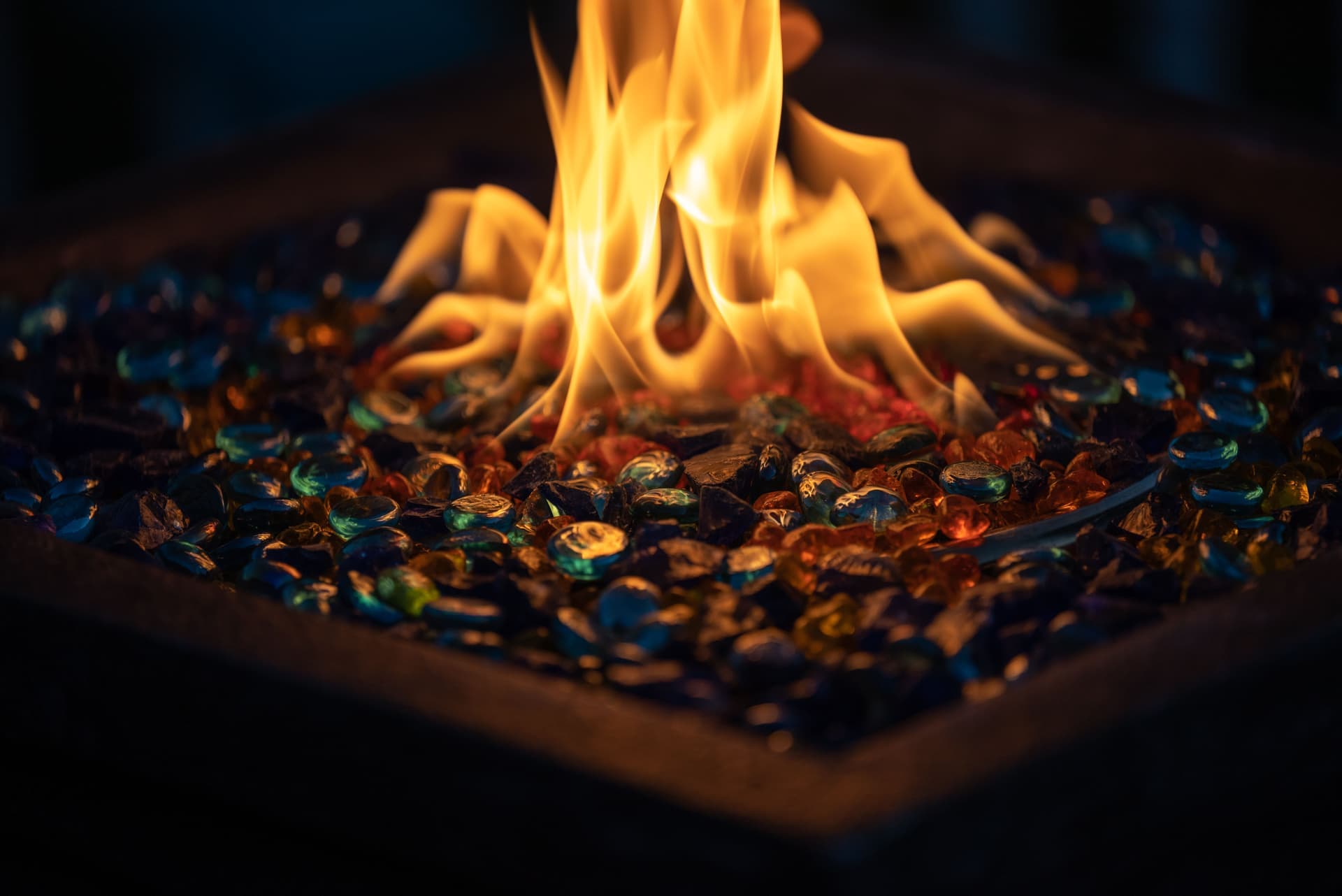
| Propane fire bowl | A burner under lava rock, fed from a cylinder | Instant flame, no smoke, permitted during many wood bans | Very poor heat per dollar; a hose across the patio |
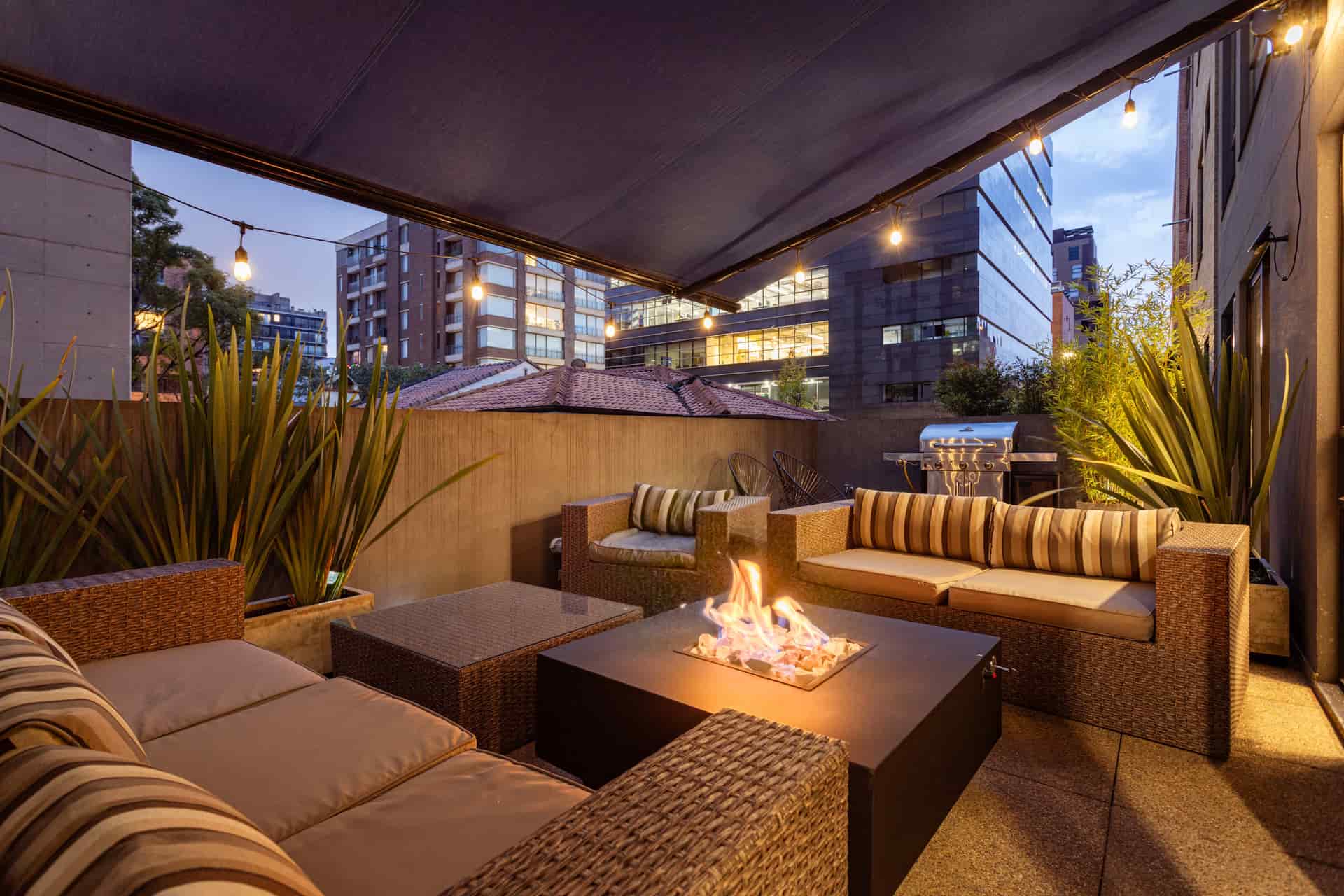
| Fire table | A propane burner built into a table with cylinder storage | Seating that already has a table in the middle of it | Furniture prices for the least heat in the category |
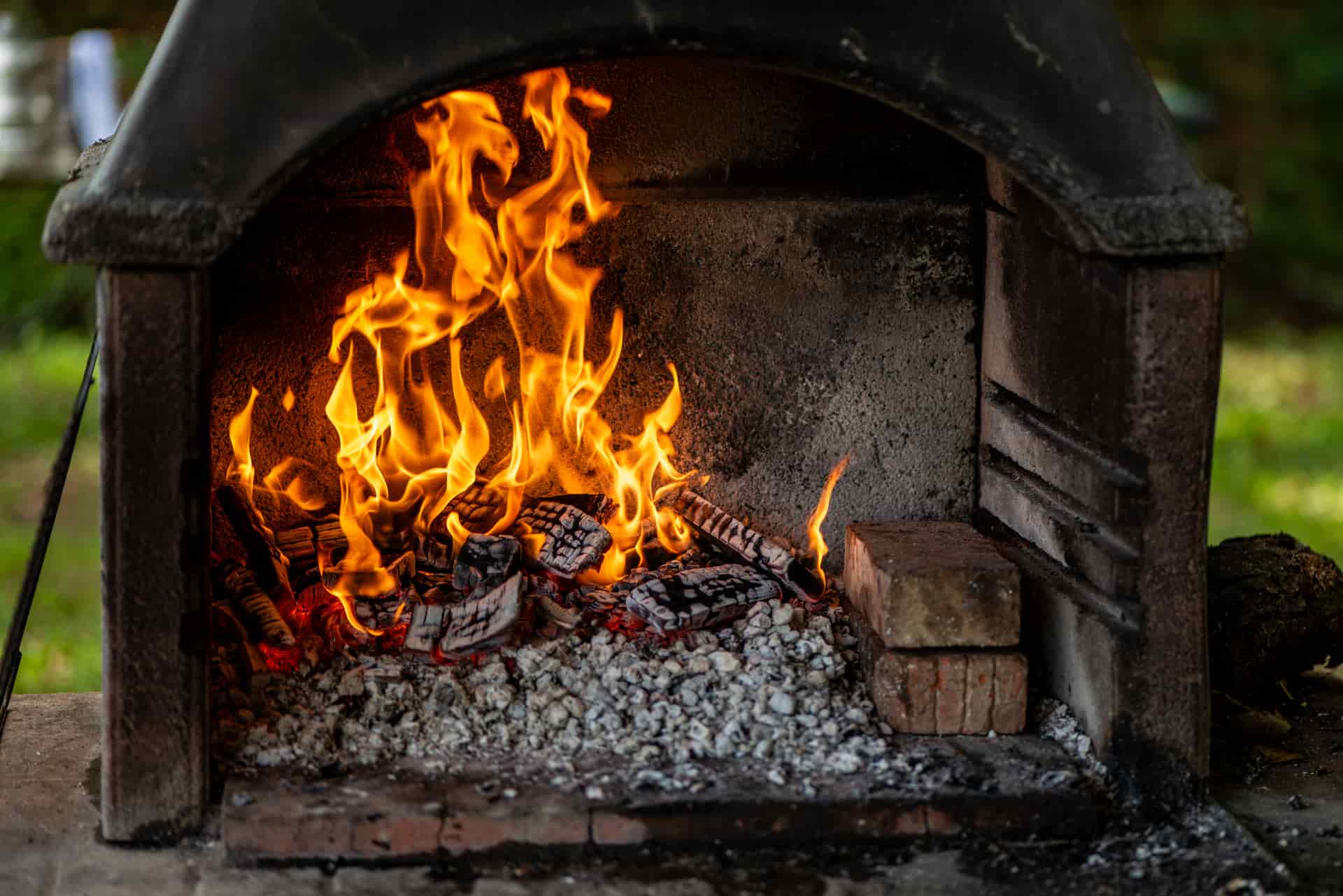
Chimineas are a fourth case — a chimney design that directs heat forward rather than up. [Compared here](/fire-pits/chiminea-vs-fire-pit).
Propane fire features are gas appliances with rated inputs, so the same arithmetic that prices a patio heater prices them. At the U.S. average residential propane price, a 58,000 BTU bowl costs about $1.70 an hour and empties a 20 lb cylinder in around seven and a half hours. A 35,000 BTU fire table is about $1.02 an hour and around twelve hours a cylinder.
Wood is harder to price honestly because firewood cost varies enormously by region and by whether you bought it or cut it, so we do not publish a figure for it. What we can say is that a wood fire's output is far higher than any of these — the constraint on a wood fire is smoke, permits and effort, not energy.
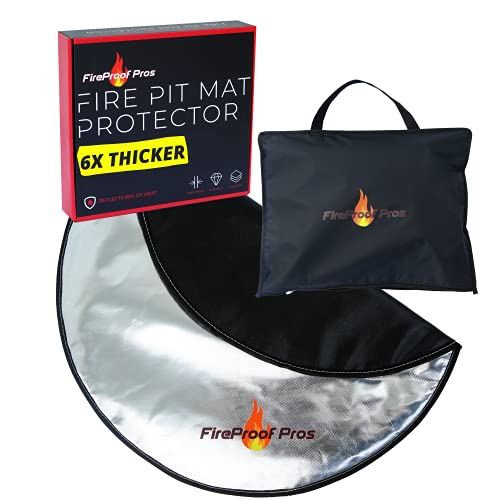
A fire pit on a wood or composite deck needs a heat barrier underneath, and on composite it needs one even when nothing is close to igniting, because composite boards soften and mark well below ignition temperature. A raised stand helps and does not replace the mat.
It is also the case that an open fire under any roof, pergola or overhang is out of the question — not marginal, out. If your patio is covered, the fire pit conversation ends there and the covered patio page is the one you want.
12 pages. Roundups and tools first, then the comparisons, then the guides.
Fire pits
Fire pits ranked on delivered warmth rather than rated output, with runtime and cost computed.

Decks
The stand-plus-barrier combination that protects decking, and the pits that suit it.
Smokeless
How secondary burn works, what it does not do, and what really determines smoke.
Deck protection
Mats judged on published thickness and stated limits, plus how to size one and why leg height matters more than the rating.
Deep review
How the secondary burn works, what smokeless really means, what wood costs, and when a propane pit is the better buy.
Deep review
What 58,000 BTU really delivers from an open bowl, the cost per hour, using it on a deck, and the fire-ban claim in context.
Deep review
What the concealed cylinder and included lid are worth, the cost per hour, and the heat-per-dollar problem.
Head to head
Output, direction, cost, wind and permitted use compared, with exits to both catalogs.
Head to head
What a fire table costs, what it heats, and the patio where it is genuinely the right buy.
Head to head
The one outdoor fire design that directs heat forward, compared with an open pit.
Head to head
Fuel cost, heat, smoke and hassle compared — and why the deciding question is not either of the obvious ones.
Before you buy
What a fire pit actually delivers, what it costs to feed, and the three cases where the answer is no.
A patio heater, for warming a seating area. A fire pit puts out plenty of energy but sends most of it upward, and only warms people who are close and facing it. A fire pit wins when people gather in a ring around it; a heater wins when seating is spread out or against a wall.
As furniture with a flame, often. As a heating strategy, no — a fire table is the poorest heat per dollar in this whole category. A 35,000 BTU table costs about $1.02 an hour to run and warms hands rather than a space.
For heat, a wood pit with a secondary-burn design. For convenience and for places with wood bans, a propane bowl. For an existing seating arrangement, a fire table. They rank differently on every axis, which is why there is no single answer.