Deep review
Hiland tabletop patio heater review
An 11,000 BTU table heater whose own manual is more candid than most listings dare to be. Two published numbers decide whether it fits your table at all.
An 11,000 BTU propane heater that stands 38 inches on a table and warms the people around it. Its manual publishes two figures that decide everything: 24 inches minimum clearance to a ceiling and 36 inches to a wall — which rules out most umbrellas. Run it from a 20 lb cylinder, not 1 lb canisters, and it costs about 32 cents an hour.
We have not lit this heater. What follows reads the manufacturer's own manual for the HLDS032 alongside the retail listing, works the arithmetic those figures imply, and says which numbers come from where.
What it is
A slim 38-inch column that sits on a table with a small propane supply inside the base and a burner behind a screen guard at the top. The listing publishes 11,000 BTU/h with adjustable control, a hammered bronze and stainless finish, a thermocouple flame-failure cutoff, an anti-tilt device, a burner screen guard, and a weight plate in the base for stability. It runs on a 1 lb canister or a 20 lb cylinder — the adapter hose for the larger cylinder is not included.
What makes it worth a full review is not the hardware, which is conventional. It is that AZ Patio Heaters publishes a real manual with real numbers in it, and several of those numbers change where you can put this thing.
Quick picks
Ranked for fit, not for hype. Output is the maker’s published figure; reach is computed from it or from the maker’s own radius claim, and the table says which. Tap a row for the full write-up, or go straight to the listing.
| # | Product | Best for | Output | Reach | Price |
|---|---|---|---|---|---|
| 1 | 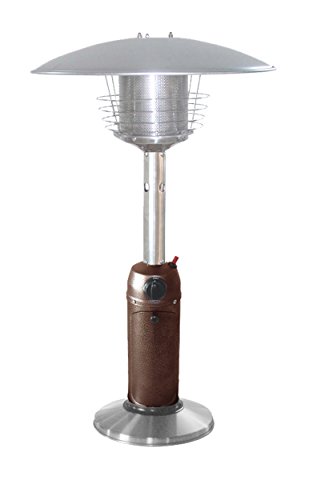 Hiland tabletop11,000 BTU heats a table, not a patio, and being clear about that is the whole point. For a bistro table on a balcony it is the right size and nothing bigger fits. | One table, four people | 11,000 BTU | 550 sq ft | $126.54 · Check on Amazon |
Reach marked “claimed” is the maker’s own published figure. Reach without that label is ours, computed from published output at 20 BTU per square foot for an open patio. Neither is a measurement we took.
Top pick · One table, four people
Hiland HLDS032-BB Portable Table Top Patio Heater, Hammered Bronze
11,000 BTU heats a table, not a patio, and being clear about that is the whole point. For a bistro table on a balcony it is the right size and nothing bigger fits.
- Fuel
- Propane
- Output
- 11,000 BTU/h
- Reach (computed)
- 550 sq ft · 13.2 ft radius
- Cost per hour
- $0.32
What works
- Runs off a 1 lb canister, which makes it the only heater here you can carry out to a table and back with one hand
- 11,000 BTU is honest for the job: our reach arithmetic puts that at roughly a table's worth of warmth, and the unit does not pretend otherwise
- A burner screen guard on a table-height heater is a genuine safety feature, not a spec-sheet line
What does not
- 1 lb canisters are the most expensive propane per BTU you can buy — get the 20 lb adapter hose if you use it regularly
- At 38 in on a table, this puts an open flame at seated head height. Placement matters more than with any other unit here
- It will not touch an open patio. Anyone expecting a room-scale effect will be disappointed
| Published specification | |
|---|---|
| Rated input | 11,000 BTU/h, adjustable |
| Height | 38 in |
| Fuel | 1 lb canister or 20 lb cylinder, per the listing |
| Finish | Hammered bronze |
| Safety | Thermocouple, anti-tilt device, burner screen guard |
| Stability | Weight plate in the base |
| Maker’s coverage claim | None published — the reach figure above is ours |
| Safety listing | Thermocouple flame-failure cutoff and anti-tilt device per the listing |
Who it is for
A balcony, a bistro table, or a second heater that warms hands at the table while a tower does the space.
What it is not for
Heating an area. And never indoors, on a covered porch with a low ceiling, or anywhere a tablecloth can reach it.
Sources for this entry
The two clearance figures that decide everything
If you read nothing else here, read this. The manual states minimum clearances from combustible materials of 24 inches to a ceiling and 36 inches to a wall.
Sit with the first one for a moment. Twenty-four inches of clear space above a heater that is already 38 inches tall means you need roughly five feet of clearance above the table surface. A patio umbrella canopy is usually nowhere near that high. Neither is a low porch soffit, a pergola with close-set beams, or the underside of a balcony above.
So the most common mental image of a tabletop heater — a small flame on a table under a parasol, taking the chill off dinner — is the one arrangement its own manufacturer rules out. If that is your situation, the product built for it clamps to the pole instead: umbrella heaters put electric radiant heat above the table with no flame under the canopy at all.
The 36-inch wall figure is the one that catches people on balconies and in corners. A bistro table pushed against a railing or a house wall does not leave three feet, and the heater has to move rather than the number.
Where the manual says it may go
This is the clearest answer on this site to a question buyers ask constantly — can a propane heater be used under a roof — and it comes from the maker rather than from us. The manual states you may place the appliance in a shelter:
- "With walls on all sides, but with no overhead cover." A walled courtyard with open sky is fine.
- "Within a partial enclosure which includes an overhead cover and no more than two side walls." A roof is permitted only when at most two sides are enclosed — and those two may be parallel, like a breezeway, or at right angles.
- And separately, in plain terms: "Do not use in unventilated or enclosed areas."
Read together, the rule is that you trade walls against a roof. Every side open, you may have a cover. Enclose a third side and you may not. That is a much more precise answer than the usual internet guidance, and it lines up with what our clearances page sets out for gas appliances generally.
Storage is part of the instruction
The manual is explicit: store the appliance indoors only if the cylinder is disconnected and removed, and a disconnected cylinder must have its dust caps fitted and must not be stored in a building, garage or any other enclosed area. The cylinder lives outside. That is not a suggestion in the small print — it is the part people get wrong every October.
What the maker admits about cold weather
Buried in the troubleshooting section is a sentence that almost no listing in this category would print: "Heater operates at reduced efficiency below 40ºF (5ºC)."
That is the manufacturer telling you its heater works less well in exactly the conditions you bought it for. It is a property of small propane supplies rather than a defect in this unit — the colder the cylinder, the lower its vapor pressure, and a 1 lb canister has very little thermal mass to draw on. The effect is a weaker flame on the coldest evenings.
We would rather a maker said this than not. It also points at the practical fix: on cold nights, a 20 lb cylinder holds its pressure better than a 1 lb canister, which is one more reason to run it on the larger supply. If you want the broader picture of what works as the temperature drops, what to run at 50, 40 and 30 degrees covers the whole category.
The fuel choice is the running cost
This unit can take either supply, and the decision is worth more money than the purchase price difference between tabletop heaters.
| Supply | Energy it holds | Runtime at 11,000 BTU/h | Cost per hour |
|---|---|---|---|
| 20 lb cylinder | About 431,000 BTU | About 39 hours | About 32 cents |
| 1 lb canister | About 21,600 BTU | About 2 hours | Depends on canister price |
Our arithmetic, from the unit's published 11,000 BTU/h rating and the propane energy figures this site uses throughout. Canister prices vary too much to publish, so the comparison is expressed in canisters rather than dollars.
The useful way to see it: one 20 lb cylinder holds roughly what twenty 1 lb canisters hold. A cylinder refill costs about $12.60 at the national average price this site cites, so canisters only break even if they cost under about 63 cents each. They do not come close.
Which makes the adapter hose — not included — effectively a required purchase for anyone using this regularly. Canisters are for portability: carrying the heater to a table with one hand and nothing trailing behind it, which is a real and genuinely nice thing to be able to do. For a heater that lives on the same patio table, buy the hose.
The prices every cost figure on this site uses
- Electricity: 18.34 cents per kWh. U.S. average residential retail price, June 2026. EIA, Electric Power Monthly, Table 5.6.A (residential, U.S. total).
- Propane: $2.674 per gallon. U.S. average residential price, week ending March 30, 2026. EIA, Weekly Heating Oil and Propane Prices (residential, U.S. average). That series only runs through the heating season, which is why the latest reading is a March one.
- Propane energy content: 91,420 BTU per gallon (higher heating value, the same basis appliance BTU ratings use). U.S. DOE Alternative Fuels Data Center, Fuel Properties Comparison.
- Conversion: 1 kWh = 3,412 BTU. Which is why a 1,500 W electric heater is a 5,118 BTU/h appliance, and why comparing it to a 48,000 BTU propane tower is not the comparison it looks like.
11,000 BTU is a table, not a patio
Worth being blunt about, because the disappointment pattern here is predictable. A full-size propane tower is rated 46,000 to 50,000 BTU. This is 11,000 — roughly a quarter — and it sits at table height rather than under a wide reflector seven feet up.
What that buys is warmth on the hands, arms and faces of people sitting at one table. What it does not buy is a comfortable patio, or anything at all for someone in a chair six feet away. No coverage figure is published for it, and any reach number you see for this heater on this site is ours and computed — the coverage page explains why a stated radius always flatters itself outdoors.
Used as intended it is the right size and the honest one. Used as a patio heater it is the wrong product, and the tabletop roundup sets out which situations genuinely call for this format.
Lighting it, and the failure to expect
The manual's procedure is worth knowing before the first evening, because the step people skip is the one that matters: hold the variable control knob down, press the igniter several times until the pilot lights, then wait 15 seconds for the thermocouple to heat before releasing the knob.
Release too early and the flame dies, which feels like a broken heater and is not. That same thermocouple is also the component most likely to genuinely fail in a few years' time — it is the commonest fault in propane patio heating, the manual's own troubleshooting table lists "replace thermocouple" as the fix, and it is a cheap part. The fault tree walks through telling one from the other, and repair or replace covers when it is worth doing.
One more from the manual worth carrying: it instructs a soapy-water leak test on the gas system periodically and immediately if you smell gas. On any propane appliance that is the routine, not an optional extra.
Who should buy it
A bistro table with open sky above it, a walled courtyard, or a balcony where the lease permits propane and there is genuine clearance overhead. It is also a good second heater — hands-and-faces warmth at the table while something larger handles the space — which is how a lot of patios end up using one.
For balconies specifically, read the lease before the spec sheet: many buildings prohibit open flame outright, and the balcony page covers what is left when they do.
Who should not
- Anyone with an umbrella over the table. The published 24-inch ceiling clearance almost certainly rules it out. Clamp an electric unit to the pole instead.
- Anyone with a low porch roof, soffit or close-set pergola beams, for the same reason.
- Anyone trying to warm a patio. 11,000 BTU at table height is a quarter of a tower's rating and a fraction of its reach.
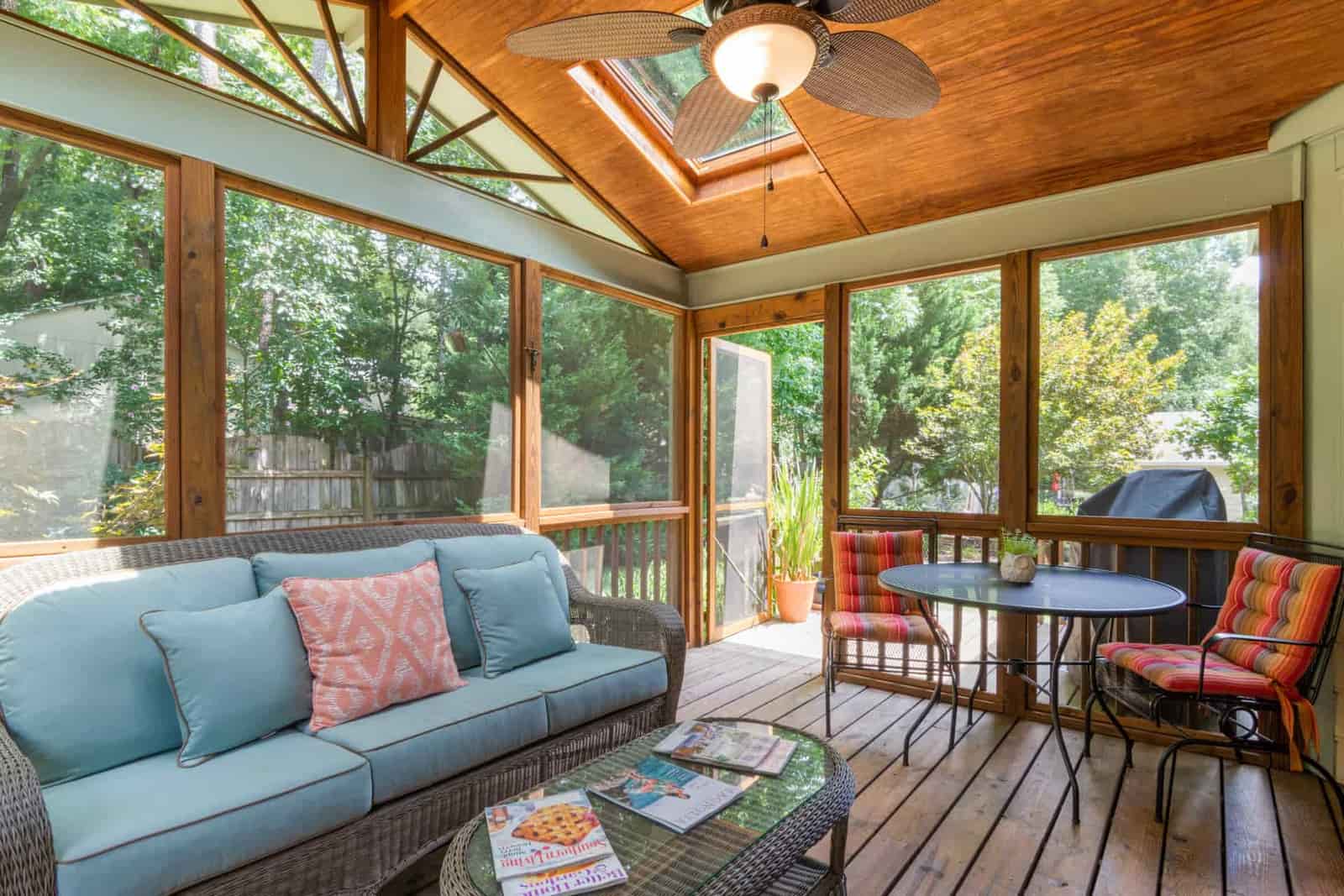
- A screened porch or anything substantially enclosed. The manual permits a roof only with no more than two side walls, and says plainly not to use it in unventilated or enclosed areas. A screened porch needs electric.
- Anyone unwilling to buy the adapter hose, unless the heater is genuinely being carried around — canisters are about twenty times the fuel cost per BTU.
The verdict
A conventional table heater with an unusually candid manual, and the manual is the reason to take it seriously. Published clearances, an explicit shelter rule, a stated cold-weather limitation and a real troubleshooting table are worth more to a buyer than another line of marketing copy — and they are exactly what the cheap unbranded tabletop heaters do not give you.
Measure the clearance above your table before ordering, buy the 20 lb adapter hose with it, and expect a thermocouple in a few years. On those terms it is the right size for the job it actually does, which is the most useful thing a tabletop heater can be.
Common questions
Can you use a tabletop patio heater under an umbrella?
Almost certainly not this one. Its manual specifies a minimum 24 inches of clearance to a ceiling, and the heater is already 38 inches tall - so you need roughly five feet of clear space above the table. Most umbrella canopies sit well below that. An electric heater clamped to the umbrella pole is the product designed for that arrangement.
What clearances does the Hiland tabletop heater need?
The manual states minimum clearances from combustible materials of 24 inches to a ceiling and 36 inches to a wall. The wall figure is the one that catches balconies and corners, where a table pushed against a railing or house wall does not leave three feet.
Can a propane patio heater be used under a roof?
This maker's manual is unusually specific. It permits a shelter with walls on all sides but no overhead cover, or a partial enclosure with an overhead cover and no more than two side walls. In short: you trade walls against a roof, and it also says plainly not to use the heater in unventilated or enclosed areas.
How long does a propane tank last on an 11,000 BTU tabletop heater?
About 39 hours from a 20 lb cylinder, which holds roughly 431,000 BTU - that is our calculation from the unit's rating. A 1 lb canister holds about 21,600 BTU, so roughly two hours. One cylinder is worth about twenty canisters.
Is it cheaper to run a tabletop heater on 1 lb canisters or a 20 lb tank?
The cylinder, by a wide margin. A refill costs about $12.60 at the national average price this site cites and gives about 39 hours, so roughly 32 cents an hour. Canisters would have to cost under about 63 cents each to match, which they do not. Buy the adapter hose unless you are genuinely carrying the heater around.
Do tabletop patio heaters work in cold weather?
Less well, and this maker says so: its manual notes the heater operates at reduced efficiency below 40 F. That is propane vapor pressure rather than a defect - a cold cylinder delivers less - and it is one more reason to use a 20 lb cylinder rather than a small canister on the coldest evenings.
Sources
- AZ Patio Heaters — HLDS032 tabletop patio heater owner's manual (PDF). Source for the 24 in ceiling and 36 in wall minimum clearances, the permitted-shelter rules, the "do not use in unventilated or enclosed areas" instruction, the cylinder storage instruction, the 15-second thermocouple lighting step, the troubleshooting table and the note that the heater operates at reduced efficiency below 40ºF (5ºC).
- Amazon listing — Hiland HLDS032-BB portable tabletop patio heater, 11,000 BTU, 38 in, 1 lb or 20 lb propane, thermocouple, anti-tilt device, burner screen guard, weight plate
Read next
Tabletop patio heaters heat a table
What a tabletop heater's 11,000 BTU actually covers, and the fuel arithmetic that decides how you feed it.
Patio umbrella heaters
Heaters that clamp to an umbrella pole, what the umbrella has to take, and when a tower is the better answer.
Heating an apartment balcony
Why balconies rule out open flame, and the small electric units that actually suit the space.
Patio heater safety, with the published numbers
Published clearance figures, the ventilation rule, and where each heater type must never go.
AZ Patio Heaters and Hiland, explained
The two-name confusion settled, what the range covers, and why parts availability is the real reason to buy it.