Before you buy
Are fire pits worth it?
Usually yes, but for a reason most buyers do not state out loud — and the people who regret it all wanted the same thing from it.
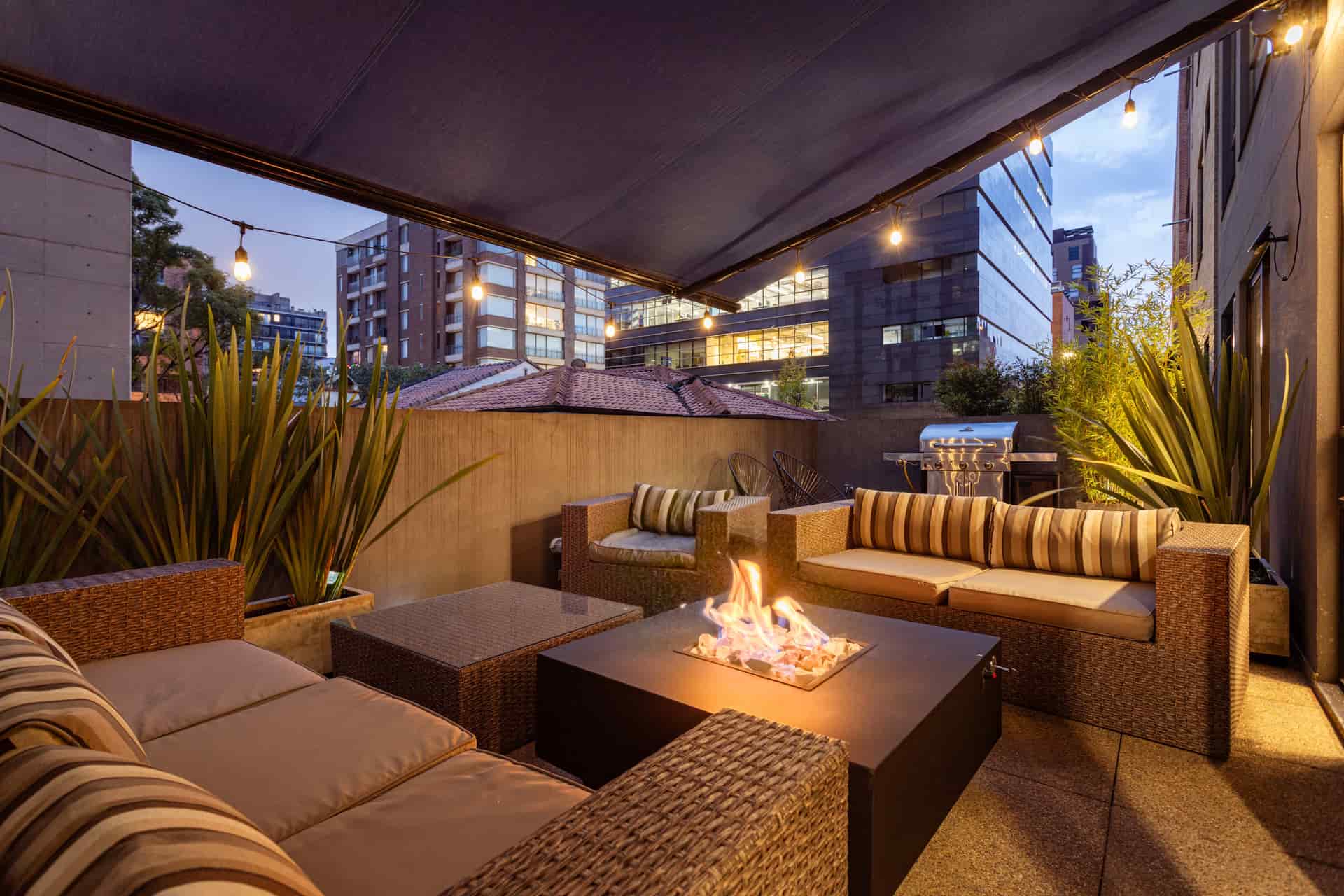
Worth it if you want a fire. Not worth it if you want a warm patio. A fire pit heats a tight ring of people who are standing close to it, and does almost nothing for anyone seated six feet back. Buyers who wanted atmosphere are nearly always happy; buyers who wanted heating are nearly always not.
The question behind the question
Almost everyone asking this is really asking one of two different things, and they have opposite answers.
"Will I use it?" — usually yes, and more than you expect. A fire pit is the thing that gets people to stay outside after dark, and the reason is not thermal. It gives a patio a focal point, which changes where people stand and how long they stay in a way no appliance does.
"Will it keep us warm?" — not in the way you mean. It will keep four people warm while they stand around it. It will not make a patio comfortable, and it will not help the person in the chair at the back. That is the mismatch that produces every disappointed owner.
What you actually get
- A focal point. The genuine product. People orient towards a fire and stay longer, and on most patios that is worth more than degrees.
- Real radiant heat at close range. A wood fire at full burn puts out more than any electric heater on this site. It just delivers it in a tight low ring rather than over a seating area.
- Light. Underrated, and the reason a fire pit makes an evening feel like something rather than like sitting outside in the dark.
- Season extension of a sort. It will not rescue a cold snap, but it turns a merely cool evening into one people stay out for.
What you do not get
- A heated patio. Six feet back you are relying on whatever the air was doing anyway. This is the single most common expectation gap in the category.
- Use under a roof. A wood pit is out entirely. A propane one is a gas appliance with published clearances, and a covered patio is a question for the safety page rather than an assumption.
- A free evening. Wood has to be bought, stored dry, carried, lit and cleaned up after. Propane costs money per hour. Neither is a switch on a wall.
- A solution to wind. A fire is if anything more affected than a heater — it is unshielded flame in open air. Block the wind first whatever you buy.
Quick picks
Ranked for fit, not for hype. Output is the maker’s published figure; reach is computed from it or from the maker’s own radius claim, and the table says which. Tap a row for the full write-up, or go straight to the listing.
| # | Product | Best for | Output | Reach | Price |
|---|---|---|---|---|---|
| 1 |  Outland Firebowl 89358,000 BTU is more rated input than any patio heater in this registry, in a 19 in bowl you can carry. The catch is that an open bowl throws most of that straight up. | The highest published output here | 58,000 BTU | 2,900 sq ft | $159.99 · Check on Amazon |
| 2 |  Solo Stove Bonfire 2.0The secondary-burn design does genuinely reduce smoke, and a wood fire puts out more heat than any patio heater here. It heats a circle of people, not a patio, and those are different products. | Heat you gather around | Not published | Not published | $349.99 · Check on Amazon |
| 3 |  Shintenchi fire table50,000 BTU of table-height flame plus somewhere to put a drink, and a lid that turns it back into a table when it is out. As heat it loses to a tower; as a reason to stay outside until eleven it beats one. | A table that is also the fire | 50,000 BTU | 2,500 sq ft | $199.99 · Check on Amazon |
Reach marked “claimed” is the maker’s own published figure. Reach without that label is ours, computed from published output at 20 BTU per square foot for an open patio. Neither is a measurement we took.
Top pick · The highest published output here
Outland Firebowl 893 Deluxe Portable Propane Fire Pit, 19 in
58,000 BTU is more rated input than any patio heater in this registry, in a 19 in bowl you can carry. The catch is that an open bowl throws most of that straight up.
- Fuel
- Propane
- Output
- 58,000 BTU/h
- Reach (computed)
- 2,900 sq ft · 30.4 ft radius
- Cost per hour
- $1.70
What works
- 58,000 BTU with no wood, no smoke and no ash — it is on in ten seconds and off in one
- Propane means it is legal in most fire-ban conditions where wood is not, though check your own county before assuming
- Portable enough to take camping, which no other heat source here manages
What does not
- An open bowl is a chimney. The rated input is the highest here and the useful radiant fraction is among the lowest — do not read 58,000 BTU as 58,000 BTU of warmth on people
- At full output a 20 lb cylinder empties fast. The runtime table has the exact figure
- The hose runs across the ground to the cylinder, which is a trip hazard and a design compromise the fire tables avoid
| Published specification | |
|---|---|
| Rated input | 58,000 BTU/h |
| Diameter | 19 in |
| Fuel | 20 lb cylinder via the included hose and regulator |
| Included | Cover and carry kit on the Deluxe |
| Fill | Lava rock included |
| Maker’s coverage claim | None published — the reach figure above is ours |
| Safety listing | CSA certified per the maker's published product data |
Who it is for
Somewhere that needs instant, smokeless flame on demand, including places where a wood fire is not permitted.
What it is not for
Efficient heating, decks without a [heat barrier](/fire-pits/deck-safe), and anywhere with anything overhead.
Sources for this entry
2 · Heat you gather around
Solo Stove Bonfire 2.0 Smokeless Fire Pit with Stand, 19.5 in
The secondary-burn design does genuinely reduce smoke, and a wood fire puts out more heat than any patio heater here. It heats a circle of people, not a patio, and those are different products.
- Fuel
- Wood
- Output
- Not published
- Reach (computed)
- Not published
- Cost per hour
- n/a
What works
- A wood fire's output is not comparable to a patio heater's — this is the reason the heater versus fire pit question resolves the way it does
- The stand is not an accessory, it is the thing that makes it usable on a surface. Buy the version that includes it
- Removable ash pan turns cleanup from a chore into a step, which is the difference between using it weekly and using it twice
What does not
- Smokeless is a comparison, not an absolute. It smokes noticeably less than an open pit; it does not produce no smoke, especially while it comes up to temperature
- The heat is radiant and low — it warms a ring of people standing close, and does nothing for anyone six feet back
- Even with the stand, this needs a heat barrier on a wood deck. The stand reduces transferred heat, it does not eliminate it
| Published specification | |
|---|---|
| Diameter | 19.5 in |
| Height | 16.75 in |
| Weight | 21.75 lb |
| Material | 304 stainless steel, Gunmetal finish |
| Maker's capacity | Suits 4 to 6 people |
| Ash handling | Removable ash pan under the base plate |
| Maker’s coverage claim | None published — the reach figure above is ours |
| Safety listing | No safety listing applies; this is a wood-burning appliance, not a gas one |
Who it is for
A group that gathers around the fire rather than sitting in a spread-out seating arrangement, on a patio where wood smoke is not a neighbor problem.
What it is not for
Anywhere with a roof — this is an open wood fire and belongs under open sky. Also not for anyone who wants heat at the flick of a switch.
3 · A table that is also the fire
Shintenchi 43 in Rectangular Propane Fire Pit Table, 50,000 BTU
50,000 BTU of table-height flame plus somewhere to put a drink, and a lid that turns it back into a table when it is out. As heat it loses to a tower; as a reason to stay outside until eleven it beats one.
- Fuel
- Propane
- Output
- 50,000 BTU/h
- Reach (computed)
- 2,500 sq ft · 28.2 ft radius
- Cost per hour
- $1.46
What works
- Concealing the cylinder inside the base is the whole design argument — no hose across the patio, no cylinder to look at
- A lid is included, which is what makes a fire table usable as a table for the other six days of the week and keeps rain out of the burner
- CSA certification is published, which on a gas appliance is the kind of claim you can actually look up — plenty of fire tables in this price band state nothing
- 50,000 BTU at table height puts heat where hands and torsos are, which is more usefully placed than a tower's overhead radiance
What does not
- Fire tables are the worst heat-per-dollar in this category and it is not close. You are buying furniture with a flame in it
- At 50,000 BTU/h a 20 lb cylinder empties faster than on a mid-size tower — run the runtime arithmetic before assuming an evening
- The flame sits in an open bowl and a stiff breeze is a real problem for it
- No coverage figure is published, so any reach number for it is ours rather than the maker's
| Published specification | |
|---|---|
| Rated input | 50,000 BTU/h |
| Size | 43 in rectangle |
| Construction | Steel |
| Fuel | 20 lb cylinder, concealed in the base |
| Included | Lid and lava rock |
| Certification | CSA certified per the listing |
| Maker’s coverage claim | None published — the reach figure above is ours |
| Safety listing | CSA certified per the listing |
Who it is for
A seating arrangement that already has a coffee table in the middle of it, where the fire is the point rather than the heating strategy.
What it is not for
Heating an area. If the goal is to make a cold patio usable, [a heater does that better for less](/fire-pits/heater-vs-fire-pit).
Wood, propane or a fire table
Three genuinely different products that get shelved together, and the choice between them decides most of whether you end up happy.
| Format | The appeal | The cost | Where it fails |
|---|---|---|---|
| Wood pit | The real thing - light, sound, smell, and the most heat per evening | Wood, storage space, and the labor of lighting and cleaning | Covered patios, smoke-sensitive neighbors, burn bans |
| Propane pit | A flame in ten seconds, off in one, no smoke and no ash | About a cylinder per several evenings, and the cylinder has to live somewhere | Anyone who wanted a fire rather than a flame |
| Fire table | It is furniture that also burns - the cylinder hides inside and it works as a table with the lid on | You are buying furniture as well as a burner, plus the same propane | Portability, and any patio short of table space |
The three formats and what each one is actually for
The split that holds up: buy wood if the fire is the point, buy propane if the evening is the point. The full comparison has the detail, and fire table versus fire pit covers the furniture question.
The three cases where the answer is no
- You have a roof. A wood pit is excluded outright and a propane one becomes a clearance question. If the patio is covered, the money goes further on a mounted electric heater that was designed for exactly that space.
- You needed heating and said fire pit. If the actual goal is a comfortable seating area in October, a patio heater does that and a fire pit does not. Buying the wrong shape of heat is the expensive mistake here.
- Nobody stands up. A fire pit rewards a group that gathers. If your patio is a dining table where everyone stays seated, the fire is at the wrong height and the wrong distance for all of them, and a table or umbrella heater fits the arrangement better.
What it costs to feed
Propane is the one we can price honestly. A 20 lb cylinder holds about 431,000 BTU, so a 58,000 BTU pit runs for roughly seven and a half hours on a fill, at something near $1.70 an hour at the national average price we cite. A 50,000 BTU fire table is closer to $1.45.
Wood we will not price, because there is no national average worth quoting — bundles from a gas station and a cord from a local supplier differ by an order of magnitude per BTU, and both are prices real people pay. The useful guidance is that buying by volume in advance is the cheap way and buying bundles as you go is the expensive one.
The prices every cost figure on this site uses
- Electricity: 18.34 cents per kWh. U.S. average residential retail price, June 2026. EIA, Electric Power Monthly, Table 5.6.A (residential, U.S. total).
- Propane: $2.674 per gallon. U.S. average residential price, week ending March 30, 2026. EIA, Weekly Heating Oil and Propane Prices (residential, U.S. average). That series only runs through the heating season, which is why the latest reading is a March one.
- Propane energy content: 91,420 BTU per gallon (higher heating value, the same basis appliance BTU ratings use). U.S. DOE Alternative Fuels Data Center, Fuel Properties Comparison.
- Conversion: 1 kWh = 3,412 BTU. Which is why a 1,500 W electric heater is a 5,118 BTU/h appliance, and why comparing it to a 48,000 BTU propane tower is not the comparison it looks like.
How long they last, which is the real cost question
A fire pit is a steel vessel that gets taken to several hundred degrees and back to ambient, repeatedly, outdoors. That cycle is what kills them, and it is why two pits at the same price can be four years apart in useful life.
- Painted steel is the cheap end. The coating fails at the hottest part first, then the exposed steel rusts from the inside out. Two to four seasons is a realistic expectation, less if it lives uncovered.
- Stainless is the reason the better wood pits cost what they do. It discolors rather than corroding, which looks like wear and is not the same as failure.
- Propane burners fail differently. The vessel usually outlives the burner assembly, and the question that decides the outcome is whether replacement parts are sold - the same question that decides whether a patio heater is worth repairing.
- A cover matters more than the material. Standing water is what turns a winter into corrosion, and it is a cheap thing to fix at purchase rather than a year in.
Which changes the arithmetic on the purchase price. A pit at half the price that lasts a third as long is not the cheaper option, and this is one of the few categories where that trade is that stark.
Where the extra money actually goes
Useful to know before deciding whether the upgrade is worth it, because the answer differs by format.
On wood pits, more money buys material and airflow engineering - stainless instead of painted steel, and a secondary-burn design that genuinely reduces smoke rather than a bowl with holes in it. Both are real and both show up every time you use it.
On propane pits, more money buys the enclosure rather than the fire. The burner and the output are broadly similar across the price range; what climbs is the cabinet, the tabletop, the finish and whether the cylinder is hidden. That is a furniture purchase with a flame in it, which is a perfectly good thing to buy as long as you know that is what you are buying.
On both, a published safety certification is worth paying for and is not evenly distributed across the price range. Some inexpensive propane pits state one and some expensive ones do not, so it is worth checking rather than assuming it scales with cost.
Each format now has a close reading of its own: the Shintenchi fire table, the Outland Firebowl 893 on portable propane, and the Solo Stove Bonfire 2.0 on wood.
The honest summary
One more thing worth saying before the summary: the accessory that most improves a fire pit is not sold with it. A heat barrier under it on any combustible surface, a cover over it between uses, and somewhere dry to keep the fuel are what separate a pit that gets used for six years from one that gets used for two.
A fire pit is one of the few outdoor purchases that reliably changes how a space gets used, and it is close to useless as a heating appliance. Buy it for the first reason and you will be happy with it for years. Buy it for the second and you will be back here in November reading about patio heaters, which is a well-trodden path and the reason that comparison page exists.
Common questions
Are fire pits worth the money?
Worth it if you want a fire - they reliably change how a patio gets used after dark, and the focal point matters more than the degrees. Not worth it if you want a warm patio, because a fire pit heats a tight ring of people standing close and does little for anyone seated further back.
Do fire pits actually keep you warm?
At close range, yes - a wood fire at full burn puts out more heat than any electric patio heater. But it radiates outward at low level from ground height, so it warms people leaning in and not a seating area. That difference in shape, not in quantity, is what disappoints buyers.
Are fire pit tables worth it?
They are, for the specific case of a patio that needs a table anyway. The cylinder hides inside the base, the lid turns it back into furniture, and you get a flame in seconds with no smoke or ash. They cost the most of the three formats and they are not portable.
Is a fire pit or a patio heater better?
Different jobs. A fire pit is for a group that gathers around it and for atmosphere; a patio heater is for keeping a seating area comfortable. If people sit in chairs spread around the patio, buy the heater. If they stand around in a circle, buy the pit.
How much does a propane fire pit cost to run?
About $1.70 an hour for a 58,000 BTU portable pit and nearer $1.45 for a 50,000 BTU fire table, at the national average propane price this site cites. A 20 lb cylinder holds roughly 431,000 BTU, which is about seven and a half hours on the larger of the two.
Can you use a fire pit on a covered patio?
A wood-burning pit, no - it is an open fire with a column of hot gas above it and it belongs under open sky. A propane pit is a gas appliance with published clearances, so it becomes a question of what the maker states for overhead clearance rather than an automatic yes.
Read next
Patio heater vs fire pit
Output, direction, cost, wind and permitted use compared, with exits to both catalogs.
The best fire pits for heat
Fire pits ranked on delivered warmth rather than rated output, with runtime and cost computed.
Propane vs wood fire pit
Fuel cost, heat, smoke and hassle compared — and why the deciding question is not either of the obvious ones.
Fire table vs fire pit
What a fire table costs, what it heats, and the patio where it is genuinely the right buy.
Solo Stove Bonfire 2.0 review
How the secondary burn works, what smokeless really means, what wood costs, and when a propane pit is the better buy.
Shintenchi 43 in fire table review
What the concealed cylinder and included lid are worth, the cost per hour, and the heat-per-dollar problem.