Windbreaks
Patio windbreaks, and why they beat a bigger heater
The highest-leverage purchase on this whole site, and the one nobody in the category recommends because it is not a heater.

Blocking the wind on the windward side cuts the heat a patio needs by about 36 percent on our sizing model — a bigger change than any heater upgrade, for a fraction of the price. Clear vinyl panels shelter best; mesh survives high wind better; both need fixing at every grommet.
The arithmetic that makes this the best purchase here
Our sizing model applies an exposure multiplier: 0.9 for a sheltered patio, 1.0 for average, 1.4 for genuinely exposed. Those numbers are ours and they are on the page so you can argue with them, but the direction is not in dispute.
Going from 1.4 to 0.9 is a reduction of about 36 percent in the output the space requires. To put that in context: the difference between the smallest and largest propane tower in this category is about four percent. A windbreak is an order of magnitude more effective than upgrading the heater, and it keeps working on every future evening at no running cost.
It also cuts the bill. A 36 percent reduction in required output translates directly into a lower setting or a smaller unit, and the cost tables scale linearly with output. This is the rare case where the cheap fix is also the better one.
The three types, and how each one fails
| Type | How well it shelters | How it fails |
|---|---|---|
| Clear vinyl panels | Best. A solid barrier creates a genuinely still pocket behind it. | It is a sail. In high wind, fixed only at corners, it tears at the grommets or leaves with the railing. |
| Mesh windscreen | Good. Cuts wind speed substantially without stopping it. | Sun-bleaches and eventually goes brittle. Does not create a fully still pocket. |
| Roll-up curtains | Good when down, nothing when up — which is the point. | Flogs noisily if not tied at the bottom, and the roller mechanism is the part that dies. |
Chosen from published product descriptions and how each material behaves structurally. We have not weather-tested any of these.
The counter-intuitive one: mesh in strong wind
Most people reach for solid panels because they block more wind, and on a sheltered side that is the right call. On a genuinely exposed railing it often is not, and the reason is structural rather than thermal.
A solid panel catches the full force of the wind and transfers all of it into whatever it is attached to. A permeable mesh lets a fraction through, which sheds load and dramatically reduces the force on the fixings. That is why agricultural and construction windbreaks are mesh rather than sheet, and why a mesh screen on an exposed deck railing tends to still be there in spring.
The practical rule: solid where you want a still pocket and the fixing is solid, mesh where the wind is strong and the fixing is a railing.
Quick picks
Ranked for fit, not for hype. Output is the maker’s published figure; reach is computed from it or from the maker’s own radius claim, and the table says which. Tap a row for the full write-up, or go straight to the listing.
| # | Product | Best for | Output | Reach | Price |
|---|---|---|---|---|---|
| 1 |  Clear vinyl curtainsThe highest-leverage purchase on this whole site. Blocking the wind on two sides changes the heat a patio needs by more than any heater upgrade does, and costs a fraction as much. | Turning open sides into walls | n/a | n/a | $63.17 · Check on Amazon-10% |
| 2 | 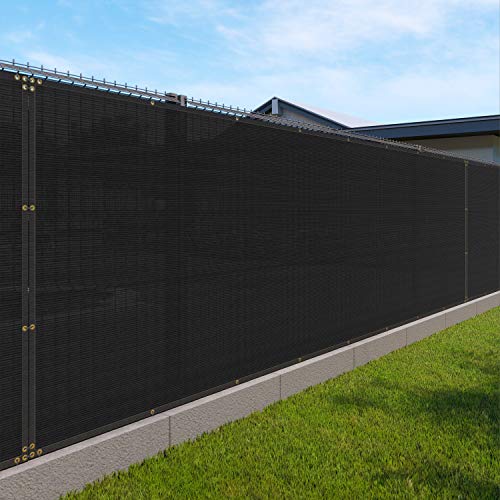 Windscreen4less 6x50Mesh is the counter-intuitive right answer in strong wind: a permeable screen sheds load instead of catching it, which is why solid panels tear off railings and mesh ones do not. | Wind you want slowed, not stopped | n/a | n/a | $42.98 · Check on Amazon |
Reach marked “claimed” is the maker’s own published figure. Reach without that label is ours, computed from published output at 20 BTU per square foot for an open patio. Neither is a measurement we took.
Top pick · Turning open sides into walls
Clear Vinyl Patio Enclosure Curtains, 23 oz, with Grommets
The highest-leverage purchase on this whole site. Blocking the wind on two sides changes the heat a patio needs by more than any heater upgrade does, and costs a fraction as much.
- Fuel
- Accessory
- Output
- Not published
- Reach (computed)
- Not published
- Cost per hour
- n/a
What works
- On our own sizing model, moving a patio from exposed to sheltered cuts the required output by about a third — that is a bigger change than any heater swap
- Clear vinyl keeps the view, which is why people actually leave it up rather than taking it down after a week
- Grommets every 12 inches make it a rope-and-tie job, not a construction project
What does not
- Enclosing a patio changes the heater rules. Once you have walls and a roof, an open-flame propane unit is no longer appropriate — read the safety page before you buy both
- Vinyl goes cloudy and stiff with age and UV, faster in hot climates
- It flogs and cracks in real wind unless it is tied at every grommet, not just the corners
| Published specification | |
|---|---|
| Material | 23 oz clear PVC vinyl tarpaulin |
| Fixing | Metal grommets, ropes and ties included |
| Claimed properties | Waterproof, anti-UV, tear resistant per the listing |
| Intended use | Porch, pergola, gazebo, balcony |
| Maker’s coverage claim | None published — the reach figure above is ours |
| Safety listing | Not applicable — this is a fabric panel, not an appliance |
Who it is for
Any patio where wind is the actual problem and the heater is being blamed for it.
What it is not for
Sealing a space fully. A partly open, well-ventilated enclosure is the goal; an airtight one with a combustion heater inside is dangerous.
Sources for this entry
2 · Wind you want slowed, not stopped
Windscreen4less 6 ft x 50 ft Privacy Fence Screen, Black
Mesh is the counter-intuitive right answer in strong wind: a permeable screen sheds load instead of catching it, which is why solid panels tear off railings and mesh ones do not.
- Fuel
- Accessory
- Output
- Not published
- Reach (computed)
- Not published
- Cost per hour
- n/a
What works
- A permeable screen reduces wind speed without becoming a sail — the failure mode of solid panels on a railing is the panel leaving with the railing attached
- Cheap enough to fit a whole railing line, which is what actually changes a patio's exposure rating
- Doubles as privacy screening, which is usually the reason it survives the household vote
What does not
- A 50 ft roll is far more than most patios need. It is priced as fencing stock, so you are buying a run and cutting it down rather than buying a panel that fits
- It cuts wind speed rather than blocking it — for full shelter you want solid or vinyl panels
- Mesh windscreen is a commodity category sold at wildly different fabric weights. 150 GSM is a reasonable mid-weight; much lighter stock exists at similar prices and does not last
- Sun-bleaches over a few seasons
| Published specification | |
|---|---|
| Size | 6 ft x 50 ft roll, black |
| Fabric weight | 150 GSM polyethylene mesh per the listing |
| Blockage | About 90% visibility blocking per the listing |
| Fixing | Reinforced brass grommets on stitched edges; cable ties or rope |
| Typical use | Deck railings, fence panels, balcony edges |
| Maker’s coverage claim | None published — the reach figure above is ours |
| Safety listing | Not applicable — this is a fabric panel, not an appliance |
Who it is for
An exposed deck or balcony with a railing to attach to, in a spot where the wind is persistent rather than occasional.
What it is not for
Creating a genuinely still pocket. If the goal is a still corner, use solid panels or vinyl.
Sources for this entry
What we would skip
A list with no losers is a list nobody edited. These are the choices we would actively steer you away from, and why.
Enclosing three sides and keeping a propane heater
This is the trap. Solid panels on three sides plus a roof is an enclosed space, and an open-combustion heater does not belong in one — it consumes oxygen and produces flue gas including carbon monoxide. Enclose the patio and switch to electric, or leave a genuinely open side.
Solid panels on an exposed railing without proper fixing
A solid panel is a sail with the same area as the panel. On an exposed deck railing, fixed at the corners only, it will eventually leave, and it may take a section of railing with it. Fix at every grommet or use mesh instead.
Cheap thin vinyl for a permanent installation
Light-gauge clear vinyl goes cloudy, stiff and brittle within a season or two of real sun, and then cracks along the fold lines. If the screen is going to live outdoors year-round, weight is the specification that matters.
Where to put it
- Find the prevailing wind. Not the direction it blew last Tuesday — the one it comes from most evenings. A ribbon tied to the railing for a week tells you more than a weather app.
- Block the windward side first. One well-placed screen does more than three badly placed ones, and you may not need the others at all.
- Then block the second side if there is one. Two adjacent sides create a genuine still corner, which is where the chairs should go.
- Leave at least one side genuinely open if you are using any combustion heater. This is not optional. The safety page explains why.
- Fix at every grommet. Corners only is how panels leave. Rope through each one, or cable ties, and check them after the first gale.
The trade you are making
Every panel you add makes the space more enclosed, and more enclosed means an open-flame heater becomes less appropriate. If you find yourself enclosing three sides, you have effectively built a porch, and the right heater for it is a mounted electric one. That is a good outcome — it costs less to run and works better in the newly still air.
How we picked
- Failure mode assessed for each type. Solid panels tear off railings; mesh sheds load; curtains flog. Which one fails and how matters more than the material spec.
- Fixing method weighed heavily. A windbreak is only as good as its attachment, and grommet spacing decides whether it survives a gale.
- Effect quantified against our own sizing model, so the benefit is a number rather than a claim.
- The safety consequence stated on every pick. Enclosing a patio changes which heaters are appropriate, and a page that sold you panels without saying so would be incomplete.
What we did not do
Everyone in this category says they tested twenty heaters. We have not tested any, and we say so. What we do instead: compile the published specs, compute the electrical and gas load from them, cite the maker’s own manual, and show the arithmetic so you can check it. The full method, including how to challenge a figure.
If you would rather build than buy, the DIY windbreak page covers materials, fixings and the two things people get wrong.
Common questions
Do patio windbreaks actually work?
Yes, and they work better than a bigger heater. On our sizing model, moving from exposed to sheltered cuts the heat a patio needs by about 36 percent — a larger change than the difference between any two heaters here, at a fraction of the cost and with no running cost at all.
What is the best material for a patio wind block?
Clear vinyl if you want a genuinely still pocket and have something solid to fix to. Mesh if the position is exposed, because a permeable screen sheds wind load instead of catching it, which is why mesh screens survive on railings where solid panels tear away.
Can I enclose my patio and still use a propane heater?
Only if at least one side stays genuinely open and air moves freely through the space. Propane heaters consume oxygen and produce flue gases including carbon monoxide. Once a patio is enclosed on three sides with a roof, the correct heater is electric.
How do I stop wind on a patio cheaply?
Identify the prevailing wind direction, then screen that one side. A single well-placed panel or run of mesh does most of the work, and it is far cheaper than enclosing the whole space or upgrading the heater.
Read next
How to build a patio windbreak
Solid or permeable, how to fix it so it survives, and how much shelter is enough.
Wind-resistant patio heaters
The heaters that keep working in a breeze, and the physics that makes the list mostly electric.
Windscreen mesh vs vinyl curtains
Mesh versus vinyl for blocking patio wind, and the ventilation rule that decides it if you burn gas.
Patio heater BTU calculator
Your patio's BTU requirement with every multiplication shown, plus why the published rules disagree.
Heating a screened porch
Why a screened porch is electric-only, and the mounted units that suit it.
What a patio heater costs to run
Cost per hour, evening and month for electric and propane, at named prices with the formulas shown.