Geometry
Patio heater coverage area
Manufacturers publish a radius. Buyers read a diameter. The gap between those two is a factor of four in area, and it explains a lot of disappointment.
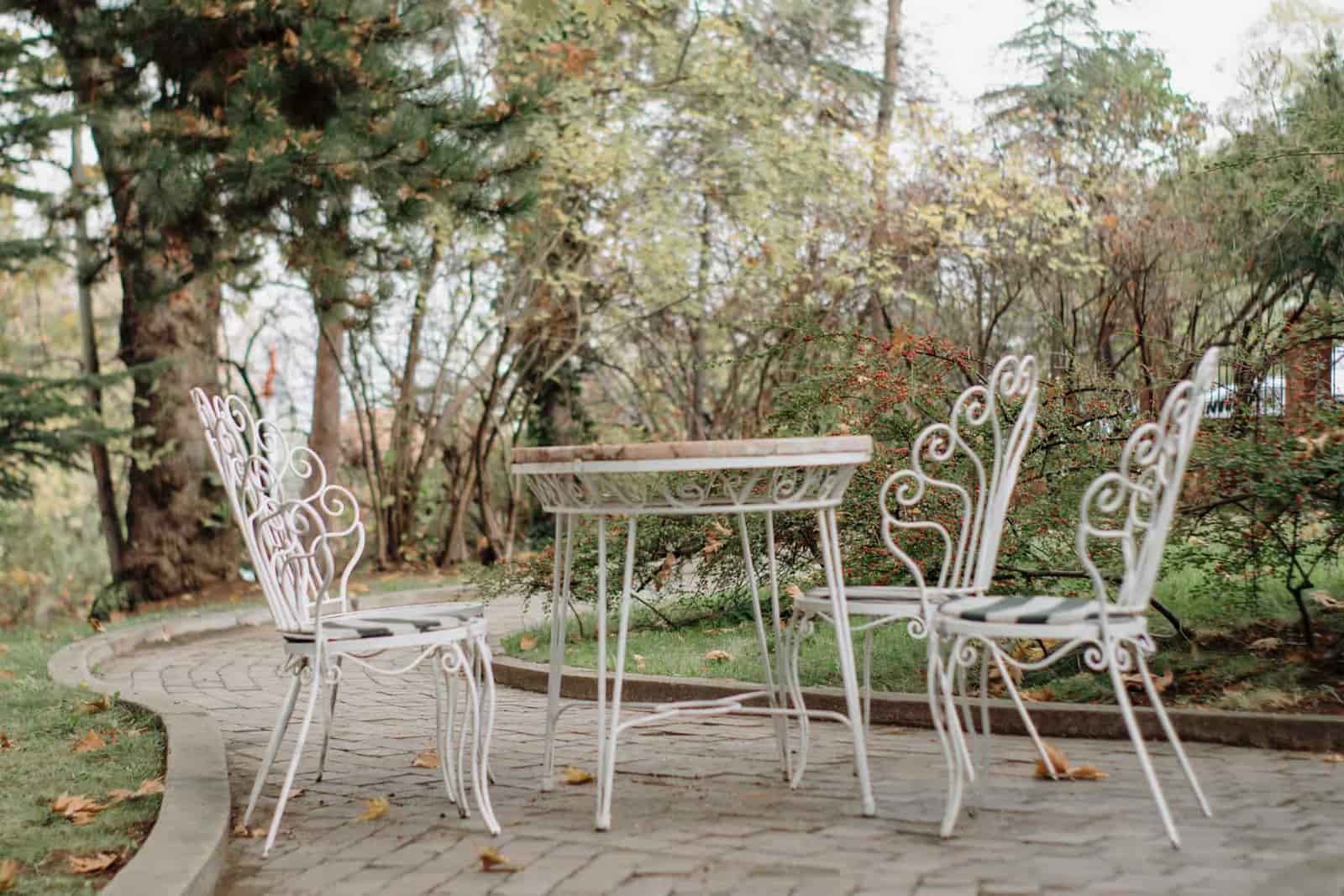
A patio heater covers a circle. A published 9-foot radius is a circle of 254 square feet and 18 feet across; a 9-foot diameter is only 64 square feet. Read every coverage claim carefully, because those two readings differ by a factor of four.
Radius, diameter, and the factor of four
Coverage claims in this category are almost always quoted as a radius, and are almost always read as a width. The arithmetic makes that mistake expensive.
Area of a circle is pi times radius squared. At a 9-foot radius that is 254 square feet, and the circle is 18 feet across. Read the same 9 feet as a diameter and you get a 4.5-foot radius and 64 square feet. Same number, four times the area, and no way to tell from the number alone which one the marketing meant.
| Claimed radius | Diameter | Area it actually covers | Output that implies at 20 BTU/sq ft |
|---|---|---|---|
| 5 ft | 10 ft | 79 sq ft | 1,571 BTU/h |
| 6 ft | 12 ft | 113 sq ft | 2,262 BTU/h |
| 7 ft | 14 ft | 154 sq ft | 3,079 BTU/h |
| 8 ft | 16 ft | 201 sq ft | 4,021 BTU/h |
| 9 ft | 18 ft | 254 sq ft | 5,089 BTU/h |
| 10 ft | 20 ft | 314 sq ft | 6,283 BTU/h |
| 12 ft | 24 ft | 452 sq ft | 9,048 BTU/h |
| 15 ft | 30 ft | 707 sq ft | 14,137 BTU/h |
Area = π x radius². The last column is the honesty check: if a maker claims a radius that would need more output than the unit produces, the claim is describing where you can feel something, not where the patio is warm.
How to sanity-check a coverage claim
The last column of that table is the useful one, and it is a test anyone can run in ten seconds. Take the claimed radius, work out the area, and multiply by 20 BTU per square foot. If the result is far more than the unit's rated output, the claim is describing where you can detect warmth, not where the patio is warm.
Worked through on a real example: the Amazon Basics tower publishes a 9-foot radius and 46,000 BTU/h. Nine feet is 254 sq ft, which at 20 BTU/sq ft needs 5,090 BTU/h. The unit produces 46,000. The claim is therefore conservative by a wide margin, which is unusual enough in this category to be worth pointing out. The full write-up is here.
Run the same check on a 1,500 W electric heater claiming to cover a large open patio and it fails immediately: 5,118 BTU/h supports about 256 sq ft on the same rule, and that is on an open patio in still air with the beam pointed at you.
Once you accept that a published radius describes a circle rather than a patio, the next question follows immediately: how many heaters does the space need? The answer is set by reach rather than by output, which is why bigger rarely substitutes for more.
Why a circle is the wrong shape for most patios
This is the practical part. Heaters cover circles; patios are rectangles; and the mismatch is why a correctly sized heater can still leave people cold.
Take a 10 x 20 ft patio, 200 sq ft. On the sizing rule that is 4,000 BTU/h, which any tower exceeds. Put one tower in the middle with a 254 sq ft circle and the numbers look comfortable. But a 254 sq ft circle is 18 feet across, and the patio is 20 feet long — so the two ends are outside it, and the circle also spills sideways onto the lawn, where it does nothing.
Two smaller units, one at each end, cover the rectangle far better with the same total output. That is a placement decision no BTU total will surface, and it is the most common reason a heater underdelivers on a long, narrow space.
The rule of thumb worth keeping
If your seating area is more than about twice as long as it is wide, plan for two heaters rather than one, whatever the arithmetic says about total output. Circles do not fit rectangles, and the corners are where people put the chairs.
Height changes the footprint too
A heater's coverage circle is measured at ground or seating level, and it depends on how high the source is. A tall tower at seven feet spreads its output over a wider, thinner circle; a wall-mounted infrared unit at eight feet, aimed down, produces a tighter, more intense cone.
Practically: mount radiant heaters at seven to nine feet and aim them at the chairs, not at the middle of the space. And accept that a tower's coverage falls off with distance rather than stopping at an edge — the published radius is where the effect becomes negligible, not a boundary.
Enclosure changes it more than anything
Everything above assumes an open patio. Put a roof over the same heater and the effective coverage grows substantially, because the warmed air that would have risen away is now trapped and circulating.
That is the same effect the enclosure multiplier in the BTU calculator accounts for, seen from the other direction. It is also why a modest electric unit performs far above its published output under a pergola, and why the covered patio page recommends much smaller heaters than an open patio of the same size.
Common questions
How much area does a patio heater cover?
A typical 46,000 to 48,000 BTU tower with a published 9-foot radius covers about 254 square feet — a circle 18 feet across. A 1,500 W electric infrared unit covers around 250 square feet on paper and considerably less in practice, because it only warms what its beam reaches.
Is a 9-foot radius the same as 9 feet of coverage?
No, and the difference is large. A 9-foot radius is a circle 18 feet across covering 254 square feet. If you read it as a 9-foot width you get 64 square feet — a quarter of the real figure. Check which one a listing means before sizing from it.
How far away from a patio heater do you feel the heat?
It falls off with distance rather than stopping at a line, so a published radius is where the effect becomes negligible. Realistically, warmth is comfortable within a few feet of a tower's center and detectable out to the claimed radius on a still evening. Wind shortens both.
Do I need one big patio heater or two small ones?
Two, if the space is more than about twice as long as it is wide. A heater covers a circle and a circle does not fit a long rectangle, so two units placed along the length beat one in the middle even at the same total output.
Read next
Patio heater BTU calculator
Your patio's BTU requirement with every multiplication shown, plus why the published rules disagree.
Propane patio heaters, with the cylinder arithmetic
Four propane heaters compared on published BTU, computed reach and real cylinder runtime.
Patio heaters for a covered patio
The clearance arithmetic for a roofed patio, and the mounted heaters that actually fit.
Infrared patio heaters, and why wind does not touch them
Four infrared heaters and heat lamps, with what radiant heat does that a flame cannot.
Amazon Basics 46,000 BTU patio heater review
The 9 ft radius checked against the arithmetic, the real cost per evening, and the one thing the listing will not tell you.
How many patio heaters do I need?
Why the count is set by reach rather than BTU, when two heaters beat one bigger one, and where to put them.