Ownership
Renting vs buying a patio heater
Rental makes sense for a date and almost never for a season. The line between those two is arithmetic, and it falls earlier than most people expect.
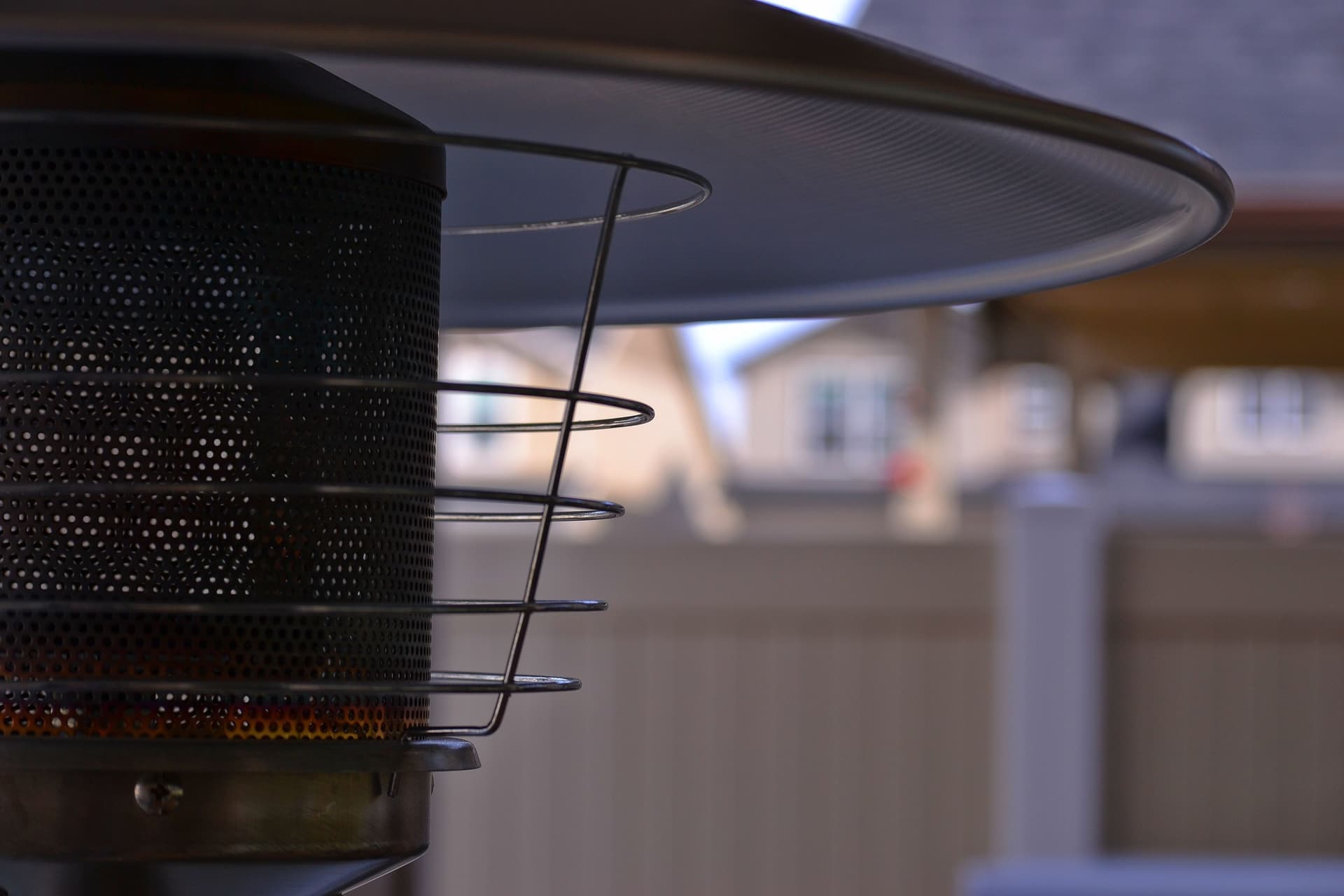
Renting wins for one-off events and loses for anything recurring. A mid-range propane tower costs roughly what two to four weekend rentals cost, so if you will want heat more than about three times, buying is cheaper — and you still own the heater afterward.
Why this question comes up at all
Patio heater rental is a real and reasonably busy search, and it is easy to see why. A heater is bulky, it lives outside, it needs storing, and most people want one for a specific evening rather than as a permanent fixture. Hiring one looks like the tidy answer.
It often is. But the arithmetic turns over faster than people expect, because a rental is priced per event while a purchase is priced once and then amortized across every evening you use it.
The breakeven, done properly
We are not going to publish a national rental rate, because there is no credible national series for it and local pricing varies enormously — event-hire companies, tool-hire chains and marquee suppliers all price differently, and delivery frequently costs more than the heater. So do this with your own quote.
The formula
Breakeven events = (purchase price + fuel) ÷ (rental price per event + rental fuel). Get one real local quote, including delivery and collection, and divide. On most quotes the answer lands between two and four events.
Two things make the rental side worse than its headline. Delivery and collection are usually charged separately and often exceed the hire fee itself for a single unit. And rental almost always excludes fuel, so a full cylinder goes on top — which is about ten hours of burn whether you use it all or not.
Two things make the purchase side better than its headline. The heater has a resale value, which is not zero for a unit in good condition. And propane costs about $1.40 an hour to run whether you rented the heater or bought it, so fuel is a wash and drops out of the comparison entirely.
When renting genuinely wins
- A single event with a lot of guests. Six heaters for one wedding is a rental. Buying six of anything for one evening is not a decision anyone should defend.
- You have nowhere to store one. A tower is roughly seven feet tall and does not fold. If the honest answer is that it would live in the hallway, rental is buying you space rather than heat.
- You are testing whether you want one at all. Hiring for one evening to find out whether your patio is genuinely usable in October is a cheap experiment, and a better one than reading about it.
When buying wins, which is most of the time
If you expect to want heat more than about three times, the purchase has already paid for itself and everything after that is free. For a patio you actually sit on, three evenings is not an ambitious target — it is one cold snap.
There is also a quality argument that goes the other way from what you would assume. Rental fleet heaters take a beating: they get moved wet, lit by people who have not read anything, and stored badly between hires. A new mid-range unit is frequently in better condition than the one that arrives on a truck.
Quick picks
Ranked for fit, not for hype. Output is the maker’s published figure; reach is computed from it or from the maker’s own radius claim, and the table says which. Tap a row for the full write-up, or go straight to the listing.
| # | Product | Best for | Output | Reach | Price |
|---|---|---|---|---|---|
| 1 |  Amazon Basics 46kOne of the very few towers whose maker publishes a coverage radius rather than a vague area, and the 9 ft figure survives the arithmetic. That alone puts it ahead of most of the field. | The published-radius honesty test | 46,000 BTU | 254 sq ft claimed | $156.16 · Check on Amazon |
| 2 |  Hiland HLDS01The mushroom tower the whole category is a copy of. 48,000 BTU is enough for a genuinely open patio, and the parts are the easiest in the category to replace when something eventually fails. | A full open patio | 48,000 BTU | 2,400 sq ft | $315.00 · Check on Amazon |
| 3 |  Dr Infrared 1500 WRadiant heat that a breeze cannot blow out, on a plug. 1,500 W is only 5,118 BTU/h, which sounds like nothing next to a propane tower and lands far more of itself on you. | Wind, and anywhere with a roof | 1,500 W | 256 sq ft | $148.98 · Check on Amazon |
Reach marked “claimed” is the maker’s own published figure. Reach without that label is ours, computed from published output at 20 BTU per square foot for an open patio. Neither is a measurement we took.
Top pick · The published-radius honesty test
Amazon Basics 46,000 BTU Outdoor Propane Patio Heater
One of the very few towers whose maker publishes a coverage radius rather than a vague area, and the 9 ft figure survives the arithmetic. That alone puts it ahead of most of the field.
- Fuel
- Propane
- Output
- 46,000 BTU/h
- Reach (claimed)
- 254 sq ft · 9.0 ft radius
- Cost per hour
- $1.35
What works
- A published 9 ft radius is a 254 sq ft circle, and 46,000 BTU is far more than that area needs — a claim on the conservative side of its own specification, which is rare here
- The water-fill base box is a real anti-tip measure, not a sticker: filled, it is the difference between a windy evening and a repair bill
- One-touch ignition and a chain for the cylinder are both small things the cheap clones drop
What does not
- The listing does not name a safety certifying body, only the tilt valve, so we cannot tell you it is CSA listed
- 91 in tall with an open flame: the same wind exposure as every other tower of this shape
- The water box has to be emptied before a freeze or it splits
| Published specification | |
|---|---|
| Rated input | 46,000 BTU/h |
| Published reach | 9 ft radius |
| Dimensions | 32.1" L x 32.1" W x 91.3" H |
| Fuel | 20 lb propane cylinder, not included |
| Safety | Tilt auto-shutoff valve; chain to secure the cylinder |
| Base | Water-fill box for ballast, wheel kit included |
| Maker’s coverage claim | 9.0 ft radius, which is 254 sq ft |
| Safety listing | Tilt auto-shutoff valve; the listing does not name a certifying body |
Who it is for
An open patio where you want the largest honest circle of warmth per dollar and are happy to handle cylinders.
What it is not for
Anywhere enclosed, and anywhere the base cannot be filled with water — an empty ballast box makes this a tall, light, tippy object.
Sources for this entry
2 · A full open patio
Hiland / AZ Patio Heaters HLDS01-CG 87 in Propane Patio Heater
The mushroom tower the whole category is a copy of. 48,000 BTU is enough for a genuinely open patio, and the parts are the easiest in the category to replace when something eventually fails.
- Fuel
- Propane
- Output
- 48,000 BTU/h
- Reach (computed)
- 2,400 sq ft · 27.6 ft radius
- Cost per hour
- $1.40
What works
- 48,000 BTU is real output — on our sizing arithmetic that is a 2,400 sq ft open patio at the rule-of-thumb rate, so it is never the unit that is undersized
- Every wear part on this platform is a stocked commodity: thermocouples, control valves, dump switches and reflectors are all available separately
- The weight bladder in the base is the single most useful anti-tip feature in the category and most rivals leave it out
What does not
- An 87 in open-flame tower is the worst possible shape in wind — this is the unit our wind guide exists for
- The maker does not publish a coverage radius, so the reach figure we show is ours, computed rather than quoted
- Full output burns a 20 lb cylinder in well under a night. See the runtime arithmetic
| Published specification | |
|---|---|
| Rated input | 48,000 BTU/h |
| Height | 87 in |
| Fuel | 20 lb propane cylinder, not included |
| Reflector | 33 in aluminum heat shield |
| Safety | Anti-tilt cutoff and thermocouple flame-failure cutoff |
| Extras | Wheels, integrated table, weight bladder for the base |
| Maker’s coverage claim | None published — the reach figure above is ours |
| Safety listing | CSA certified per the maker's product literature |
Who it is for
An open patio with no roof, where you need volume of heat and can accept swapping cylinders. Also the right answer if you want a unit whose parts you can still buy in five years.
What it is not for
A screened porch, a garage, or anywhere without open sky above it. It is an open-flame combustion appliance and needs genuine outdoor ventilation.
3 · Wind, and anywhere with a roof
Dr Infrared Heater DR-238 Carbon Infrared Patio Heater with Kasa Outdoor Smart Plug
Radiant heat that a breeze cannot blow out, on a plug. 1,500 W is only 5,118 BTU/h, which sounds like nothing next to a propane tower and lands far more of itself on you.
- Fuel
- Electric
- Output
- 1,500 W = 5,118 BTU/h
- Reach (computed)
- 256 sq ft · 9.0 ft radius
- Cost per hour
- $0.28
What works
- Infrared warms objects, not air, so it is the only heat that survives a breeze — this is the single reason wind changes the whole buying decision
- No combustion means no flue gas, which is what makes it legal and sensible on a screened porch where propane is not
- Three settings matter more than they sound: 900 W costs a third less to run and is enough most evenings
What does not
- 1,500 W is 1,500 W. Nothing at this wattage heats faster than anything else at this wattage; the differences between electric heaters are beam shape and build, not power
- It heats what it points at. Step out of the beam and you are cold immediately — this is a fundamentally different experience from a tower
- A 120 V plug-in unit is capped by your circuit, not by the maker. See why 1,500 W is the ceiling
| Published specification | |
|---|---|
| Rated power | 1,500 W at 120 V |
| Settings | 900 W / 1,200 W / 1,500 W |
| Element | Carbon infrared lamp |
| Reflector | Mirror aluminum, 90% reflectivity per the maker |
| Housing | Anodized aluminum, rated for outdoor use |
| Mounting | Wall and ceiling brackets plus remote in the box |
| Bundle | Currently sold with a Kasa EP40 outdoor smart plug |
| Maker’s coverage claim | None published — the reach figure above is ours |
| Safety listing | ETL listed, per the maker's published product data |
Who it is for
A covered patio, pergola or screened porch where you can mount it overhead and point it at where people sit, and anywhere wind ruins a flame.
What it is not for
A big open patio with nowhere to mount it. Radiant heat needs a line of sight and a place to hang from.
What to buy if buying wins
For the open-patio case that most rentals are covering, a 46,000 to 48,000 BTU propane tower is the direct equivalent of the thing you would have hired, and it is the cheapest way to buy that amount of heat. Both towers above are that unit.
If your space is covered or sheltered, do not buy the rental equivalent — buy the thing that actually suits the space. A 1,500 W electric infrared unit costs a fraction as much per hour to run, needs no cylinders, and is the better answer under a roof, where a propane tower is a clearance problem rather than a heating one.
What a rental actually arrives as
Worth knowing before you assume rental means commercial-grade. Most event-hire stock is the same mid-range propane tower sold in hardware stores, sometimes in a branded finish. You are renting the product, not a better class of product.
- Check the cylinder arrangement on booking. Some suppliers include a full cylinder, some charge for it, and some expect you to source one. This is the most common surprise on the invoice.
- Confirm delivery and collection windows. A heater delivered at 9am for a 7pm event that has to be collected the following morning is two half-days of somebody being present.
- Ask who lights it. Most hires are drop-and-go, which means the first time anyone lights it is you, in the dark, in front of guests.
- Inspect the reflector and the base on arrival. A dented reflector spreads heat unevenly and a wobbly base is the tip-over risk you did not sign up for.
None of that makes rental a bad option. It makes the true cost of a hire higher than the headline, which is exactly the thing the breakeven arithmetic above is trying to capture.
The storage objection, answered
This is the real reason most people consider renting, and it deserves a straight answer rather than a dismissal. A tower does take up meaningful space for seven months of the year.
- A cover lets it stay outside, which removes the problem entirely for most people. What to look for in a cover.
- Tabletop and wall-mounted units store in a cupboard or do not need storing at all, and for a small patio they may be the better buy anyway.
- The cylinder is the part with rules. It stores outdoors, upright, never in a garage or basement — see off-season storage.
The short version
Get one local quote including delivery. Divide your purchase price by it. If the answer is under three or four, and you expect to use a heater more than that, buy — and work out what size you actually need before you do, because buying the wrong size is the only way to lose this arithmetic.
Common questions
Is it cheaper to rent or buy a patio heater?
Buying, for anything recurring. A mid-range propane tower typically costs what two to four weekend rentals cost once delivery and collection are counted, so if you want heat more than about three times, buying is cheaper and you keep the heater.
Does patio heater rental include propane?
Usually not. Rental normally covers the unit only, with a full cylinder charged separately or supplied by you. Since fuel costs the same either way, it drops out of the rent-versus-buy comparison entirely.
How much does it cost to rent a patio heater?
It varies too much by region and supplier for a national figure to be meaningful, and delivery and collection often cost more than the hire itself. Get one local quote including both, then run the breakeven division on this page.
When is renting a patio heater the right call?
Three cases: a single large event needing several units, having genuinely nowhere to store a seven-foot tower, or testing whether you want one at all before committing.
Does a patio heater hold its value if I resell it?
A clean, working mid-range tower retains meaningful resale value, particularly in early autumn when demand peaks. That resale value is a real part of the rent-versus-buy comparison and is usually left out of it — it effectively reduces the purchase price you are amortizing.
Should I rent first to try before buying?
It is a genuinely good use of a rental, and cheaper than buying the wrong thing. One hired evening tells you whether your patio is usable in the cold, whether the space needs one heater or two, and whether wind is your real problem — all of which change what you should buy.
Are rental patio heaters good quality?
Fleet units are heavily used and often stored badly between hires. A new mid-range heater is frequently in better condition than a rental, which is worth weighing if you were assuming rental meant commercial-grade.
Sources
Read next
The best patio heaters, sorted by the patio
Six heaters covering every real patio case, with published output, computed reach and cost per hour.
Patio heater BTU calculator
Your patio's BTU requirement with every multiplication shown, plus why the published rules disagree.
What a patio heater costs to run
Cost per hour, evening and month for electric and propane, at named prices with the formulas shown.
Patio heater covers
How to size a heater cover, what the fabric ratings mean, and the two ways cheap covers fail.
Storing a patio heater for the off-season
The off-season routine, where the cylinder goes, and which cover shape fits which heater.
The best patio heaters under $200
What $200 actually buys in outdoor heat, and why the answer differs by a factor of nine between fuels.
Are patio heaters worth it?
What an extra evening outside actually costs, and the three patios where a heater is the wrong purchase.