Covered patios
Patio heaters for a covered patio
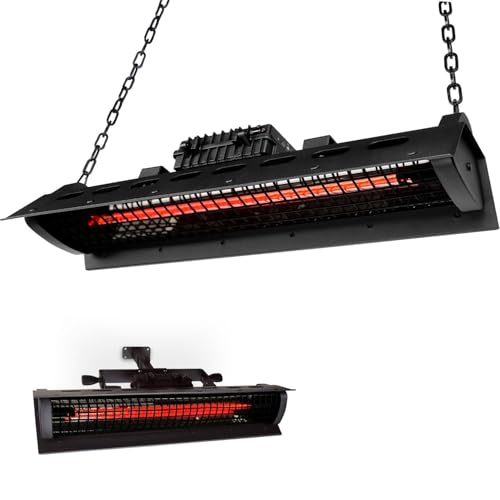
The clearance arithmetic for a roofed patio, and the mounted heaters that actually fit.
Fit and safety
A roof, a screen, a wooden deck or a gazebo each rule some heaters out entirely. Here are the manufacturer clearance figures, and the heater that fits each case.
Whatever your space, read safety and clearances first. It has the published figures the rest of these pages apply.

Fire Sense publishes at least 36 inches of overhead clearance for a propane patio heater and 18 inches of side clearance for an electric one. No manufacturer permits use in an enclosed space. In practice: open patio, anything goes; roof with open sides, propane with clearance or electric; screens or walls, electric only.
The most common bad purchase in this category is not the wrong brand. It is a 48,000 BTU open-flame propane tower bought for a screened porch, which arrives, gets assembled, and then cannot responsibly be used. The listing did not say so. The reviews did not say so. The manual, at the bottom of page four, says outdoor use only.
That failure is entirely avoidable, and avoiding it takes one number: the clearance your space can offer above and beside a heater. Everything else follows from it.
These come from Fire Sense, a manufacturer in this category, not from us. Your own unit's manual takes precedence over any general figure, and if the two disagree the manual wins every time.
| Heater type | Overhead clearance | Side clearance |
|---|---|---|
| Propane | At least 36 in from the ceiling | 24 to 36 in from combustibles |
| Electric | 12 to 24 in above | About 18 in around |
| Natural gas | 24 to 36 in overhead | 24 to 36 in to the sides |
Published by Fire Sense / Balkene Home. The company's own guidance stresses that each model is tested to its own clearance requirements and the model's manual is the authority.
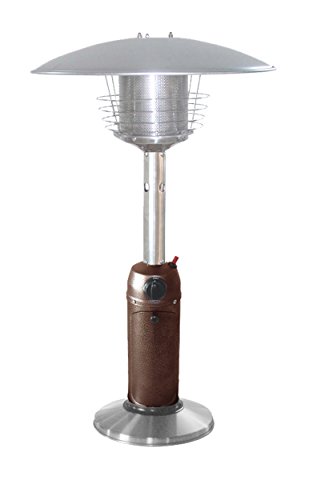
Notice what those numbers do to a typical space. A standard porch ceiling is eight feet. A 7-foot 3-inch propane tower needs 36 inches above it, which means it needs a ceiling over ten feet. Under an ordinary porch roof, the propane tower is not a close call — it does not fit, and the shortfall is over two feet.
The arithmetic that makes the decision for you
Tower height plus required overhead clearance must be less than your ceiling height. An 87 in tower plus 36 in of clearance is 123 in — that is 10 ft 3 in of ceiling. Almost no covered patio has it. This one subtraction resolves most of the covered-patio question before any product page is opened.
Clearance is about heat and combustible surfaces. Ventilation is about combustion products, and it is the rule that decides screened porches and gazebos. A propane heater consumes oxygen and produces carbon monoxide among its flue gases. Outdoors, with air moving freely, that is a non-issue. Inside a screened enclosure with the sides zipped down, it is a genuine hazard.
There is no clever middle ground and no product that solves it. If your space has a roof and enough wall or screening that air does not move freely through it, the correct heater is electric. That is not a preference, and it is the reason the screened porch page contains no propane picks at all.
Wood and composite decks come up constantly, usually framed as a fire question. Ignition is the dramatic risk and the rarer one. The everyday problem is that composite decking softens and marks at temperatures well below anything catching light, and that a forty-pound heater on a small base sits on a surface with give in it.
So the deck answer is a heat barrier underneath anything with a flame in it, plus attention to the base. The wood deck page has the detail, and deck-safe fire pits covers the harder version of the same problem.
9 pages. Roundups and tools first, then the comparisons, then the guides.
Covered patios
The clearance arithmetic for a roofed patio, and the mounted heaters that actually fit.
Screened porches
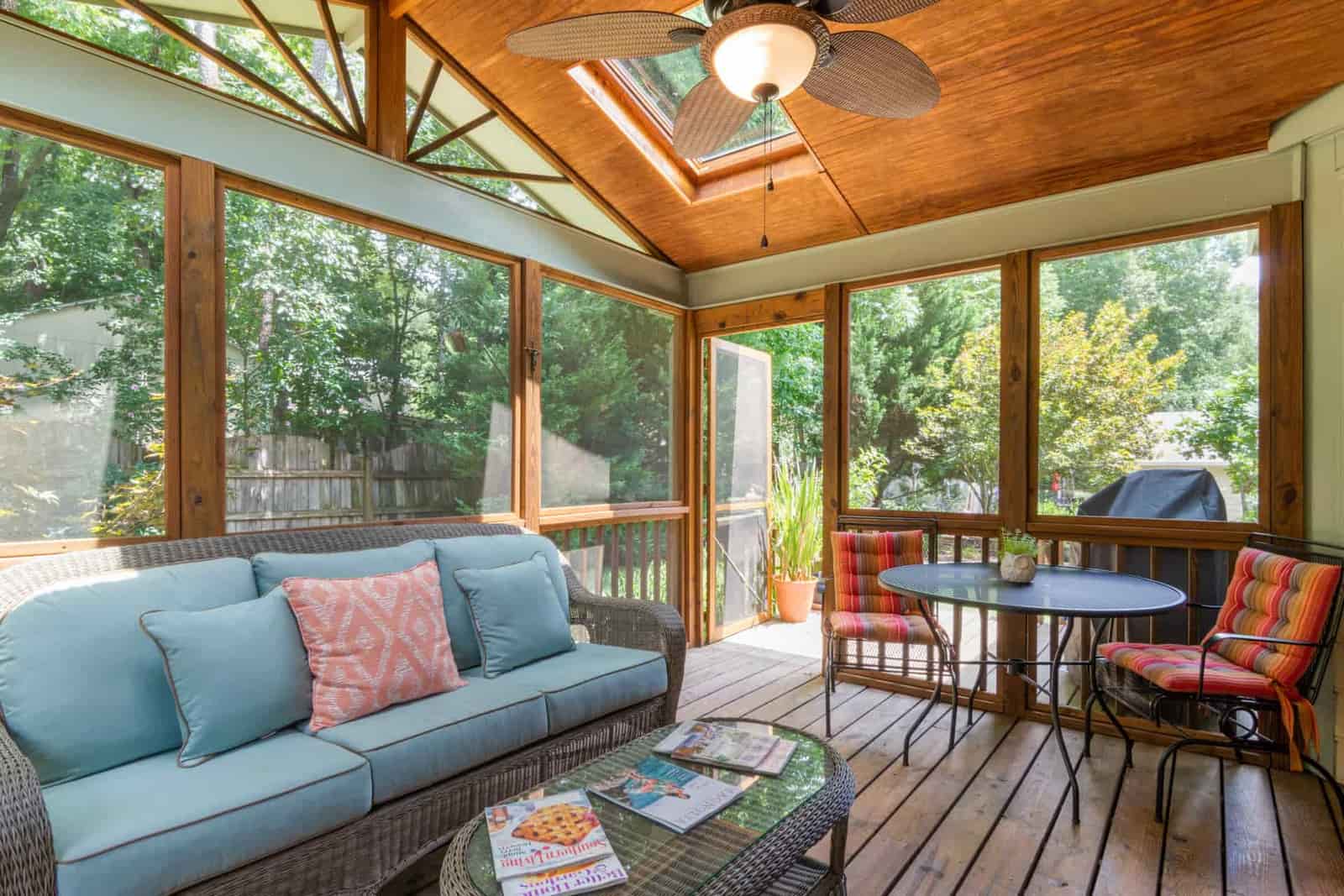
Why a screened porch is electric-only, and the mounted units that suit it.

Decks
Heat barriers, base stability, and the composite decking problem that starts before ignition.

Pergolas
Why a pergola is ideal for mounted infrared, plus mounting height, clearance and picks.
Gazebos
Open sides or zipped down — the question that decides which heater a gazebo can take.
Commercial
Sizing and running a commercial terrace: coverage per table, cost per seat, and units that survive nightly use.
By space
Why balconies rule out open flame, and the small electric units that actually suit the space.
By space
Why floor space and clearance decide this rather than BTU, and the heaters that fit a 10x10 or 12x12.
Safety pillar
Published clearance figures, the ventilation rule, and where each heater type must never go.
Yes, if the ceiling is high enough and the sides are open. Fire Sense publishes at least 36 inches of overhead clearance for propane, so a 7 ft 3 in tower needs a ceiling over 10 ft 3 in. Most covered patios do not have that, which is why a mounted electric infrared unit is usually the answer instead.
Gas ones do, absolutely. Propane and natural gas heaters consume oxygen and produce combustion gases including carbon monoxide, so they are outdoor appliances and every manual says so. Electric heaters produce no combustion products at all, which is why they are the only correct choice for a screened or largely enclosed space.
With a heat barrier underneath and a stable base, yes. The everyday risk on a deck is not ignition but heat marking, especially on composite boards which soften well below ignition temperature. Put a rated mat under anything with a flame, and secure the base against tipping.