Infrared safety
Are infrared patio heaters safe?
The word radiation is doing a lot of unearned work in this question. What comes out of an infrared heater is heat, in the most literal sense available.
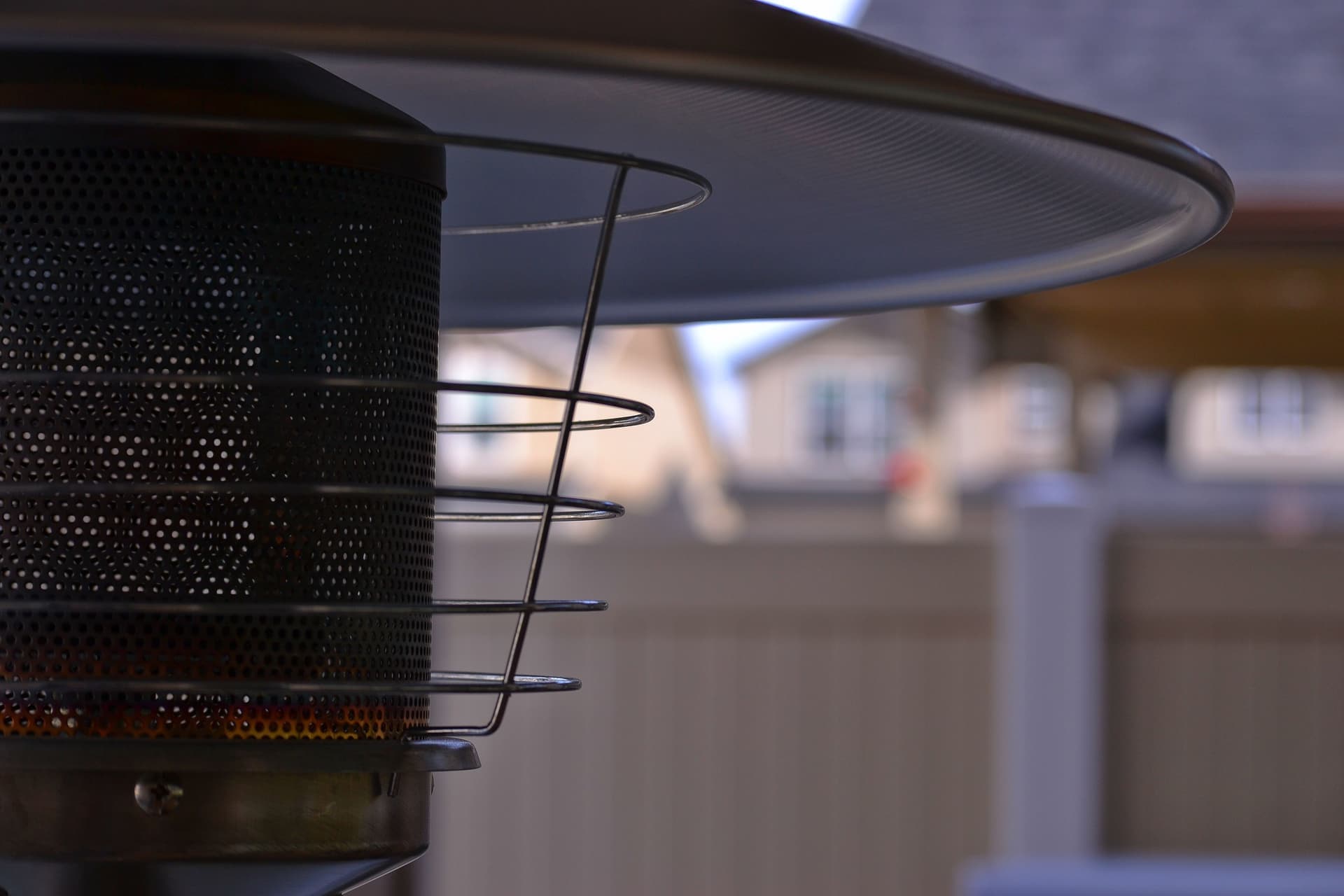
Yes. The infrared an outdoor patio heater emits is thermal, non-ionizing radiation — the same band of the spectrum a wood fire, a cast-iron radiator or a sun-warmed flagstone gives off — and it has no mechanism for the kind of damage ultraviolet light causes. UK occupational-health guidance lists cold-weather outdoor heaters among infrared heating devices and states they "present minimal risks of harm to health." The hazards worth managing are ordinary ones: touching a hot appliance, and bright glare in your eyes at close range. For the gentlest version, a carbon-element unit like the Dr Infrared carbon heater — best for anyone sitting under it for a whole evening — runs cooler and dimmer than a quartz or halogen bar.
This page exists because "infrared radiation" sounds like something to worry about and "heat" does not, even though on a patio they describe the same thing. Below is what the distinction actually rests on.
What infrared is, in one table
Infrared is named for sitting just beyond red at the long-wavelength end of visible light. Everything warm emits it, continuously, including you. It is divided into three bands:
| Band | Wavelength | Reaches the retina? | Where patio heaters sit |
|---|---|---|---|
| IR-A (near) | 700–1,400 nm | Yes | Halogen and the hottest quartz elements emit a share here, along with the visible orange glow |
| IR-B (mid) | 1,400–3,000 nm | No — not transmitted to the retina | Quartz and golden-tube elements |
| IR-C (far) | 3,000 nm – 1 mm | No — not transmitted to the retina | Carbon elements and every warm surface, including a radiator or a fire's embers |
Band definitions from University of Warwick health and safety guidance on infrared radiation. All three are non-ionizing — they are longer in wavelength, and therefore lower in photon energy, than visible light.
The load-bearing word is non-ionizing. Ultraviolet light, X-rays and gamma rays carry enough energy per photon to break chemical bonds and damage DNA directly, which is why sunburn and skin cancer are UV phenomena. Infrared photons carry less energy than visible light, let alone UV. What they do when absorbed is make molecules move faster — which is the physical definition of getting warmer, and the whole of the effect.
The comparison that settles it for most people
Sitting under an infrared patio heater is radiologically the same kind of exposure as sitting in front of a fireplace, leaning against a warm radiator, or standing on a patio slab that has been in the sun all afternoon. All four are warm objects radiating in the infrared. None of them is doing anything to you that the others are not.
Why your own warning system covers this
This is the most useful thing to understand and it is rarely said. The reason UV is dangerous to sit under is not only its photon energy — it is that you cannot feel it. Sunburn arrives hours after the exposure that caused it, so nothing stops you at the time.
Infrared is the opposite case. OSHA's own overview of non-ionizing radiation notes that the skin and eyes absorb infrared as heat, and that workers normally notice excessive exposure through heat sensation and pain. The sensation is immediate, proportional and unignorable. If an infrared heater is giving you too much, you know within seconds and you move your chair — which is a feedback loop UV does not offer.
That is why the published occupational concern about infrared is concentrated on workplaces where people cannot move away and the intensities are enormous — foundries, glass blowing, welding, molten metal. The Warwick guidance draws exactly this line: outdoor heaters present minimal risk, while infrared from hot work "can cause serious burns to unprotected skin." A 1,500 W element at eight feet is not in the same conversation as a furnace mouth.
The hazards that are actually real
Three of them, in the order you are likely to meet them. None is a reason not to own one; all are reasons to mount it properly.
- Contact burns on the appliance. Far and away the most likely injury. The element housing, grille and reflector get hot and stay hot after shut-off. This is a clearance-and-placement problem, and it is the whole argument of the kids and pets page — mount it out of reach and it stops existing.
- Glare and eye discomfort at close range. Not a radiation injury but a genuine nuisance: a bright quartz or halogen bar in your field of view all evening is tiring. The published eye concerns — corneal flash burns and cataract risk — come from high-powered IR-A sources at industrial intensities, which is why glass blowers' cataracts is the classic occupational example. Note from the table above that IR-B and IR-C are not transmitted to the retina at all.
- Erythema ab igne, from habitual close exposure. Worth naming because it is the one documented skin effect of prolonged infrared heat rather than of light: a reddish-brown mottling that develops on skin repeatedly heated at close range over long periods, classically from sitting very close to a heat source. It is a heat effect, it needs sustained proximity, and the fix is distance — but "completely without skin effects" would be an overclaim, and reviews of intense infrared exposure have noted that current exposure guidelines do not account for everything.
Element type changes what you experience
This is where the safety question turns into a buying question, and it is the one axis on which these units genuinely differ. A hotter element emits at shorter wavelengths and puts out more visible light along with the heat.
Quartz and halogen elements run hotter, come up to temperature almost instantly, and glow bright orange — more IR-A and more visible glare. Carbon elements run cooler and dimmer, emit further into IR-B and IR-C, and give a deeper, softer red. The heat output is identical, because both are converting the same 1,500 W: about 5,118 BTU/h either way, as the conversion page shows. Nothing is being traded for the gentler experience.
The carbon versus quartz comparison is the full version of that decision, including warm-up time and element life. For this page the summary is short: if the reason you are reading about infrared safety is that a glowing bar in your eyeline feels unpleasant, buy carbon — the problem is glare rather than radiation, and carbon solves glare.
Quick picks
Ranked for fit, not for hype. Output is the maker’s published figure; reach is computed from it or from the maker’s own radius claim, and the table says which. Tap a row for the full write-up, or go straight to the listing.
| # | Product | Best for | Output | Reach | Price |
|---|---|---|---|---|---|
| 1 |  Dr Infrared 1500 WRadiant heat that a breeze cannot blow out, on a plug. 1,500 W is only 5,118 BTU/h, which sounds like nothing next to a propane tower and lands far more of itself on you. | Wind, and anywhere with a roof | 1,500 W | 256 sq ft | $132.32 · Check on Amazon |
| 2 | 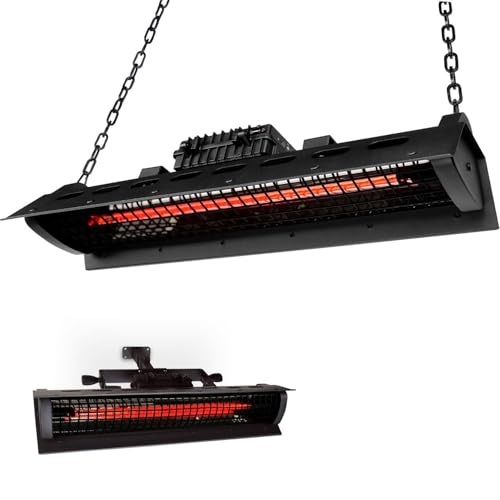 Star Patio STP2020-AOne of the very few electric units whose maker publishes a coverage area at all — 110 sq ft — and it mounts to a wall or hangs from a ceiling on chains. No ingress rating is published, so keep it somewhere sheltered. | A published coverage figure | 1,500 W | 110 sq ft claimed | $199.99 · Check on Amazon |
| 3 |  Heat Storm TradesmanThe one electric unit here with a published IP rating, which is the difference between a heater that survives a wet winter mounted outdoors and one that is a warranty claim waiting to happen. | Leaving outside all year | 1,500 W | 256 sq ft | $99.99 · Check on Amazon-8% |
Reach marked “claimed” is the maker’s own published figure. Reach without that label is ours, computed from published output at 20 BTU per square foot for an open patio. Neither is a measurement we took.
Top pick · Wind, and anywhere with a roof
Dr Infrared Heater DR-238 Carbon Infrared Patio Heater with Kasa Outdoor Smart Plug
Radiant heat that a breeze cannot blow out, on a plug. 1,500 W is only 5,118 BTU/h, which sounds like nothing next to a propane tower and lands far more of itself on you.
- Fuel
- Electric
- Output
- 1,500 W = 5,118 BTU/h
- Reach (computed)
- 256 sq ft · 9.0 ft radius
- Cost per hour
- $0.28
What works
- Infrared warms objects, not air, so it is the only heat that survives a breeze — this is the single reason wind changes the whole buying decision
- No combustion means no flue gas, which is what makes it legal and sensible on a screened porch where propane is not
- Three settings matter more than they sound: 900 W costs a third less to run and is enough most evenings
What does not
- 1,500 W is 1,500 W. Nothing at this wattage heats faster than anything else at this wattage; the differences between electric heaters are beam shape and build, not power
- It heats what it points at. Step out of the beam and you are cold immediately — this is a fundamentally different experience from a tower
- A 120 V plug-in unit is capped by your circuit, not by the maker. See why 1,500 W is the ceiling
| Published specification | |
|---|---|
| Rated power | 1,500 W at 120 V |
| Settings | 900 W / 1,200 W / 1,500 W |
| Element | Carbon infrared lamp |
| Reflector | Mirror aluminum, 90% reflectivity per the maker |
| Housing | Anodized aluminum, rated for outdoor use |
| Mounting | Wall and ceiling brackets plus remote in the box |
| Bundle | Currently sold with a Kasa EP40 outdoor smart plug |
| Maker’s coverage claim | None published — the reach figure above is ours |
| Safety listing | ETL listed, per the maker's published product data |
Who it is for
A covered patio, pergola or screened porch where you can mount it overhead and point it at where people sit, and anywhere wind ruins a flame.
What it is not for
A big open patio with nowhere to mount it. Radiant heat needs a line of sight and a place to hang from.
2 · A published coverage figure
Star Patio STP2020-A-RMN2025 Wall and Ceiling Electric Infrared Patio Heater
One of the very few electric units whose maker publishes a coverage area at all — 110 sq ft — and it mounts to a wall or hangs from a ceiling on chains. No ingress rating is published, so keep it somewhere sheltered.
- Fuel
- Electric
- Output
- 1,500 W = 5,118 BTU/h
- Reach (claimed)
- 110 sq ft · 5.9 ft radius
- Cost per hour
- $0.28
What works
- It publishes a coverage figure. 110 sq ft is a real, checkable claim, and almost nobody in this category states one at all — which is the whole subject of our coverage page
- Wall bracket and ceiling chains both in the box, with 60 degrees of tilt, so the beam can actually be aimed at the chairs rather than at whatever the bracket decided
- 5,100 BTU/h published output is within a rounding error of the 5,118 our watts-to-BTU conversion gives, which is a maker doing its own arithmetic honestly
- Remote control on a unit mounted above head height is functional rather than a luxury
What does not
- No ingress rating is published for this model. Other units in this roundup publish one, and on a permanently mounted outdoor appliance that silence means you cannot price the weather risk. Treat it as a sheltered-position heater
- 110 sq ft is a small area — roughly a 10 by 11 ft patch, which is a seating group and not a patio
- 1,500 W, like everything else that plugs into a standard socket. The ceiling applies here as everywhere
- A 6 ft cord means the outlet has to be close, or an outdoor-rated extension has to be part of the plan
| Published specification | |
|---|---|
| Rated power | 1,500 W at 110 V, 60 Hz |
| Published output | 5,100 BTU/h per the maker |
| Published coverage | Up to 110 sq ft per the maker |
| Element | Golden tube |
| Mounting | Wall bracket or ceiling chains, up to 60 degrees of tilt |
| Size and weight | 27.5 x 7 x 5.7 in, 7.7 lb |
| Element life | 5,000 hours per the maker |
| Maker’s coverage claim | 110 sq ft |
| Safety listing | No ingress rating published for this model |
Who it is for
A sheltered wall or porch ceiling over a seating group, where you want a heater whose maker will tell you what area it actually covers.
What it is not for
An exposed wall where driving rain reaches it, since nothing is published about ingress protection, or any space much larger than a seating group.
3 · Leaving outside all year
Heat Storm Tradesman HS-1500-OTR-R 1500 W Weatherproof Infrared Heater
The one electric unit here with a published IP rating, which is the difference between a heater that survives a wet winter mounted outdoors and one that is a warranty claim waiting to happen.
- Fuel
- Electric
- Output
- 1,500 W = 5,118 BTU/h
- Reach (computed)
- 256 sq ft · 9.0 ft radius
- Cost per hour
- $0.28
What works
- A published IPX4 rating. Almost nobody in this category publishes an ingress rating at all, and mounting an unrated electric heater outdoors is a gamble you cannot price
- The maker publishes its own BTU figure (5,200), which is within a rounding error of the 5,118 our watts-to-BTU conversion gives — a company doing its own arithmetic honestly
- Wall or ceiling mount puts the heat above head height where a radiant beam belongs
What does not
- IPX4 rates water only — the solids digit is X, meaning none is published. It is splashing-water protection, not immersion, and it tells you nothing about dust ingress
- Fixed mounting means fixed aim. Get the position wrong and there is no adjusting it from the chair
- Same 1,500 W ceiling as every other plug-in electric heater
| Published specification | |
|---|---|
| Rated power | 1,500 W at 120 V |
| Published output | 5,200 BTU/h per the maker |
| Element | Carbon fiber infrared, per the maker |
| Weather rating | IPX4 |
| Dimensions | 27 x 8 x 6 in |
| Control | Remote included |
| Mounting | Wall or ceiling; tripod and tri-mount combos are separate SKUs |
| Maker’s coverage claim | None published — the reach figure above is ours |
| Safety listing | IPX4 weatherproof rating published by the maker |
Who it is for
A permanently mounted heater on a pergola, porch ceiling or exterior wall that you never want to take down and store.
What it is not for
Portability, and any open patio with no structure to mount to.
Children, pets and pregnancy
The three groups the autocomplete suggestions ask about, so worth answering directly rather than by omission.
There is no radiological mechanism that distinguishes these groups, because there is no radiological mechanism at all — infrared deposits heat, and heat is heat whoever absorbs it. What does distinguish them is the thermal side: a small child or a dog is less able to recognize discomfort and move away, and a dog in particular will lie closer to a heat source for longer than a person finds comfortable. That is a placement issue, and it is solved the same way: mount the unit high, aim it at the seating, and keep floor-level intensity low. The kids and pets page works through the geometry.
What we will not do is offer medical advice. If you have a specific medical reason to ask about heat exposure, that is a question for a clinician rather than for a patio heater site, and anyone telling you otherwise with confidence is overreaching.
The electrical side, which is the part to take seriously
A mild irony of this question: the genuine safety considerations for an electric infrared patio heater are almost entirely electrical rather than radiological.
- A GFCI-protected outdoor circuit, because this is a mains appliance living outdoors in the rain.
- A published ingress rating for anything permanently mounted outside — the wall-mounted page explains why a silent spec sheet on IP is the thing to weigh.
- 1,500 W continuous is most of a 15 A circuit, so sharing it invites a tripping breaker. The electrical fault tree covers the symptoms.
- An outdoor-rated, correctly gauged extension if the outlet is not close. An indoor cord on a continuous 12.5 A load is a real hazard, in a way the infrared is not.
How we picked
- The radiation question answered from published guidance, not from reassurance. We quote occupational-health sources on what infrared does to skin and eyes, including where they say the risk is minimal and where they say it is not.
- Thermal hazards separated from radiological ones, because the first are real and manageable and the second are the thing people are actually worried about.
- Element type weighted, since the spectrum a heater emits — and therefore the glare and the sensation — is set by how hot its element runs.
- Picks chosen for gentleness, not output. Every unit here is bound by the same 1,500 W ceiling, so there is nothing to trade; the differences are wavelength, enclosure and where it mounts.
- Honest about the one skin effect that is documented from prolonged close heat exposure, rather than declaring the whole subject risk-free.
What we did not do
Everyone in this category says they tested twenty heaters. We have not tested any, and we say so. What we do instead: compile the published specs, compute the electrical and gas load from them, cite the maker’s own manual, and show the arithmetic so you can check it. The full method, including how to challenge a figure.
For what radiant heat does that a flame cannot — and why it is the only thing that works in a breeze — the infrared roundup is the page, and infrared versus propane is the comparison.
Common questions
Are infrared patio heaters safe?
Yes. They emit thermal, non-ionizing infrared - the same band a wood fire or a warm radiator gives off - which has no mechanism for the DNA damage ultraviolet light causes. UK occupational-health guidance lists cold-weather outdoor heaters among infrared heating devices and says they present minimal risks of harm to health. The hazards to manage are touching the hot appliance and glare at close range.
Is infrared radiation harmful to humans?
At patio-heater intensities, no. Infrared is non-ionizing and is absorbed as heat, and you feel it immediately - OSHA notes that excessive exposure is normally noticed through heat sensation and pain, so you move before harm occurs. The documented injuries come from industrial intensities where people cannot move away: molten metal, welding and glass blowing, which is the origin of glass blowers' cataracts.
Is infrared the same as UV?
No, and this is the whole distinction. Ultraviolet is shorter in wavelength and higher in photon energy than visible light, enough to break chemical bonds and damage DNA - which is why it causes sunburn and skin cancer. Infrared is longer in wavelength and lower in energy than visible light. When absorbed it makes molecules move faster, which is simply getting warmer.
Can an infrared patio heater damage your eyes?
Not at the intensities and distances involved on a patio. The published eye concerns - corneal flash burns and cataract development - relate to high-powered IR-A sources in industrial settings. IR-B and IR-C, which is where quartz, golden-tube and carbon elements concentrate their output, are not transmitted to the retina at all. What you may get is glare and tiredness from a bright element in your eyeline, which is a comfort problem that a carbon element solves.
Are infrared heaters safe for babies and pets?
There is no radiological difference, because the mechanism is heat rather than ionizing radiation. The real difference is thermal: a small child or a dog is less likely to recognize discomfort and move away, and dogs will lie closer to heat for longer than people do. Treat it as a placement question - mount the unit high, aim it at the seating, and keep floor-level intensity low. For specific medical questions, ask a clinician rather than a heater site.
Does carbon or quartz matter for safety?
For comfort rather than safety. Quartz and halogen elements run hotter, emit more in IR-A and glow bright orange; carbon runs cooler and dimmer and emits further into IR-B and IR-C. Heat output is identical at about 5,118 BTU/h from 1,500 W either way, so the gentler experience costs nothing. If a glowing bar in your eyeline is the thing bothering you, buy carbon.
Sources
- University of Warwick, Health and Safety — Infrared Radiation guidance (IR-A 700–1,400 nm, IR-B 1,400–3,000 nm, IR-C 3,000 nm–1 mm; IR-B and IR-C not transmitted to the retina; cold weather outdoor heaters "present minimal risks of harm to health"; hot work can cause serious burns to unprotected skin)
- ICNIRP — Guidelines on Limits of Exposure to Incoherent Visible and Infrared Radiation (2013), the international exposure-limit framework for broadband infrared sources
- NIOSH — Biological Effects of Infrared Radiation, the reference review of infrared effects on the eyes and skin
Read next
Infrared patio heaters, and why wind does not touch them
Four infrared heaters and heat lamps, with what radiant heat does that a flame cannot.
Carbon vs quartz infrared elements
The two infrared element types compared on warm-up, glare and durability — and why output is identical.
Patio heaters with kids and pets
Why mounting height, not output, decides this — and the electric units that put the heat out of reach.
Patio heater safety, with the published numbers
Published clearance figures, the ventilation rule, and where each heater type must never go.
Wall mounted patio heaters, and the rating that decides
Wall and ceiling mounted electric heaters, ranked on published weather rating and mounting.
Electric patio heaters, and the ceiling nobody mentions
Four electric patio heaters compared on wattage, published IP rating and cost per hour.